The Dawn of a Divine Revelation
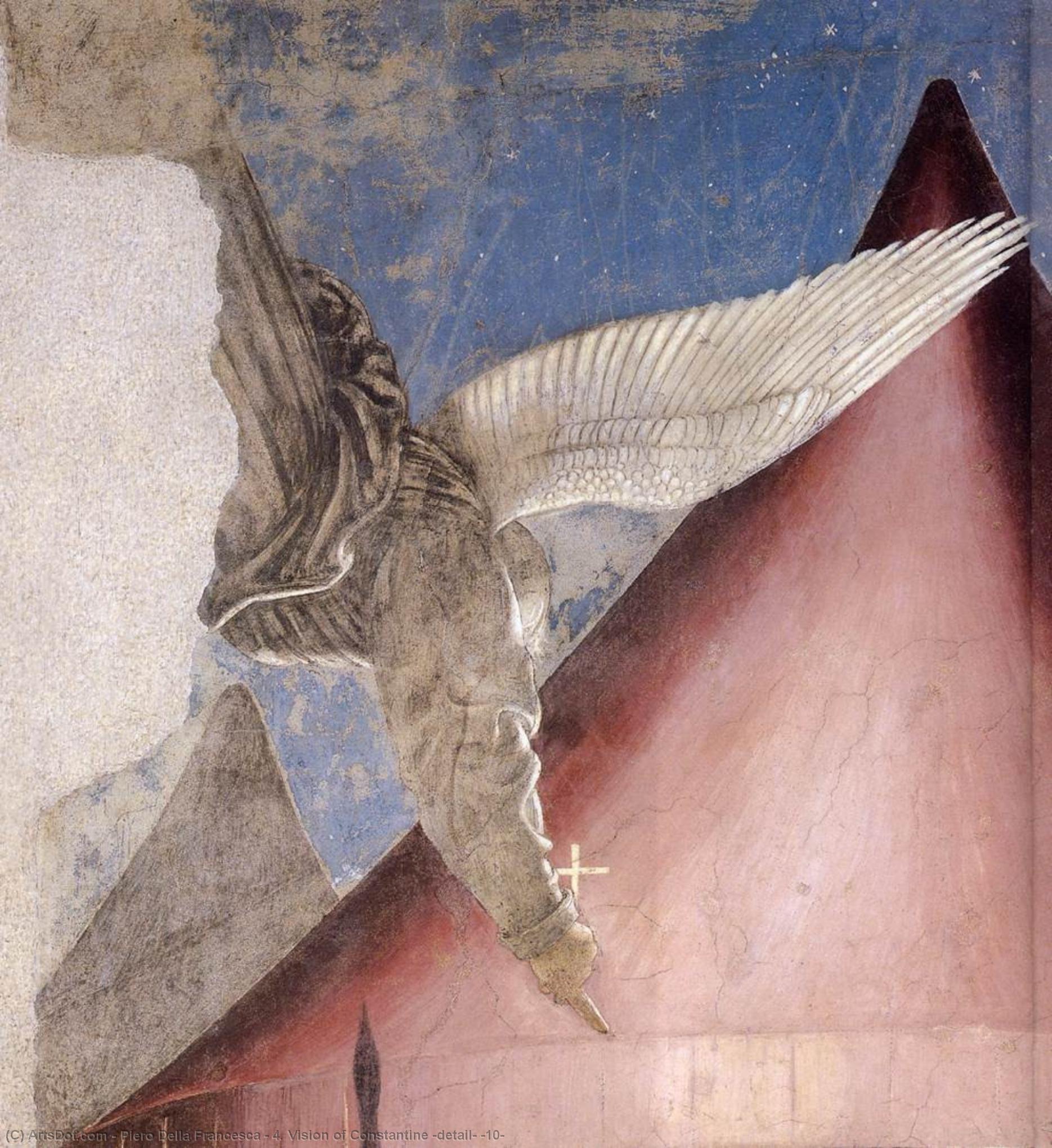
Within the hallowed halls of the Basilica of San Francesco in Arezzo, Italy, resides a fresco sequence known as “The Legend of the True Cross,” and at its heart lies ‘4. Vision of Constantine (detail) (10)’. This isn’t merely a painting; it's a meticulously crafted window into the mind of Piero della Francesca, a Renaissance artist who redefined perspective, light, and narrative within the confines of a single image. Commissioned around 1452, this detail captures a pivotal moment from Jacobus de Voragine’s “Golden Legend,” depicting Constantine’s visionary encounter with the True Cross – an event that irrevocably shaped the destiny of Christendom. The scene unfolds with a startling clarity, achieved through Della Francesca's mastery of linear perspective, drawing the viewer inexorably into the heart of the composition. Notice how the architecture recedes in perfect geometric harmony, creating an illusion of depth that transcends the two-dimensional surface. The figures themselves are rendered with an almost sculptural quality – their forms defined by precise lines and a profound understanding of anatomy, yet imbued with a serene dignity rarely seen in contemporary art.
The Language of Light: Chiaroscuro and its Impact
Piero della Francesca’s genius lies not just in his technical skill but also in his manipulation of light. He employs the technique of *chiaroscuro* – a dramatic interplay of light and shadow – to imbue the scene with an almost ethereal quality. Observe how the light, seemingly originating from an unseen source above, washes over Constantine’s face, highlighting his expression of awe and revelation. The shadows deepen the folds of his garments, adding volume and texture, while simultaneously creating a sense of mystery surrounding the divine encounter. This masterful use of light isn't merely decorative; it serves to elevate the scene, transforming a historical narrative into a profound spiritual experience. It’s a technique that would profoundly influence generations of artists, from the Baroque masters to the Luminists of the 19th century and beyond – a testament to Della Francesca’s enduring legacy.
A Cultural Tapestry: Renaissance Italy and Beyond
To fully appreciate ‘4. Vision of Constantine (detail)’, it's crucial to understand its context within the vibrant cultural landscape of Renaissance Italy. The era was marked by a renewed interest in classical antiquity, a burgeoning spirit of humanism, and an unprecedented flourishing of artistic innovation. The Basilica of San Francesco itself stands as a powerful symbol of this period, reflecting the region’s deep-rooted religious faith and its commitment to preserving artistic heritage. The fresco cycle as a whole draws upon biblical narratives, incorporating elements of classical mythology and philosophical thought. Furthermore, the influence of figures like Masaccio, whose groundbreaking use of perspective revolutionized painting, is undeniably present in Della Francesca's work. The image’s impact extends beyond Italy; its emphasis on rational order, precise observation, and the manipulation of light has resonated throughout Western art history, shaping artistic styles for centuries to come.
Symbolism and Spiritual Resonance
Beyond its technical brilliance, ‘4. Vision of Constantine (detail)’ is rich in symbolic meaning. The vision itself represents a pivotal moment in Christian history – the discovery of the True Cross, believed to be the wood upon which Jesus Christ was crucified. Constantine's conversion and subsequent patronage of Christianity were instrumental in establishing the religion as the state religion of the Roman Empire. The scene’s composition—with Constantine bathed in divine light, surrounded by skeptical soldiers—underscores the transformative power of faith. The geometric precision of the architecture reinforces the idea of a divinely ordained order, while the subdued expressions of the guards hint at the difficulty of reconciling earthly skepticism with transcendent revelation. This painting is not simply a depiction of an event; it’s a meditation on faith, vision, and the intersection of the human and divine realms.