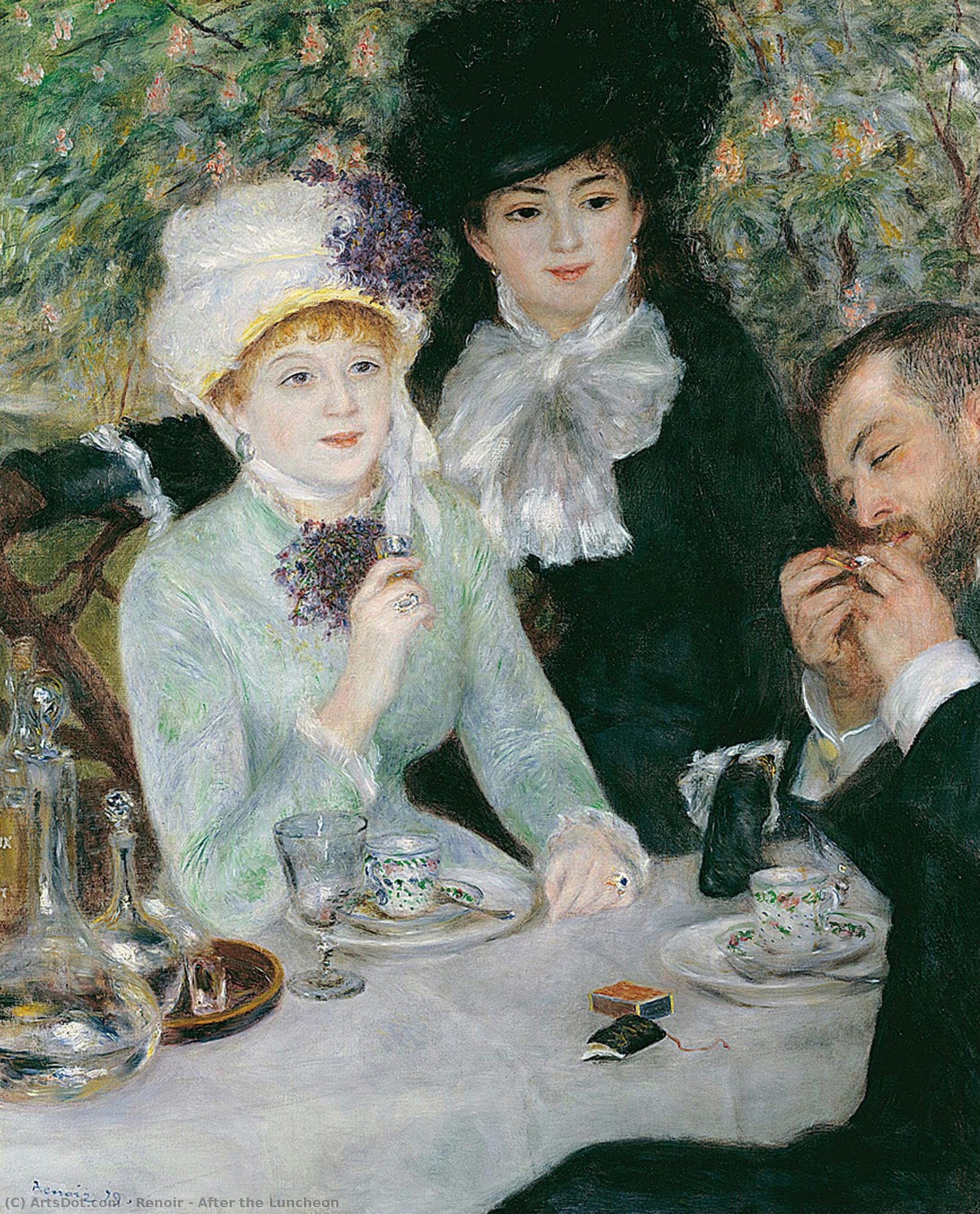
Experience the tranquil charm of Pierre-Auguste Renoir's Impressionist masterpiece After the Luncheon, a sun-dappled scene of Parisian leisure that invites you to bring this timeless moment of light and color into your home.
Otkrijte Pierre-Auguste Renoara, impresionističkog majstora poznatog po slikovitim portretima i prizorama pariškog života! Uživajte u njegovim radovima poput 'Plesa u Mölanu de la Galete' i otkrijte lepotu i svetlost u svakoj potezi.
Istražite 7 vekova umetnosti u Štadel muzeju u Frankfurtu! Od remek-dela renesanse do modernih kreacija, otkrijte ikoničke slike i skulpture u zapanjujućem arhitektonskom okruženju.
After the Luncheon: A Moment of Parisian Impression
A glimpse into the idyllic world of Pierre-Auguste Renoir’s “After the Luncheon” transports us back to 1879 Paris, capturing a quintessential scene of leisure and social interaction. Painted during the height of Impressionism's influence, this artwork isn’t merely a depiction of a picnic; it’s an embodiment of the movement’s core principles – prioritizing fleeting impressions of light and color over meticulous realism. The painting portrays three figures seated around a table outdoors beneath dappled sunlight filtering through lush foliage, creating an atmosphere of warmth and tranquility that resonates with viewers even today.
Composition & Technique: Embracing Spontaneity
Renoir skillfully employs a triangular composition, anchoring the scene with the horizontal tabletop while positioning the figures at its apexes. This deliberate arrangement lends stability to the overall impression of movement and spontaneity – characteristic traits of Impressionist art. The artist’s technique is masterful, utilizing wet-on-wet painting methods that allow colors to blend optically, resulting in a luminous surface texture. Visible brushstrokes are abundant, conveying a sense of immediacy and capturing the ephemeral quality of the moment. Short, broken strokes build up layers of pigment, creating vibrant hues and subtle tonal variations—a testament to Renoir’s dedication to faithfully representing how light transforms surfaces.
Color Palette & Light: Capturing Parisian Atmosphere
The artwork's color palette is dominated by soft greens, creams, pale yellows, punctuated by delicate pinks and lavenders. These hues harmonize beautifully, mirroring the natural surroundings and contributing to an airy, inviting ambiance. Renoir’s masterful manipulation of light—particularly the dappled sunlight—is paramount to conveying this atmosphere. Highlights shimmer subtly on skin tones and foliage, enhancing luminosity and creating a captivating visual experience. The artist expertly captures the diffused glow of daylight, reflecting its influence on color perception and reinforcing the Impressionist preoccupation with capturing sensory impressions.
Symbolism & Emotional Resonance: An Invitation to Leisure
Beyond its aesthetic beauty, “After the Luncheon” speaks to broader themes of companionship and enjoyment—values central to Parisian life during Renoir’s era. The intimate setting suggests a private moment shared between friends or loved ones, fostering feelings of warmth and contentment. Like many Impressionist paintings, this artwork invites contemplation on the simple pleasures of everyday existence. It's a celebration of beauty found in ordinary moments, mirroring Renoir’s own artistic philosophy—to depict life as it is experienced, unfiltered by academic conventions.
Historical Context & Legacy: The Birth of Modern Art
“After the Luncheon” stands as a pivotal work within Impressionism, marking a decisive break from traditional art academies and establishing a new aesthetic direction. Renoir’s embrace of plein air painting—working outdoors directly onto canvas—challenged established artistic norms and paved the way for subsequent movements in modern art. Its influence can be seen in countless reproductions and interpretations that continue to inspire artists and collectors alike, securing its place as an enduring icon of Impressionist artistry.