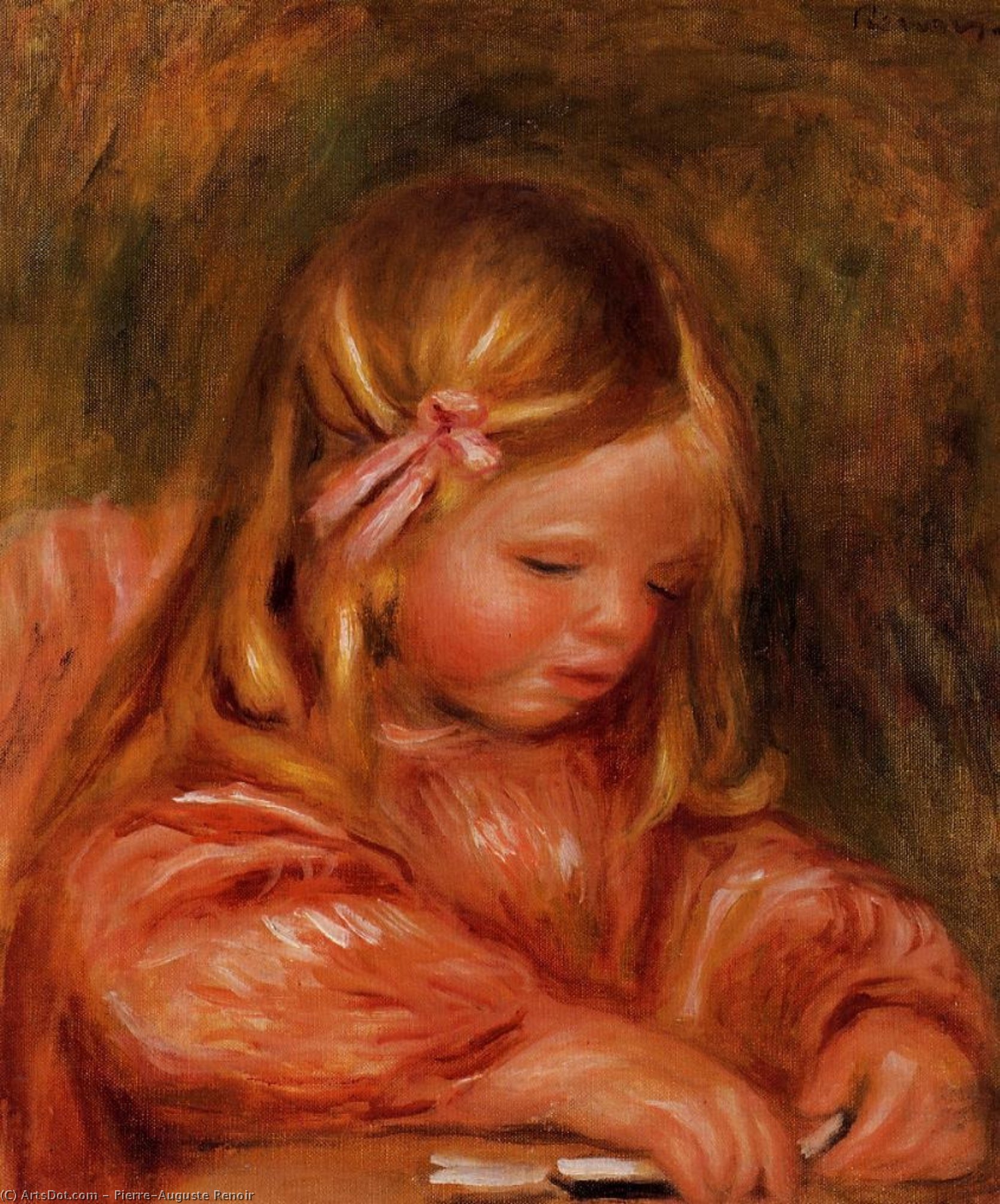
Claude Renoir Playing with Dominos – A Snapshot of Impressionist Domesticity
Pierre-Auguste Renoir, a renowned French artist, created the captivating painting
Claude Renoir Playing with Dominos in 1905. This oil on canvas masterpiece is a testament to Renoir's skill in capturing the essence of everyday life and the beauty of human interaction—a scene rendered with remarkable tenderness and luminous color. It’s more than just a depiction; it’s an invitation into a moment of quiet contemplation, reflecting Renoir’s fascination with portraying ordinary subjects imbued with profound emotion.
The Painting's Composition – Light and Gesture
The painting depicts Claude Renoir, the artist’s son, engrossed in playing with dominos. The young boy is dressed in a pink dress, adding a touch of elegance to the scene. A bow adorns his hair, further emphasizing his innocence and playfulness. In the background, two other figures are partially visible—likely Renoir's wife Estelle Joyeaux—but they don’t detract from the main focus of the painting – Claude’s absorbed concentration. Renoir masterfully utilizes light to illuminate Claude’s face and hands, creating a palpable sense of warmth and immediacy. The arrangement feels deliberately simple yet carefully considered, prioritizing gesture and emotion over complex narrative.
Artistic Style – Impressionism at Its Finest
Renoir's unwavering commitment to Impressionism is evident throughout this work. He employs loose brushstrokes—characteristic of the movement—to blend colors seamlessly, capturing the subtle nuances of light and atmosphere. The palette leans towards warm hues—peach, rose, ochre—creating a harmonious visual experience that evokes feelings of comfort and nostalgia. Unlike many Impressionist landscapes, this portrait eschews grand vistas for intimate domesticity, demonstrating Renoir’s ability to find beauty in commonplace moments. It exemplifies the Impressionists' desire to convey not just what they saw but how they *felt*.
Historical Context – A Reflection of Renoir’s Artistic Vision
Claude Renoir Playing with Dominos sits alongside other paintings by Pierre-Auguste Renoir exploring themes of family life and childhood joy. It’s part of a broader artistic dialogue concerning the portrayal of domestic scenes—a reaction against academic art's preoccupation with historical grandeur. Consider it alongside masterpieces like
Portrait of a Young Girl and
Gypsy Girl—works that similarly celebrate the beauty of ordinary subjects and human relationships.
Preservation and Exhibition – Witnessing Renoir’s Legacy
The painting is currently housed at
Amgueddfa Cymru – National Museum Wales, Cardiff, Wales—a beacon for Welsh culture and heritage. The museum’s dedication to safeguarding artistic treasures ensures that future generations can appreciate Renoir's enduring contribution to Impressionist art. For more information on the museum’s collections and exhibitions, visit
Discovering the Artworks of Amgueddfa Cymru.