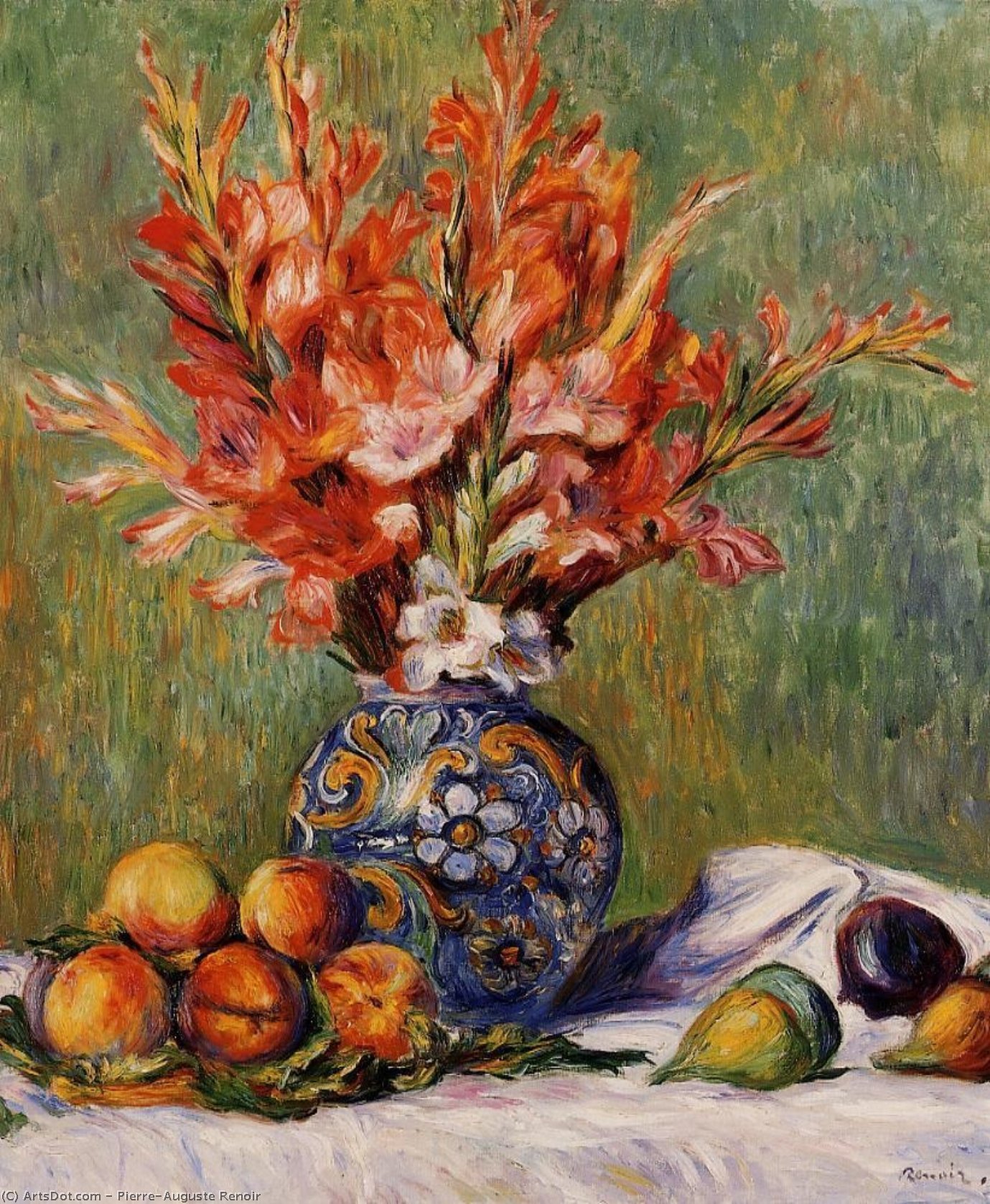
Flowers and Fruit: A Celebration of Impressionist Beauty
Pierre-Auguste Renoir’s “Flowers and Fruit” stands as a quintessential embodiment of Impressionism—a movement that sought to capture fleeting moments of light and color, prioritizing sensory experience over meticulous detail. Created in 1889 during the height of artistic innovation in Paris, this painting transcends mere representation; it's an invitation into a serene tableau brimming with vibrancy and warmth.
The Painting: A Harmonious Blend of Colors and Textures
Measuring 65 x 54 cm, “Flowers and Fruit” is executed in oil on canvas—a medium favored by Impressionists like Monet and Sisley—allowing Renoir to achieve remarkable luminosity and textural richness. The composition centers around a vase overflowing with crimson blossoms, complemented by strategically placed oranges, apples, and two pears. These fruits aren’t merely objects; they are imbued with life, radiating subtle hues that dance across the canvas surface. Renoir skillfully employs loose brushstrokes—characteristic of Impressionist technique—to blend colors seamlessly, creating an atmosphere of diffused light and shimmering brilliance. Notice how he captures the velvety sheen of the petals and the smooth contours of the fruit, conveying a palpable sense of tactile pleasure.
Artistic Style: Impressionism
Renoir’s approach aligns perfectly with the core tenets of Impressionism. Unlike academic painters who prioritized precise realism, Impressionists aimed to depict what they *saw*, prioritizing subjective perception over objective observation. They rejected traditional studio lighting and instead sought inspiration in outdoor scenes—particularly dappled sunlight filtering through foliage—capturing the ephemeral qualities of light as it transforms throughout the day. This painting exemplifies this philosophy by eschewing sharp outlines and favoring soft, blended hues that evoke a feeling of tranquility and optimism. The artist’s masterful manipulation of color is particularly noteworthy; Renoir uses complementary colors—such as red and green—to heighten visual impact and create depth within the composition.
Context: Still Life Painting
Still life painting has enjoyed considerable prestige throughout Western art history, dating back to antiquity and flourishing during the Renaissance. However, Impressionism reinvigorated this genre by introducing a radically new aesthetic sensibility. Prior to Renoir’s time, still lifes often adhered to strict conventions of formal composition and idealized beauty—emphasizing polished surfaces and carefully arranged objects. Renoir challenged these traditions, opting for an informal arrangement that prioritized spontaneity and emotional resonance. Furthermore, the subject matter itself—flowers and fruit—held symbolic significance within Impressionist culture, representing fertility, abundance, and the ephemeral joys of everyday life.
Comparative Works: Other Notable Paintings
To appreciate Renoir’s contribution to still life painting, it's beneficial to consider how he compares with fellow Impressionists like Paul Cézanne and Claude Monet. Cézanne’s “Still Life with Apples and Plums” (41 x 27 cm) demonstrates a more analytical approach—focusing on geometric forms and exploring the underlying structure of objects. Monet’s “White Poppy” (37 x 117 cm), conversely, prioritizes capturing the effects of light on color—creating an ethereal impression that transcends mere visual representation. These artists represent distinct interpretations of Impressionist principles, highlighting the breadth of artistic expression during this transformative period.
## Relevance: A Comprehensive Guide to Staedtische Kunsthalle Mannheim (Germany)
For those eager to delve deeper into Renoir’s oeuvre and explore the broader landscape of Impressionism, a visit to the Staedtische Kunsthalle Mannheim in Germany is indispensable. The museum houses an impressive collection spanning centuries—including significant pieces from the Impressionist era—providing invaluable insight into artistic developments during this pivotal moment in art history. Examining Renoir's work alongside other masters will illuminate the stylistic nuances and intellectual currents that shaped the movement’s legacy.
## Conclusion: A Masterpiece of Impressionism
“Flowers and Fruit” by Pierre-Auguste Renoir remains a testament to the enduring power of Impressionist aesthetics—a celebration of beauty, light, and color that continues to captivate audiences today. Its harmonious arrangement, masterful brushwork, and evocative palette solidify Renoir’s position as one of the foremost painters of his time—a true pioneer in capturing the fleeting sensations of visual experience. To experience this timeless artwork firsthand or acquire a high-quality reproduction, explore
https://ArtsDot.com for exceptional artistic treasures.