Provenance: Sold 26 June 1900 to Durand-Ruel (New York and Paris). Probably Alexandre Berthier [1883-1918], Prince de Wagram, Paris. Sold October 23, 1926 to Chester Dale [1882-1962], New York.
A Moment Frozen in Impressionistic Light
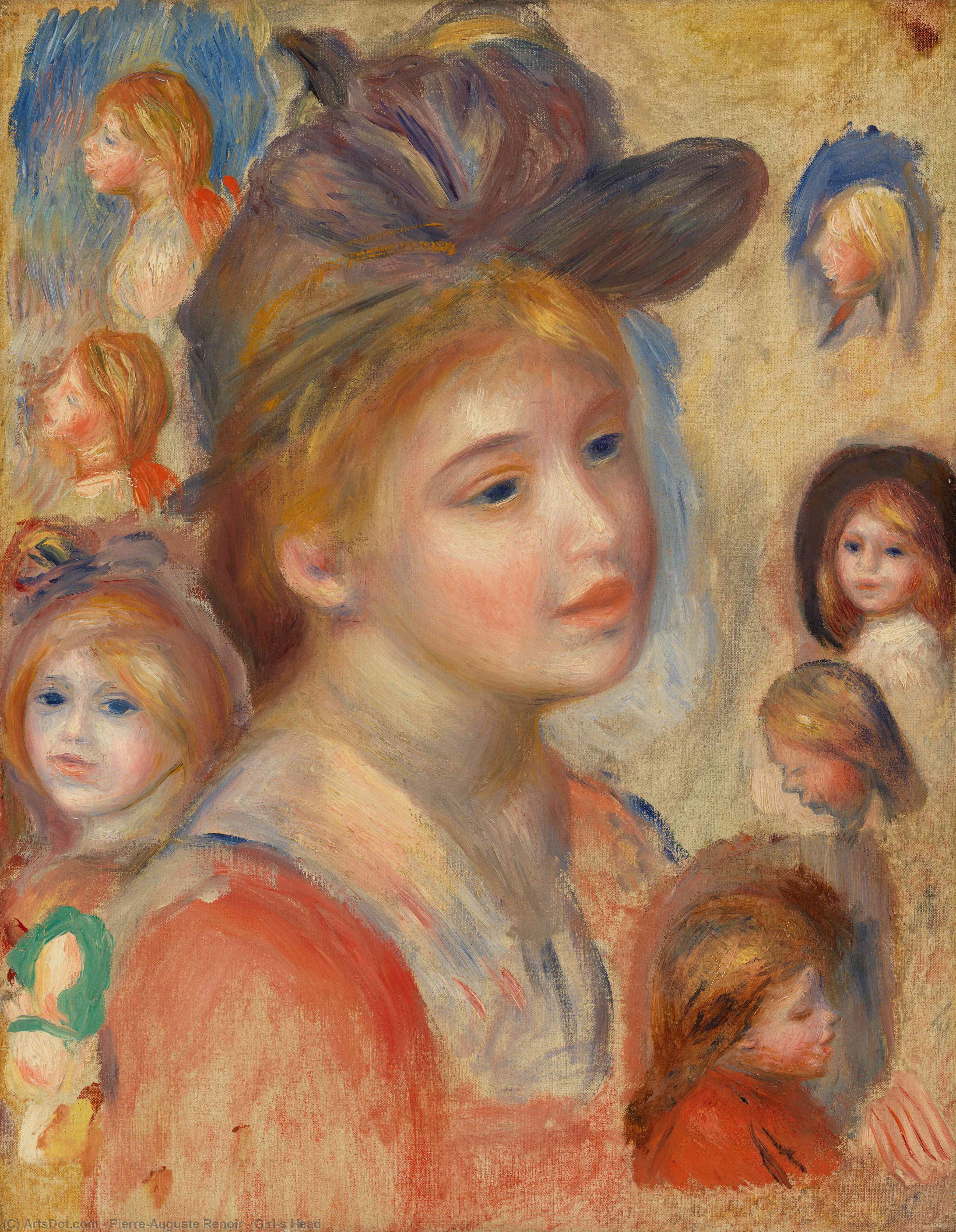
In the vast tapestry of the Impressionist movement, few works capture the ephemeral essence of youth and warmth as tenderly as Pierre-Auguste Renoir's "Girl's Head." Painted around 1897, this masterpiece serves as a profound window into the artist's soul, where the boundaries between subject and atmosphere dissolve into a luminous dance of color. The portrait features the delicate face of a young woman—often identified as Jeanne Samary, a frequent muse who embodied the grace Renoir so dearly loved. As her gaze meets the viewer, an immediate and intimate connection is forged, inviting us to step out of the rush of modern life and into a serene, timeless moment of quiet contemplation.
Renoir’s technique in this piece is nothing short of spellbinding, showcasing the very hallmarks that revolutionized Western art. Eschewing the rigid, clinical lines of academic tradition, he employed loose, visible brushstrokes that breathe life into the canvas. The texture appears almost velvety, achieved through a masterful layering of pigment that softens the contours of the girl's face and allows light to appear as if it is radiating from within the skin itself. By utilizing a palette dominated by vibrant reds, oranges, and warm ochres, Renoir creates a sense of heat and vitality, making the painting feel less like a static image and more like a living, breathing memory bathed in the golden glow of a late afternoon.
Symbolism and the Spirit of the Belle Époque
Beyond its undeniable aesthetic beauty, "Girl's Head" carries a weight of symbolic resonance that speaks to the universal themes of innocence and the fleeting nature of time. The youthful features of the subject act as a vessel for purity, a theme that Renoir revisited throughout his career to celebrate the uncorrupted beauty of the natural world. There is a subtle tension within the composition; while her direct gaze suggests a burgeoning confidence and awareness, there is an underlying softness that conveys a sense of vulnerability. This duality captures the very essence of the Belle Époque—a period of profound optimism and cultural flourishing in France, yet one always shadowed by the transient nature of such splendor.
For the discerning collector or interior designer, this artwork offers more than mere decoration; it provides an emotional anchor for a space. The warmth of the color palette makes it an ideal centerpiece for rooms designed to evoke comfort, luxury, and sophistication. Whether placed in a sun-drenched morning room or a moody, curated study, the painting’s ability to manipulate light and mood ensures it remains a captivating conversation piece. To possess a high-quality reproduction of this work is to bring a fragment of Renoir's luminous world into one's own home, offering a daily invitation to find beauty in the fleeting impressions of our own lives.