Otkrijte Pierre-Auguste Renoara, impresionističkog majstora poznatog po slikovitim portretima i prizorama pariškog života! Uživajte u njegovim radovima poput 'Plesa u Mölanu de la Galete' i otkrijte lepotu i svetlost u svakoj potezi.
Погледајте европску уметност у еволицију на Музеју Пушкина у Москви! Откријте шемаре из Италијанских примитива и импресионистичке слике – чаша културног путовања очекује вас.
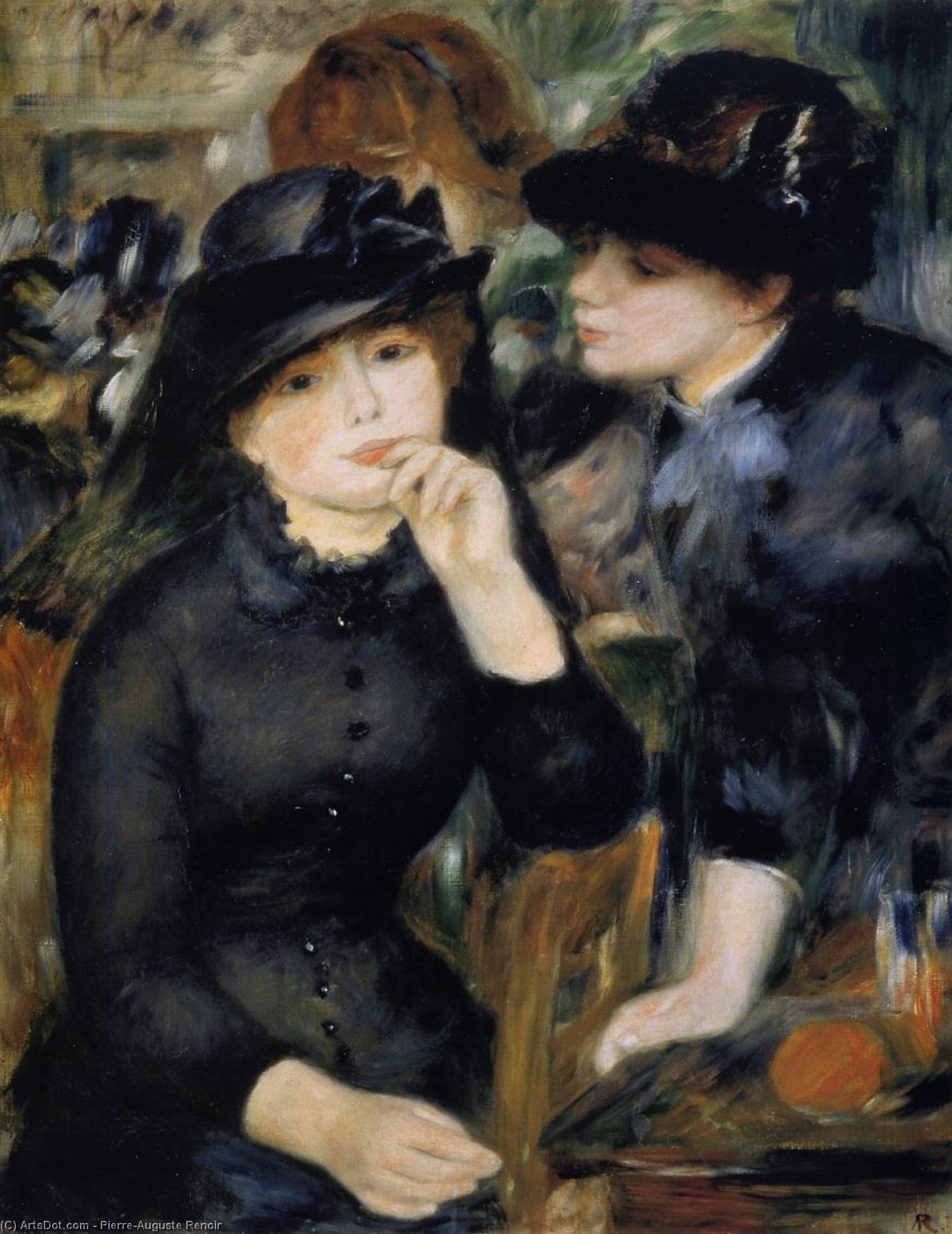
Girls in Black: A Portrait of Impressionistic Grace
Pierre-Auguste Renoir’s “Girls in Black” stands as a quintessential example of Impressionism—a movement that irrevocably altered the course of Western art history by prioritizing fleeting moments of light and color over meticulous detail. Painted in 1880, this oil on canvas resides within the hallowed halls of The Pushkin State Museum in Moscow, Russia, offering visitors an unparalleled opportunity to contemplate a masterpiece of serene beauty and subtle emotion.
Composition and Observation
The painting’s visual impact derives largely from its carefully considered composition. Two women are positioned centrally against a muted backdrop—one on the left, bathed in soft light emanating from what appears to be a window, and the other on the right, gazing intently at her companion. The woman on the left wears a hat adorned with delicate feathers, adding an element of aristocratic elegance to the scene. Notably absent is any visible headwear for the second figure, emphasizing her gaze and fostering a sense of intimacy between the subjects. A third person—presumably a seated gentleman—completes the tableau, subtly anchoring the composition while maintaining a distance from the primary focus. The chair itself serves as a grounding element, reinforcing the stillness of the moment captured on canvas. Renoir’s masterful brushstrokes convey an atmosphere of quiet contemplation and understated connection.
Impressionistic Technique: Light and Color
Renoir's technique embodies the core tenets of Impressionism. He eschewed traditional blending methods, opting instead for juxtaposed strokes of color that allowed light to shimmer across the surface of the canvas. The palette is dominated by muted shades—primarily browns, creams, and pale pinks—creating a harmonious blend that mimics the diffused illumination characteristic of Parisian interiors during Renoir’s time. Careful attention was paid to capturing the nuances of light reflecting off surfaces, particularly on the woman's skin and the hat’s feathers. This technique wasn't merely about replicating what the eye perceives; it was about conveying an emotional response—a feeling of warmth, serenity, and perhaps even wistful nostalgia.
Historical Context: The Belle Époque
“Girls in Black” emerged during the Belle Époque (roughly 1871-1914)—a period marked by unprecedented optimism and cultural flourishing in France. This era witnessed a burgeoning interest in psychology and introspection, influencing artists to explore themes of emotion and subjectivity. Impressionism responded directly to these trends, rejecting academic conventions that prioritized idealized representations over realistic depictions of everyday life. Renoir’s work aligns perfectly with this artistic spirit, capturing the essence of Parisian social life—a world of refined leisure and subtle interactions—with remarkable sensitivity.
Symbolic Resonance: Feminine Connection
Beyond its technical brilliance, “Girls in Black” possesses a symbolic depth that resonates powerfully with viewers. The two women’s gaze establishes a connection—a silent dialogue—that speaks to the importance of human relationships and emotional intimacy. The hat symbolizes status and adornment, reflecting the social conventions of the time while simultaneously hinting at vulnerability and grace. Renoir's portrayal captures not just a visual image but also an intangible feeling—the quiet beauty of companionship and the enduring fascination with feminine allure.
Conclusion: A Legacy of Impressionistic Vision
“Girls in Black” remains a testament to Pierre-Auguste Renoir’s artistic genius and his unwavering commitment to capturing the fleeting moments of beauty that define human experience. As part of the Impressionist movement, it profoundly impacted subsequent generations of artists—laying the groundwork for movements like Proto-Cubism—and continues to inspire admiration for its luminous palette, masterful brushwork, and evocative portrayal of human connection. To delve deeper into Renoir’s oeuvre or explore the broader history of art, visit /art/list/?Filter=8XXE5A-Pierre-Auguste-Renoir-Girls-in-Black—where you can discover reproductions of this iconic painting and gain invaluable insight into Impressionistic principles.