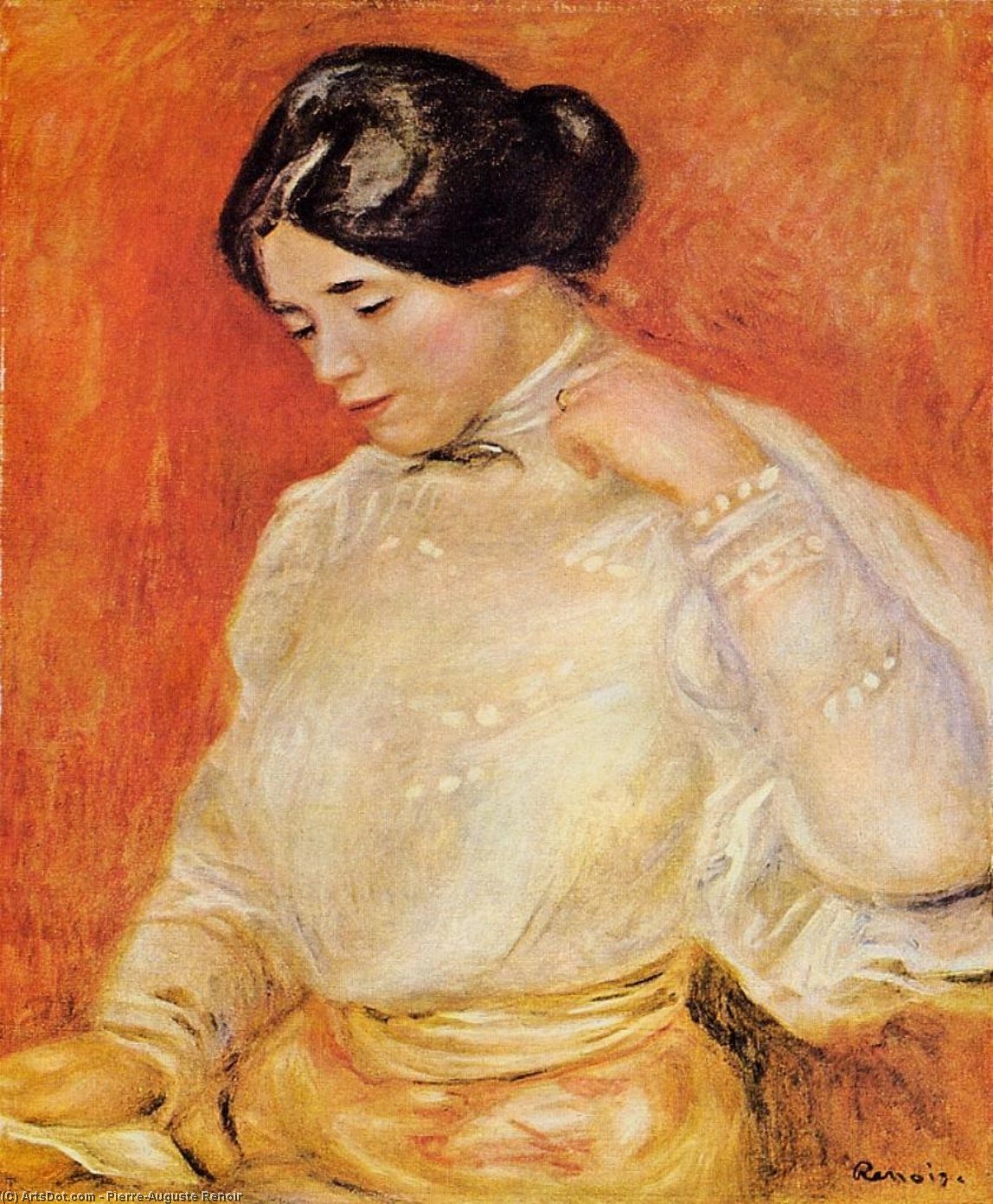
Renoir’s ‘Graziella’: A serene 1910 portrait capturing quiet contemplation & light. Admire the warm hues, pearl necklace, and subtle Fauvist influence of this Detroit Institute masterpiece.
Otkrijte Pierre-Auguste Renoara, impresionističkog majstora poznatog po slikovitim portretima i prizorama pariškog života! Uživajte u njegovim radovima poput 'Plesa u Mölanu de la Galete' i otkrijte lepotu i svetlost u svakoj potezi.
Откријте сјајан свет уметности у ДИА! Истражите светиште репродукција познатих дела Дијега Ривере и других маестрија, одражавајући богато наслеђе Дејтроита и културну разноликости.
Откријте сјајан свет уметности у ДИА! Истражите светиште репродукција познатих дела Дијега Ривере и других маестрија, одражавајући богато наслеђе Дејтроита и културну разноликости.
ДИА, Детройтски институт умет
A Moment Frozen in Light: Exploring Renoir’s Graziella
Pierre-Auguste Renoir's “Graziella,” completed in 1910, stands as a quintessential example of Impressionist artistry—a captivating portrait that transcends mere visual representation to capture the essence of stillness and contemplative beauty. Housed within the Detroit Institute of the Arts’ collection, this oil on canvas painting invites viewers into a serene interior space dominated by warm hues and bathed in diffused light, reflecting Renoir's masterful command of capturing fleeting impressions.
Composition and Technique: Impressionism at Its Finest
The artwork depicts a young woman seated before a book, her gaze directed downwards—a posture that speaks volumes about inner reflection. Renoir’s technique is characterized by loose brushstrokes and blended pigments, prioritizing the depiction of light and color over precise anatomical detail. This approach aligns perfectly with Impressionism's core philosophy: to convey not what the eye sees directly but rather how it perceives the world around it. The warm red wall serves as a harmonious backdrop, enhancing the painting’s overall atmosphere and complementing the delicate shades of white and gold adorning the woman’s dress.
Symbolic Layers: Femininity and Quiet Contemplation
Beyond its aesthetic beauty, “Graziella” resonates with deeper symbolic meanings. The woman's posture embodies a spirit of introspection—a deliberate avoidance of outward gaze that suggests a preoccupation with inner thoughts and emotions. Her pearl necklace symbolizes purity and innocence, reinforcing the Impressionist tradition of portraying women as figures of grace and virtue. Renoir skillfully utilizes color to convey mood; the muted palette contributes to the painting’s tranquil ambiance.
Influence of Fauvism: A Subtle Nod to Bold Expression
Although “Graziella” eschews the vibrant, unrestrained colors championed by Fauvist artists like Henri Matisse—a movement that prioritized expressive brushstrokes and bold hues—it subtly reflects Renoir’s engagement with broader artistic currents. The artist's ability to blend stylistic influences demonstrates his versatility and intellectual curiosity, cementing his legacy as one of Impressionism’s most innovative figures.
A Timeless Portrait: Graziella Today
"Graziella" continues to inspire artists and art enthusiasts alike, demonstrating Renoir’s enduring skill in conveying emotion through visual form. Its quiet elegance and masterful technique serve as a testament to the Impressionist movement's commitment to capturing fleeting moments of beauty—a timeless masterpiece that invites contemplation and appreciation for its subtle nuances.