Introduction to a Moment of Tranquility
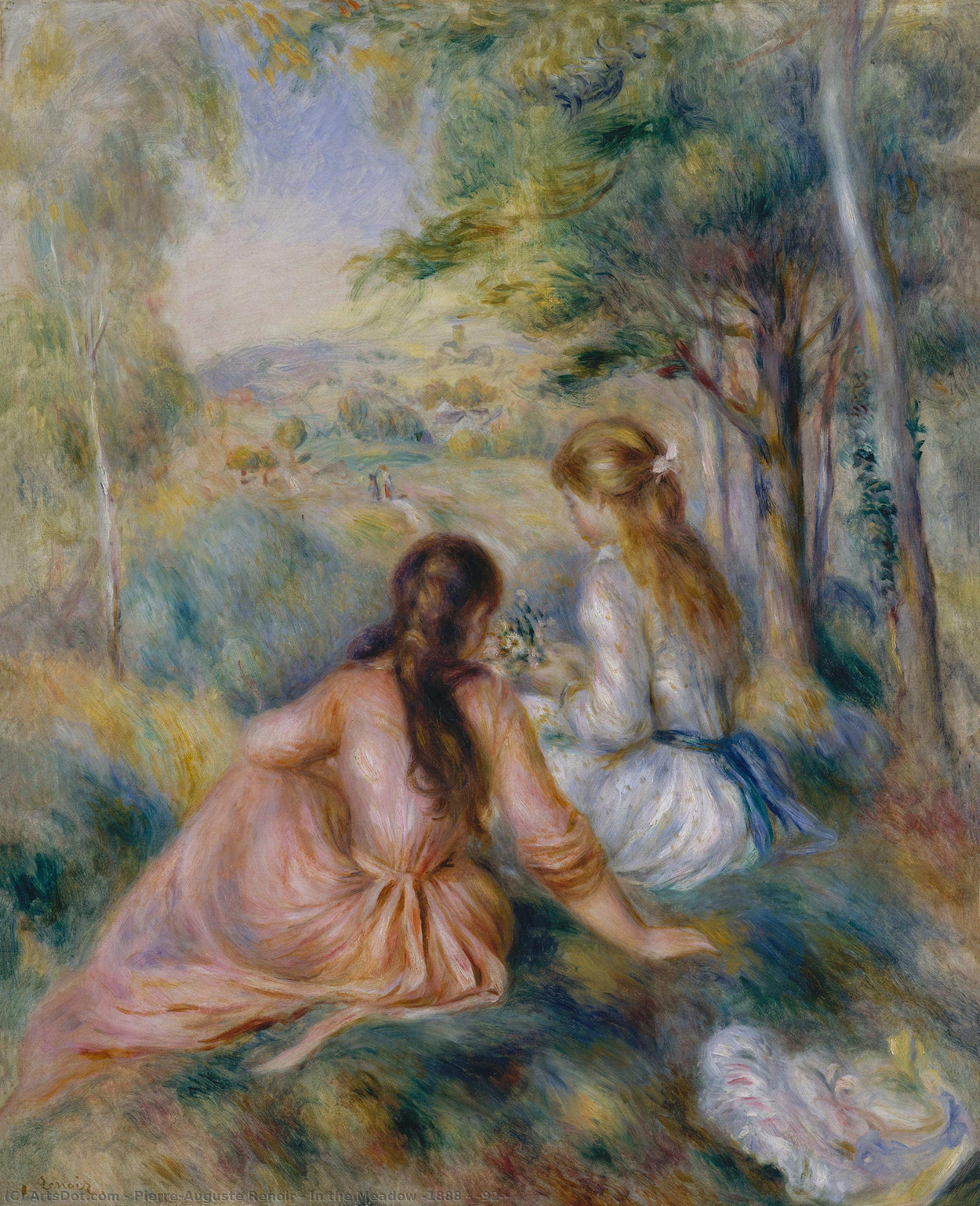
Pierre-Auguste Renoir’s “In the Meadow” isn't merely a painting; it’s an invitation. An invitation to step away from the bustle of Parisian life, to breathe in the warmth of a summer afternoon, and to witness a scene of profound serenity. Completed between 1888 and 1892, this oil on canvas captures two young women immersed in a simple pleasure – a leisurely picnic amidst a lush meadow bathed in dappled sunlight. More than just a depiction of a pastoral idyll, the painting is a masterful exploration of light, color, and the fleeting beauty of everyday moments, firmly rooted within the heart of the Impressionist movement.
Renoir, already a recognized figure by this period, was deeply invested in capturing the ephemeral qualities of light and atmosphere. He sought to move beyond traditional academic painting, which prioritized precise detail and historical narrative, instead focusing on the immediate sensory experience – what he saw, felt, and heard at a particular moment in time. “In the Meadow” exemplifies this shift, prioritizing the impression of light and color over rigid form and meticulous representation.
The Dance of Light and Composition
What immediately draws the eye is Renoir’s masterful manipulation of light. He doesn't simply paint a meadow; he paints the *effect* of sunlight filtering through the trees, creating a mosaic of shimmering highlights and soft shadows. The dappled patterns dance across the grass, lending texture and depth to the scene. Notice how the warm tones of the sunlit areas contrast with the cooler hues of the shaded foliage – this interplay creates a dynamic visual rhythm that keeps the eye moving throughout the canvas.
The composition itself is carefully considered. The two women are positioned slightly off-center, creating a sense of balance and inviting the viewer to share their quiet contemplation. Their relaxed postures and gentle interaction suggest an intimacy and connection with nature. The distant figures and horse further enhance the feeling of spaciousness and tranquility, reinforcing the painting’s overall atmosphere of peaceful escape.
Impressionism, Pointillism, and Renoir's Experimentation
Renoir’s approach to color owes a debt to both Impressionism and Pointillism, though he never fully embraced the latter’s strict methodology. He utilized broken brushstrokes and juxtaposed complementary colors – blues and oranges, greens and reds – to create vibrant, luminous effects. This technique is particularly evident in the rendering of the foliage, where individual strokes of color blend seamlessly together to suggest a rich tapestry of green.
Interestingly, “In the Meadow” reflects Renoir’s ongoing experimentation with different painting techniques. While not strictly Pointillist, he clearly sought to capture the fleeting effects of light and atmosphere in a way that anticipated later developments in modern art. The loose brushwork and emphasis on color over form are hallmarks of his evolving style.
Symbolism and Emotional Resonance
Beyond its technical brilliance, “In the Meadow” resonates with a profound sense of emotional warmth. It’s not just a pretty picture; it evokes feelings of nostalgia, contentment, and connection to nature. The painting speaks to the simple pleasures of life – friendship, beauty, and the restorative power of the outdoors.
The meadow itself can be interpreted as a symbol of innocence and renewal. The two women, bathed in sunlight, represent youth and vitality, while their leisurely activity suggests a rejection of societal pressures and a celebration of the present moment. Renoir’s ability to capture such subtle yet powerful emotions is what elevates “In the Meadow” from a mere landscape painting to a timeless work of art.
Artist: Pierre-Auguste Renoir
Painting Title: In the Meadow
Date: 1888-92
For a truly immersive experience and a stunning reproduction of “In the Meadow,” we invite you to explore our hand-painted oil painting reproductions at ArtsDot.com. Bring this exquisite scene into your home and savor its timeless beauty.