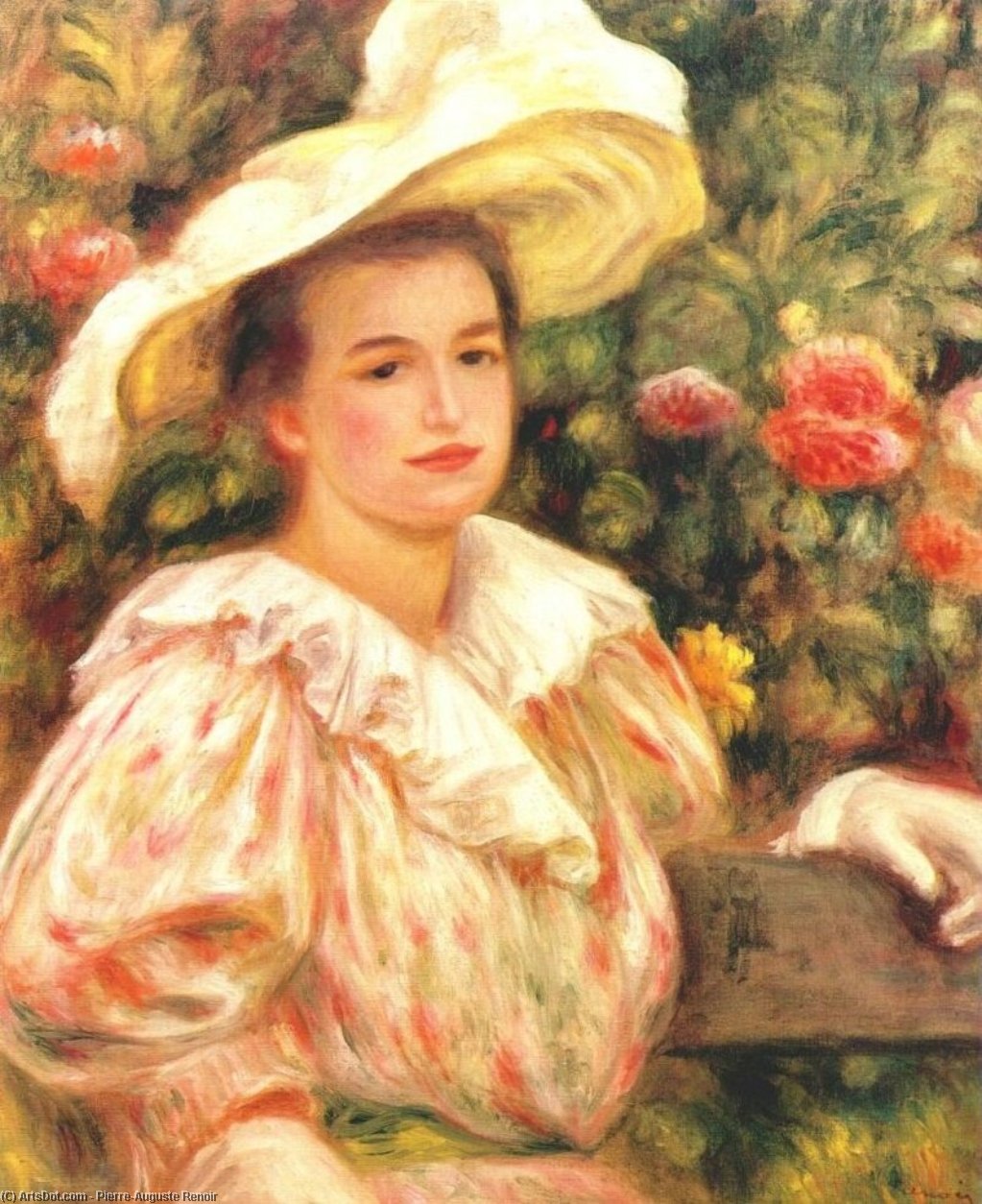
Lady with White Hat: A Portrait of Elegance and Impressionistic Light
The
Lady with White Hat, a masterpiece created by the renowned French artist
Pierre-Auguste Renoir in 1895, transcends mere representation—it captures a fleeting moment of beauty and serenity within the vibrant tapestry of Parisian life. Available for viewing on /en/art/show/art-8xyrr7-en/ this painting exemplifies Renoir’s masterful command of Impressionistic technique and his ability to convey emotion through subtle color palettes and textured brushstrokes.
Composition and Technique: Embracing Movement and Atmosphere
Renoir's approach to portraying the subject is characterized by a deliberate disregard for traditional academic conventions. Instead of striving for precise detail, he employs short, broken brushstrokes—a hallmark of Impressionism—to depict the woman seated on a bench amidst a profusion of flowers. These strokes aren’t merely decorative; they actively contribute to the painting's sense of movement and luminosity. The artist skillfully blends colors directly onto the canvas, allowing them to mingle and shimmer in response to ambient light – precisely what Monet and Sisley pursued during their explorations of plein air painting. Notice how Renoir captures the diffused glow emanating from the blossoms surrounding the lady’s head, creating an ethereal effect that elevates the portrait beyond a simple likeness. The meticulous layering of paint builds up texture and depth, inviting viewers to linger on the surface and absorb its nuances.
Historical Context: Paris at the Dawn of Modernity
The creation of “Lady with White Hat” coincided with a pivotal moment in Parisian history—the Belle Époque (Beautiful Era), spanning from 1871 to 1914. Following the Franco-Prussian War and subsequent upheaval, Paris experienced an unprecedented surge of artistic innovation and cultural dynamism. Impressionism emerged as a reaction against academic realism, championed by artists who sought to depict the sensory experience of everyday life rather than idealized historical narratives or mythological subjects. Renoir’s work reflects this spirit of experimentation and celebrates the pleasures of bourgeois society—a fascination with beauty, leisure, and refined taste that defined the era. The painting speaks to a broader cultural preoccupation with femininity and grace, mirroring the prevailing aesthetic ideals of the time.
Symbolism and Emotional Resonance: Flowers as Expressions of Sentiment
Beyond its formal artistry, “Lady with White Hat” is laden with symbolic significance. The white hat itself represents purity and innocence—a deliberate choice by Renoir to convey a sense of composure and serenity. Furthermore, the abundant roses adorning the woman’s hair symbolize love, beauty, and remembrance. These flowers aren't merely decorative elements; they serve as conduits for emotion, reflecting the idealized vision of femininity prevalent in Impressionist art. The lady’s gaze—directed outwards towards the viewer—creates a connection between subject and observer, inviting contemplation on themes of intimacy and vulnerability. Renoir’s ability to evoke such profound emotional resonance underscores his genius as a painter and cements “Lady with White Hat”'s place among the most cherished portraits of its time.
Legacy and Preservation: A Testament to Artistic Excellence
The Museo Sorolla in Madrid, Spain, houses one of the finest surviving examples of Renoir’s oeuvre—a testament to the enduring power of Impressionism and the importance of safeguarding artistic heritage. Originally the home and studio of Spanish painter Joaquín Sorolla y Bastida, it now serves as a museum dedicated to preserving Sorolla's paintings and promoting his artistic legacy. Similarly, “Lady with White Hat” continues to inspire artists and collectors alike—a timeless masterpiece that embodies the spirit of Impressionism’s pursuit of beauty and its masterful manipulation of light and color. For those seeking to experience Renoir’s art firsthand, ArtsDot offers exceptional reproductions that faithfully capture the painting's luminous qualities.