Otkrijte Pierre-Auguste Renoara, impresionističkog majstora poznatog po slikovitim portretima i prizorama pariškog života! Uživajte u njegovim radovima poput 'Plesa u Mölanu de la Galete' i otkrijte lepotu i svetlost u svakoj potezi.
Откријте уметничку душу Беча у Музеју Фолкунг! Гледајте ремек-дела Рафаела, Реmbrанта и Вермера, као и древна блага из Египта до Рима. Истарија и лепота на једном месту!
Есен Музеј, Фолкунг Музеј, Немачка уметност, Импресионизам, Експресионизам, Архитектура, Давид Чиперфилд, Паул Ј. Сацс, Карл Ернст Остухс
Откијте уметничку душу Беча у Художничком музеју! Гледајте ремек-дела Рафаела, Реmbrанта и
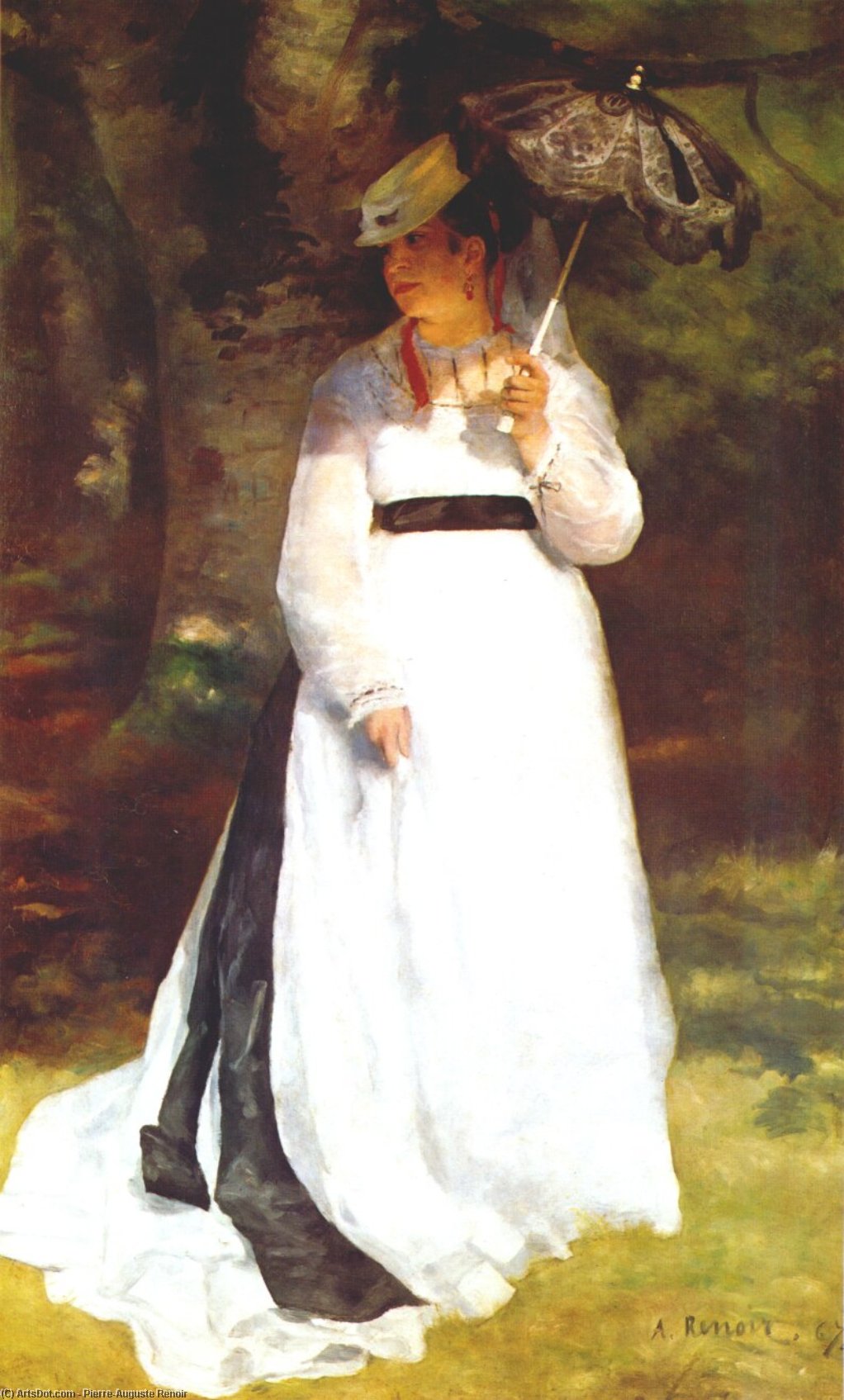
Portrait of Lise with Umbrella: A Glimpse into Renoir's Early Brilliance
- Title: Portrait of Lise with Umbrella
- Artist: Pierre-Auguste Renoir
- Date: 1867
- Medium: Oil on Canvas
- Dimensions: Unknown
- Location: Museum Folkwang, Essen, Germany
Renoir's "Portrait of Lise with Umbrella" is a captivating work from his early Salon period, showcasing the burgeoning talent of one of Impressionism’s most celebrated figures. This full-length portrait depicts Lise Tréhot, Renoir’s favored model at the time, standing gracefully in a wooded setting. The painting's significance lies not only in its aesthetic beauty but also in its pivotal role in establishing Renoir's reputation and foreshadowing his later Impressionistic masterpieces.
Style and Technique: Bridging Realism and Impressionism
The artwork exemplifies a transitional phase in Renoir’s artistic development. While rooted in the principles of Realism, particularly evident in the meticulous rendering of details like Lise's dress and parasol, it also hints at the emerging Impressionistic style that would define his later career. Renoir was influenced by Gustave Courbet during this period, adopting a focus on depicting everyday subjects with honesty and precision. However, he began to experiment with light and color in ways that moved beyond strict Realist conventions.
- Filtered Light: Renoir masterfully utilizes filtered sunlight dappling through the trees, creating a luminous atmosphere and softening the edges of forms. This technique anticipates his later explorations of light in works like "The Swing" and "Dance at Le Moulin de la Galette."
- Color Palette: The painting features a harmonious color palette dominated by soft greens, whites, and subtle browns, contributing to its overall sense of tranquility and elegance.
- Brushwork: While not as loose as his later Impressionistic brushstrokes, the application of paint in "Portrait of Lise with Umbrella" demonstrates a move away from the rigid precision of academic painting towards a more fluid and expressive style.
Historical Context and Reception
Created in 1867, this portrait was submitted to the Paris Salon, a prestigious annual art exhibition that heavily influenced artistic careers. After several previous rejections, "Portrait of Lise with Umbrella" was finally accepted and exhibited in May 1868. However, its unconventional composition – a life-size portrait with unusual contrasts between light and shadow – drew mixed reactions from critics. Some found it jarring and ridiculed the work, while others recognized its innovative qualities.
- Salon Acceptance: The Salon acceptance was a significant milestone for Renoir, providing him with much-needed recognition and validation.
- Critical Response: The painting's departure from traditional portraiture sparked debate among critics, highlighting the evolving artistic landscape of the time.
- Early Patronage: Théodore Duret, a champion of emerging artists, purchased the painting from Renoir, demonstrating early support for his talent. Later, Karl Ernst Osthaus acquired it for the Museum Folkwang, ensuring its preservation and accessibility to future generations.
Symbolism and Emotional Impact
Beyond its technical merits, "Portrait of Lise with Umbrella" evokes a sense of quiet contemplation and understated elegance. The parasol itself can be interpreted as a symbol of protection and refinement, while the wooded setting suggests a retreat from the bustling city into a realm of natural beauty. Lise's gaze, directed slightly away from the viewer, creates an air of mystery and invites introspection.
- The Parasol: Represents not only shade but also a fashionable accessory signifying Lise’s social standing and refined taste.
- The Forest Setting: Symbolizes a connection to nature and provides a serene backdrop for the portrait, contrasting with the urban environment of Paris.
- Lise's Expression: Her subtle expression conveys a sense of quiet confidence and inner peace, inviting viewers to contemplate her thoughts and emotions.
“Portrait of Lise with Umbrella” remains a testament to Renoir’s artistic evolution and his enduring ability to capture the beauty of everyday life. It serves as a valuable window into the transition from Realism to Impressionism, showcasing the artist's burgeoning talent and foreshadowing his future contributions to art history.