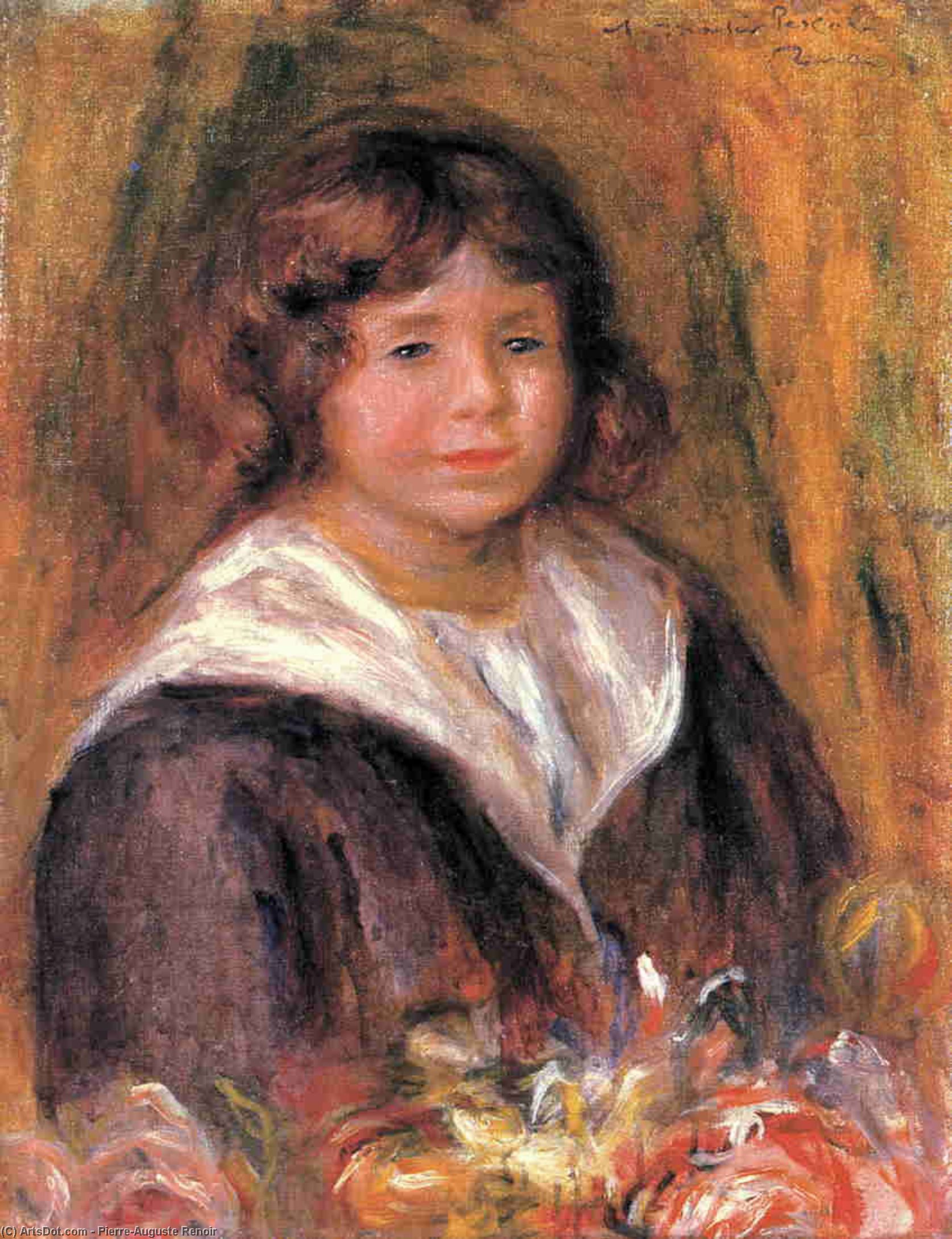
Isprobajte lepotu impresionizma uz Renoirov „Portret Djeteta“, oslikujući mladostvenu nevinost i spokojnu kontemplaciju maestralnim potezima četke i svetlom – nezaboravno umetničko djelo.
Otkrijte Pierre-Auguste Renoara, impresionističkog majstora poznatog po slikovitim portretima i prizorama pariškog života! Uživajte u njegovim radovima poput 'Plesa u Mölanu de la Galete' i otkrijte lepotu i svetlost u svakoj potezi.
An Intimate Encounter with Light and Innocence
To gaze upon Pierre-Auguste Renoir’s Portrait of a Boy (Jean Pascalis) is to step into a world where time slows, and the ephemeral beauty of childhood is captured in a single, breathless moment. Painted in 1916, during the twilight of Renoir's illustrious career, this work transcends simple portraiture to become a profound window into the Impressionist soul. The subject, a young boy with soft brown hair, meets the viewer’s eye with a gaze that is at once direct and subtly melancholic, inviting an immediate, intimate connection. Clad in a pristine white shirt and adorned with an elegant bow, his presence is bathed in a soft, diffused light that seems to emanate from within the canvas itself, creating an atmosphere of profound tenderness and quiet contemplation.
The Mastery of Renoir’s Late Impressionist Vision
Renoir’s technical mastery during this period is nothing short of extraordinary. Moving away from the more structured compositions of his earlier years, this piece showcases his late-career fascination with capturing the fleeting textures of life and the nuances of human emotion. Through delicate, rhythmic brushstrokes and a rich, vibrant palette, he utilizes the medium of oil on canvas to create a tactile experience that feels both lush and ethereal. For the discerning collector or interior designer, the painting offers a remarkable depth; the way the light dances across the boy's features provides a sense of movement and vitality that breathes life into any curated space. The modest dimensions of 48 x 37 cm allow for an intense concentration of visual impact, making it an ideal centerpiece for a sophisticated study or a refined gallery wall where intimacy is paramount.
A Harmonious Tapestry of Nature and Emotion
Beyond the physical likeness, the painting is woven with symbolic threads that ground the portrait in the natural world. Scattered strategically around the frame, delicate floral motifs serve as more than mere decoration; they are visual anchors that reflect Renoir’s deep-seated appreciation for nature's harmony. These blossoms, much like the boy himself, represent a state of grace and tranquility. The interplay between the human subject and these organic elements creates a sense of balance, suggesting that true beauty is found in the seamless integration of life and the environment. It is this emotional resonance—this ability to evoke both nostalgia and peace—that makes this masterpiece an enduring treasure for those who seek to surround themselves with art that speaks to the very essence of the human spirit.