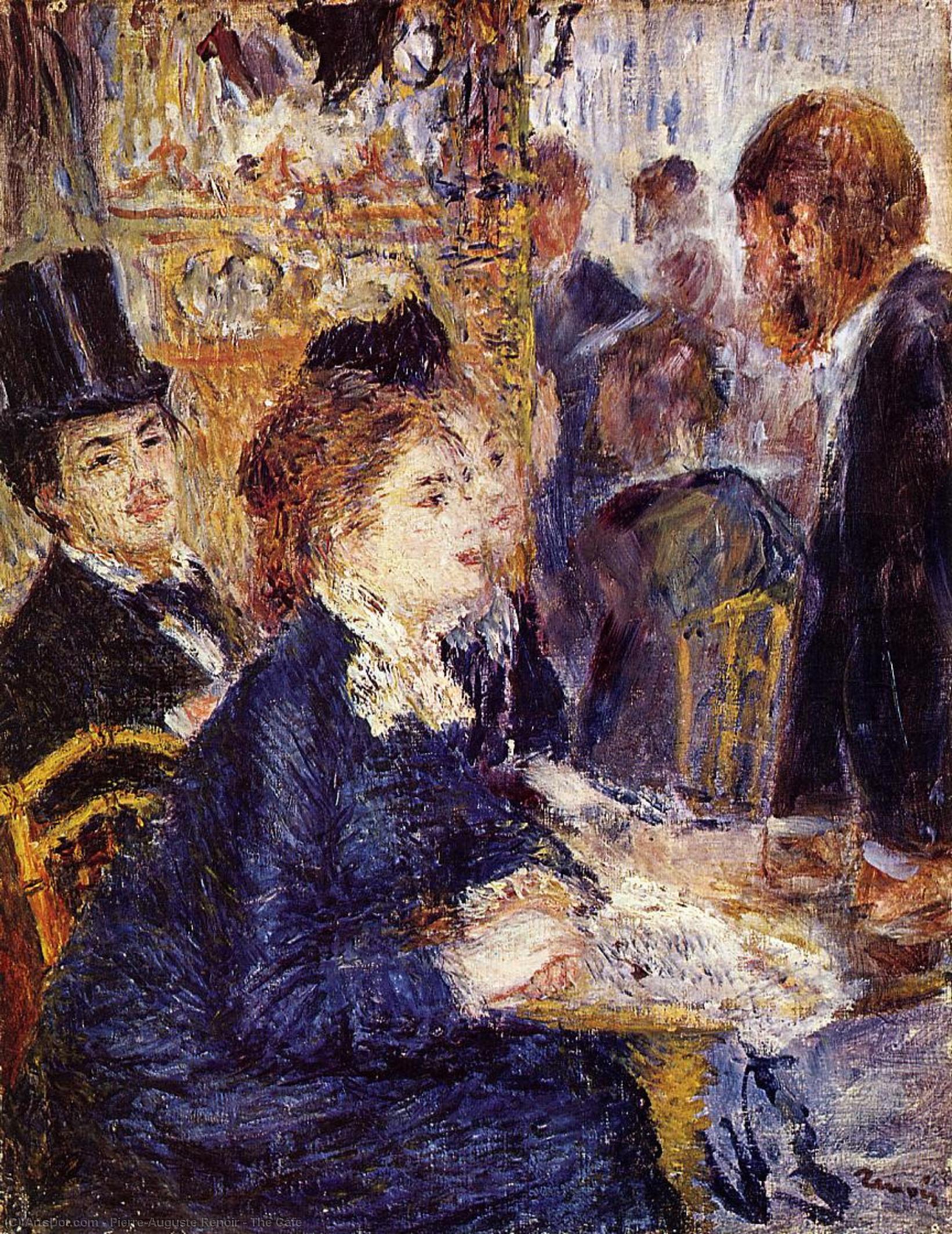
Experience Renoir's 'The Cafe,' a vibrant Impressionist snapshot of Parisian social life. Capture the energy and warmth of a bustling café scene, meticulously recreated in a stunning oil painting reproduction.
Otkrijte Pierre-Auguste Renoara, impresionističkog majstora poznatog po slikovitim portretima i prizorama pariškog života! Uživajte u njegovim radovima poput 'Plesa u Mölanu de la Galete' i otkrijte lepotu i svetlost u svakoj potezi.
A Snapshot of Parisian Life: Renoir’s “The Cafe”
Pierre-Auguste Renoir's "The Cafe," painted in 1875, stands as a quintessential emblem of Impressionism—a movement that irrevocably altered the course of art history. More than just a depiction of a café scene, it embodies Renoir’s masterful ability to distill complex emotions and experiences into luminous color palettes and delicately rendered brushstrokes. This oil on canvas masterpiece transports viewers back to late 19th-century Paris, capturing not merely what was seen but how it felt.
The Scene Unfolds: A Moment Frozen in Time
The painting captures a bustling café terrace during the golden hour—that fleeting period between sunrise and sunset when light casts long shadows and imbues everything with warmth. Renoir skillfully portrays a group of individuals engaged in animated conversation, their faces illuminated by dappled sunlight filtering through the foliage overhead. Tables laden with drinks and delectable pastries punctuate the space, fostering an atmosphere of convivial delight. Notice the subtle details—bottles strategically positioned on tables, reflecting the light, and figures moving gracefully amidst the chatter – all contributing to a palpable sense of immediacy and spontaneity.
Technique & Impressionistic Brilliance: Capturing Light’s Dance
Renoir's artistic prowess is immediately evident in his revolutionary approach to painting technique. Characteristic of Impressionism, he eschewed traditional academic conventions favoring loose brushstrokes that prioritize capturing the ephemeral qualities of light and color. Rather than meticulously blending hues to achieve smooth surfaces, Renoir applied paint in short, broken strokes—a technique designed to mimic the way our eyes perceive visual information. This method allows for a vibrant interplay of colors, creating an illusion of shimmering luminescence and conveying the vibrancy of the café environment. The artist’s masterful use of color – particularly yellows and oranges – powerfully communicates the warmth and optimism associated with this social gathering.
Historical Context: Paris at the Dawn of Modernity
“The Cafe” emerged during a pivotal moment in Parisian history—the burgeoning era of Impressionism coincided with significant societal transformations. Cafés had become central hubs for intellectual discourse, artistic experimentation, and social interaction, representing a departure from the rigid hierarchies of previous generations. Renoir’s painting reflects this cultural shift, portraying not just a picturesque scene but also an emblem of Paris's embrace of modernity and its celebration of everyday life. It stands alongside works by Monet and Degas as testament to Impressionism’s fascination with capturing fleeting impressions and conveying subjective experience—a precursor to the artistic movements that would define the 20th century.
Symbolic Resonance: Beyond Mere Representation
Beyond its technical brilliance, “The Cafe” resonates with symbolic significance. The café itself represents a space of openness, connection, and shared experience – ideals central to Impressionist thought. Renoir’s depiction of figures bathed in sunlight symbolizes vitality and joy, capturing the essence of human interaction and celebrating the beauty found within ordinary moments. Consider how Renoir's careful composition contributes to this emotional impact—the placement of figures and the interplay of light and shadow create a harmonious balance that invites contemplation and evokes feelings of warmth and nostalgia.