A Sun-Drenched Moment in Parisian Leisure
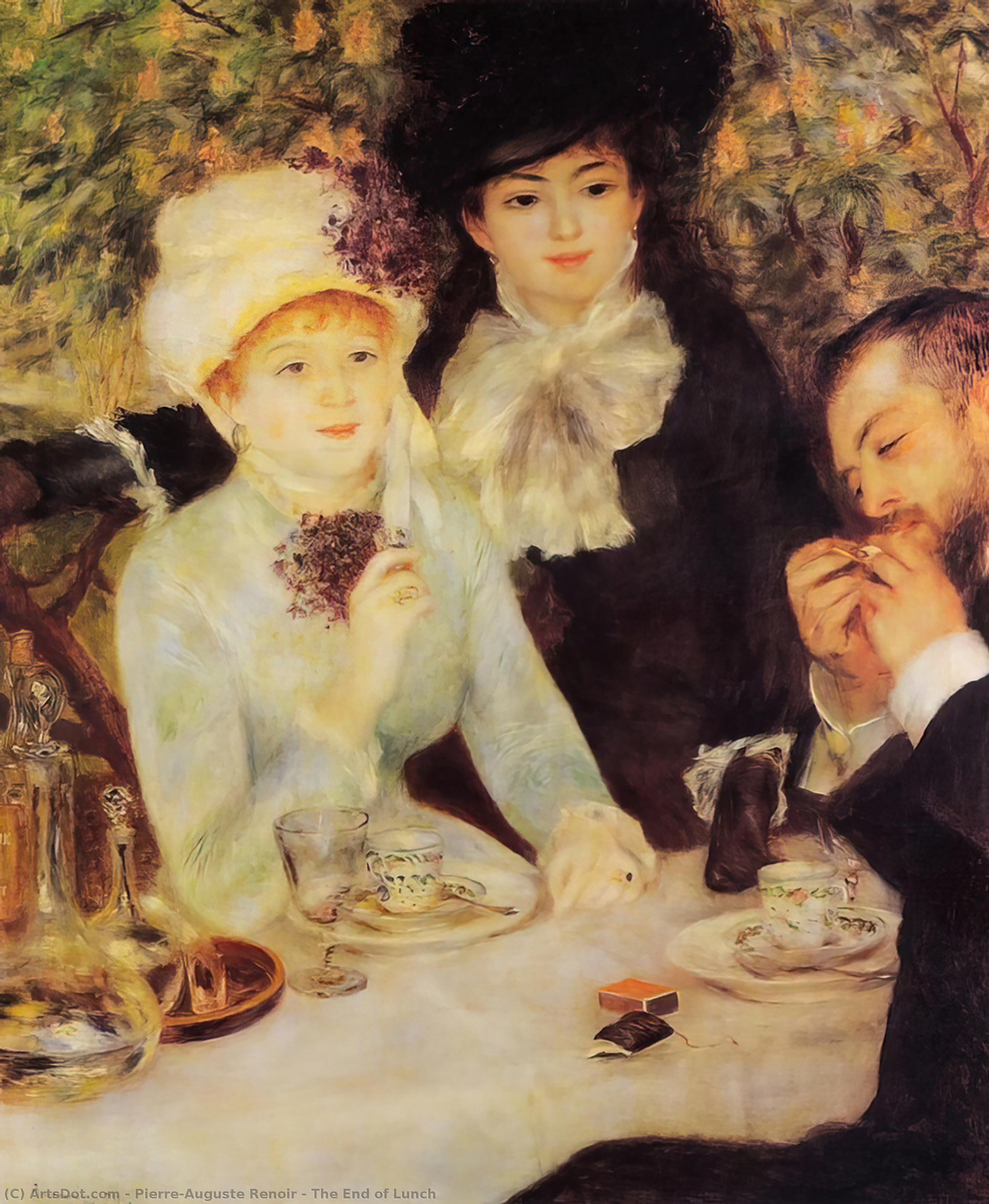
In the soft, dappled light of an afternoon long since passed, Pierre-Auguste Renoir’s 1879 masterpiece, “The End of Lunch,” invites us into a world of quiet elegance and sensory delight. This quintessential Impressionist work does not merely depict a scene; it captures the very essence of a fleeting moment, frozen in time with an exquisite tenderness. Set within the lush, verdant atmosphere of what appears to be a garden or a shaded bistro, the painting brings together three figures—Ellen Andrée, Marguerite Legrand, and Edmond Renoir—around a table that remains a testament to the joys of conviviality. As the meal draws to a close, there is a palpable sense of relaxed contemplation, where the clinking of glassware and the low murmur of conversation seem almost audible through the canvas.
Renoir, a master of capturing the ephemeral, utilizes his signature technique to dissolve the boundaries between subject and atmosphere. The painting is a symphony of light and color, where thick, visible brushstrokes work in harmony to mimic the way sunlight filters through overhead foliage, creating dancing patterns of warmth and shadow across the figures' clothing and the tabletop. By prioritizing the sensory experience of light over rigid anatomical precision, Renost allows the viewer to feel the gentle warmth of the sun and the breezy freshness of the outdoors. This approach transforms a simple social gathering into a luminous tableau that celebrates the beauty found in the most ordinary of human interactions.
The Artistry of Impressionist Light and Texture
To gaze upon this work is to witness the revolutionary spirit of the Impressionist movement at its zenith. Renoir eschews the heavy, dark tones of traditional academic painting in favor of a vibrant, luminous palette. He masterfully employs complementary colors—subtle violets and blues dancing against warm yellows and greens—to create a visual vibration that breathes life into the scene. The texture of the oil on canvas is particularly striking; the impasto technique adds a physical dimension to the light, making the white of a lady's hat or the glint of a wine glass appear to catch the actual light of the room in which the painting hangs.
Beyond its technical brilliance, the painting carries a profound emotional resonance. There is an understated intimacy in the way the figures are positioned—one lost in thought, another engaged in spirited dialogue, and a man quietly tending to his cigarette. It evokes a sense of nostalgia for a slower, more graceful era, making it an ideal centerpiece for any sophisticated interior. For collectors and designers alike, "The End of Lunch" offers more than just aesthetic beauty; it provides a window into the soul of 19th-century Paris, offering a timeless sense of peace, luxury, and the enduring charm of shared human connection.