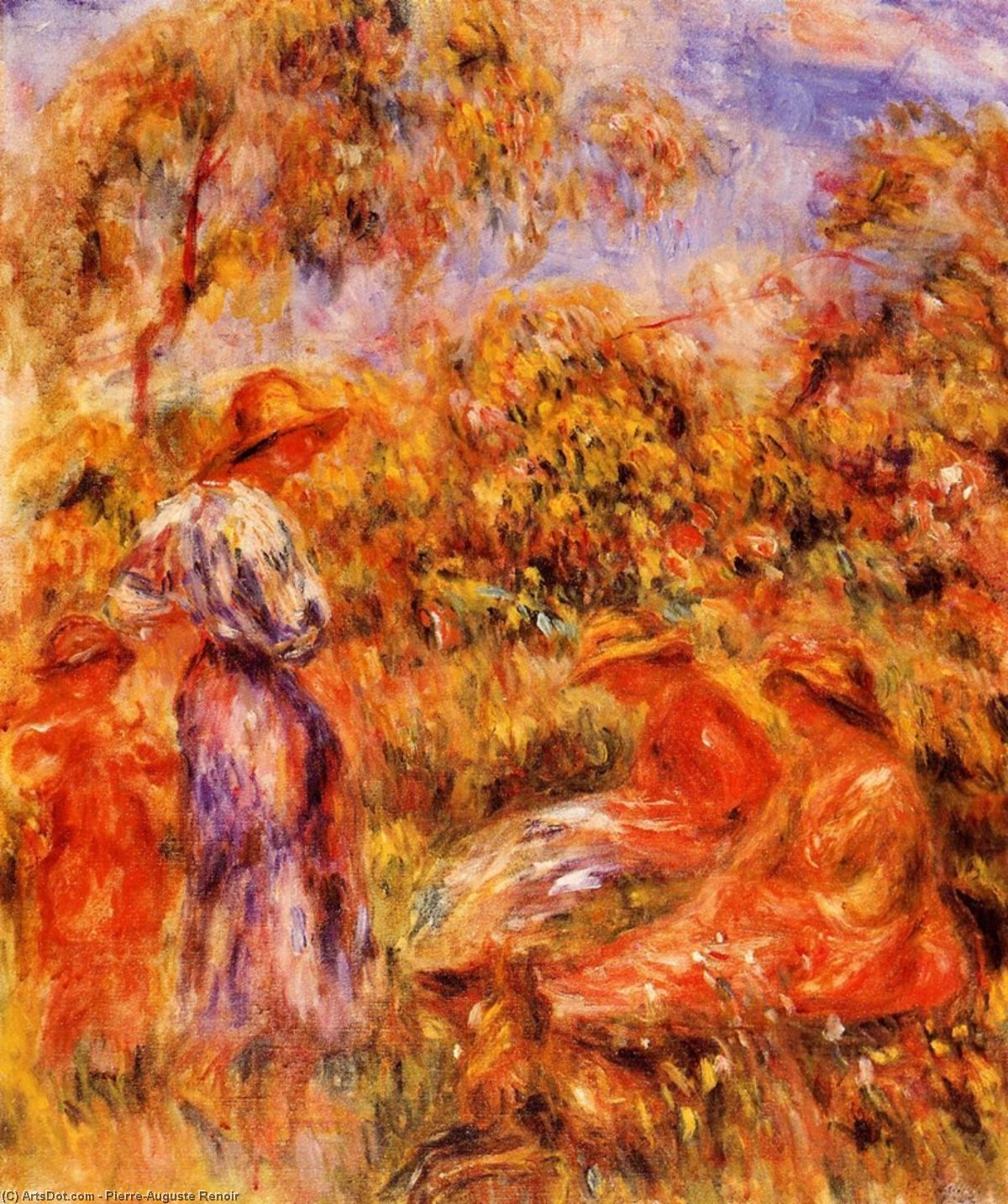
Subject and Composition of "Three Women and Child in a Landscape"
Pierre-Auguste Renoir's "Three Women and Child in a Landscape," painted in 1918, depicts a serene scene of domestic tranquility. The artwork portrays three women – likely members of his family – accompanied by a young child, standing amidst a lush, verdant landscape. The composition is carefully balanced; the figures are positioned centrally within the frame, creating a sense of harmony and stability. Two umbrellas suggest a pleasant day spent outdoors, adding to the overall feeling of leisure and contentment. The background features trees and foliage, rendered with Renoir's characteristic soft brushstrokes, contributing to the painting’s gentle atmosphere.
Impressionistic Style and Technique
"Three Women and Child in a Landscape" exemplifies Renoir's mature Impressionist style, though it shows a shift towards a more classical approach compared to his earlier works. Renoir masterfully employs light and color to evoke a sense of warmth and vibrancy. His technique involves short, broken brushstrokes that capture the fleeting effects of sunlight on the figures and landscape. The colors are rich and luminous, with subtle gradations creating depth and dimension. Unlike some of his earlier Impressionist paintings which focused more on capturing momentary impressions, this work demonstrates a greater emphasis on form and structure while retaining the characteristic softness and luminosity of his style.
Historical Context and Renoir's Late Period
Painted towards the end of World War I, "Three Women and Child in a Landscape" reflects a yearning for peace and domesticity amidst the turmoil of the era. Renoir had experienced significant personal challenges during this period, including health issues stemming from arthritis which made painting increasingly difficult. Despite these hardships, he continued to create art, often focusing on scenes of family life and nature as sources of solace and inspiration. This late-period work showcases a return to themes that were central to his artistic development – the beauty of women and children, and the joys of everyday existence. His visit to Italy in 1881 had also influenced his later style, leading him to incorporate elements of classical art into his Impressionistic approach.
Symbolism and Emotional Impact
Beyond its aesthetic appeal, "Three Women and Child in a Landscape" carries symbolic weight. The presence of the child represents innocence and hope for the future, while the women embody nurturing and familial bonds. The landscape itself symbolizes nature's restorative power and provides a backdrop of tranquility. The painting evokes feelings of warmth, serenity, and contentment. It is an intimate portrayal of family life that resonates with viewers on an emotional level, offering a glimpse into a moment of quiet happiness and connection.