A Symphony of Light and Serenity
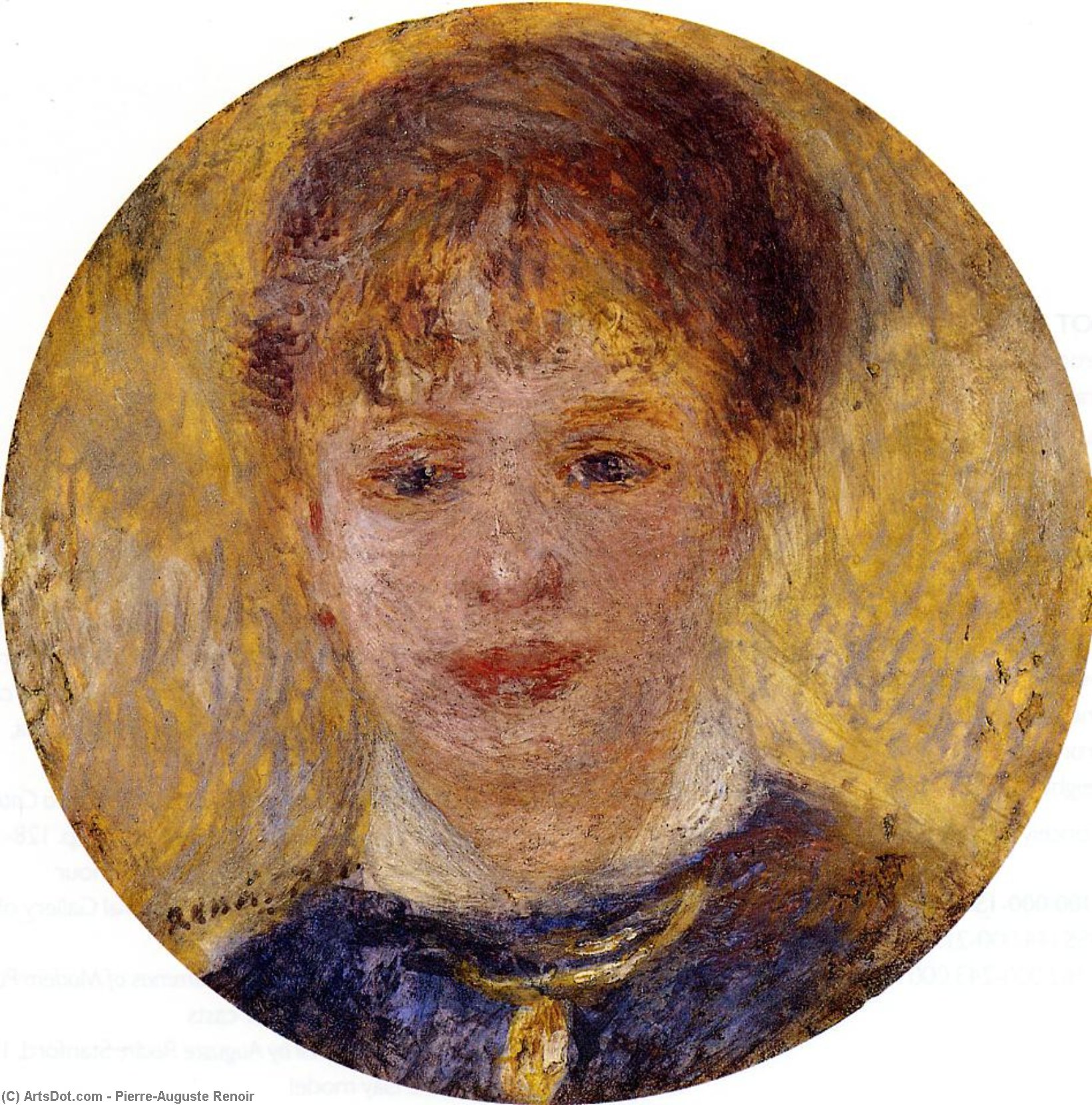
In the vast pantheon of Impressionist masterpieces, few works capture the quiet intimacy of a single moment as tenderly as Pierre-Auguste Renoir’s "Woman's Head 1." Painted in 1905, this portrait serves as a luminous window into the artist's soul, where the boundaries between subject and atmosphere begin to dissolve. At first glance, the viewer is met with the striking gaze of a woman whose expression oscillates between profound contemplation and a gentle, inviting presence. Her brown hair, framed by a delicate blue ribbon, and the subtle shimmer of a gold necklace are not merely decorative flourishes; they are anchors of elegance that ground the ethereal quality of the painting in a tangible, sophisticated reality.
Renoir, a master who spent his life chasing the ephemeral dance of light, utilizes this portrait to showcase the very essence of the Impressionist spirit. Rather than relying on the rigid, heavy outlines of academic tradition, he employs the technique of broken color. By applying small, rhythmic patches of pigment side by side, Renoir allows the viewer's eye to perform a subtle optical mixing. This creates a shimmering, breathing surface where light seems to vibrate across the woman's skin and the folds of her blue attire. The result is an illusion of depth and movement that makes the canvas feel less like a static image and more like a living, breathing memory captured in time.
The Art of Emotional Resonance
Beyond the technical brilliance lies a deep psychological nuance that elevates "Woman's Head 1" from a mere likeness to an exploration of human emotion. The subject’s direct yet thoughtful gaze invites a silent dialogue with the observer, prompting us to wonder about the thoughts held within her quietude. This sense of introspection is beautifully balanced by Renoir's warmth; even in her serious expression, there is an unmistakable softness—a hallmark of his ability to portray beauty without artifice. For the collector or the interior designer, this piece offers a unique emotional versatility. It possesses the gravitas required for a formal study, yet its luminous palette brings a sense of tranquility and light to any curated space.
To possess a reproduction of such a work is to bring a fragment of 19th-century French elegance into the modern home. The painting acts as a focal point that does not demand attention through loudness, but rather earns it through grace. Whether placed in a sun-drenched morning room or a sophisticated, dimly lit library, the interplay of the blue ribbon, the golden accents, and the soft skin tones provides a timeless aesthetic appeal. It is an invitation to slow down, to breathe, and to find beauty in the quiet, fleeting moments of existence—just as Renoir intended over a century ago.