The Intimate Echoes of Domesticity
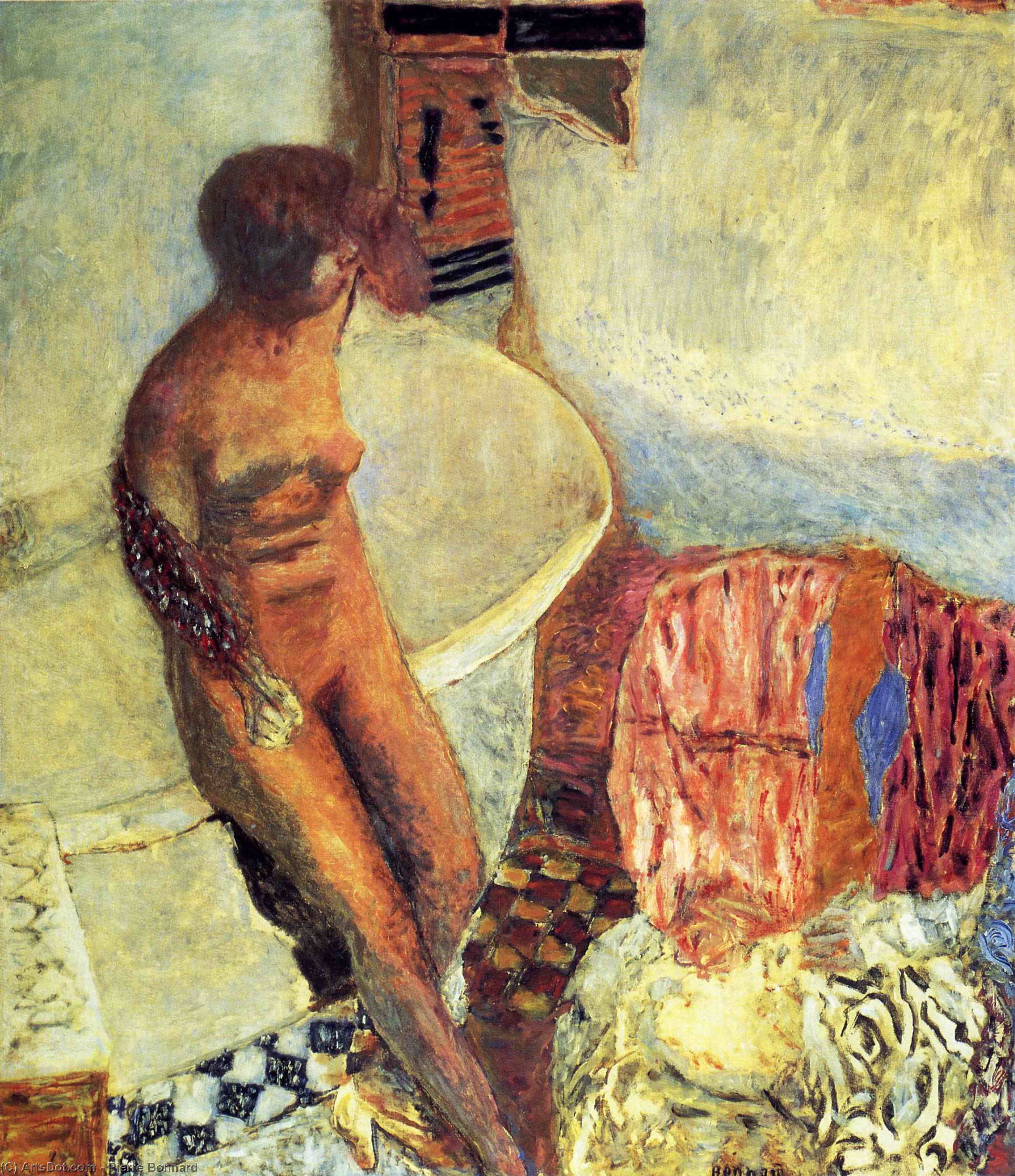
To stand before this depiction, Nude by the Bath Tub, is to step into a moment suspended between waking thought and deep repose. It is not merely a portrait of the human form within a bathroom setting; it is an immersion into memory itself. The composition immediately draws the eye into a space that feels both intensely private and strangely exposed. Bonnard masterfully captures the ambiguity inherent in domestic scenes—the quiet aftermath, the lingering presence. The central figure, rendered with such palpable warmth, seems caught in a wash of diffused light, inviting the viewer to contemplate vulnerability and the sheer physicality of being present.
A Symphony of Color and Form: Technical Mastery
Technically, this work is a vibrant testament to the expressive power of oil paint on canvas. One cannot help but notice the visible hand of the artist; the brushstrokes are not disguises for skill but rather celebrations of it. They are loose, gestural, and richly textured, creating an impasto surface that begs to be touched. The palette favors warm, earthy tones, allowing Bonnard to build up musculature and form through sheer chromatic resonance. This rejection of polished academic finish in favor of visible process is what gives the piece its raw, beating heart. The background elements—the geometric tiling, the indistinct walls—are treated with a similar freedom, ensuring that the emotional weight remains squarely on the figures while still grounding them within a recognizable, if dreamlike, environment.
Echoes of Style: Fauvism Meets Expressionism
Stylistically, the painting hovers beautifully between the vibrant color explorations of Fauvism and the subjective intensity of Expressionism. While Bonnard’s later work often retained an intimate domesticity, here the emotional charge elevates the scene beyond mere observation. The flattening of perspective and the overlapping, somewhat distorted organic shapes suggest that what we are seeing is less a literal room and more a feeling about being in one. This sense of fragmented perception—the way memory colors reality—is key to its enduring power. It speaks to an inner landscape rather than an outer vista.
Symbolism and the Dual Presence
The inclusion of a second, nude female figure positioned behind the central subject adds a layer of compelling narrative depth. This duality—two forms interacting within this intimate space—invites endless interpretation: is it companionship, contrast, or perhaps the contrasting states of self? Bonnard often explored themes of intimacy and the passage of time through his subjects. The nudes here become archetypes; they are explorations of the human condition itself—the interplay between visibility and concealment, desire and solitude. For the collector or designer, this piece offers not just decoration, but a profound conversation starter about connection.
Bringing Bonnard Home: Curating Emotion
To reproduce such an emotionally charged work is to capture its spirit of luminous immediacy. When considering this for your space, view it as a focal point that refuses to be merely decorative. It demands contemplation. The rich texture and the warm glow emanating from the canvas will interact beautifully with natural light, transforming any room into one imbued with Bonnard’s signature sense of lived-in, beautiful melancholy. Owning this reproduction is acquiring a piece of captured atmosphere—a vibrant echo of Parisian life filtered through the lens of profound feeling.