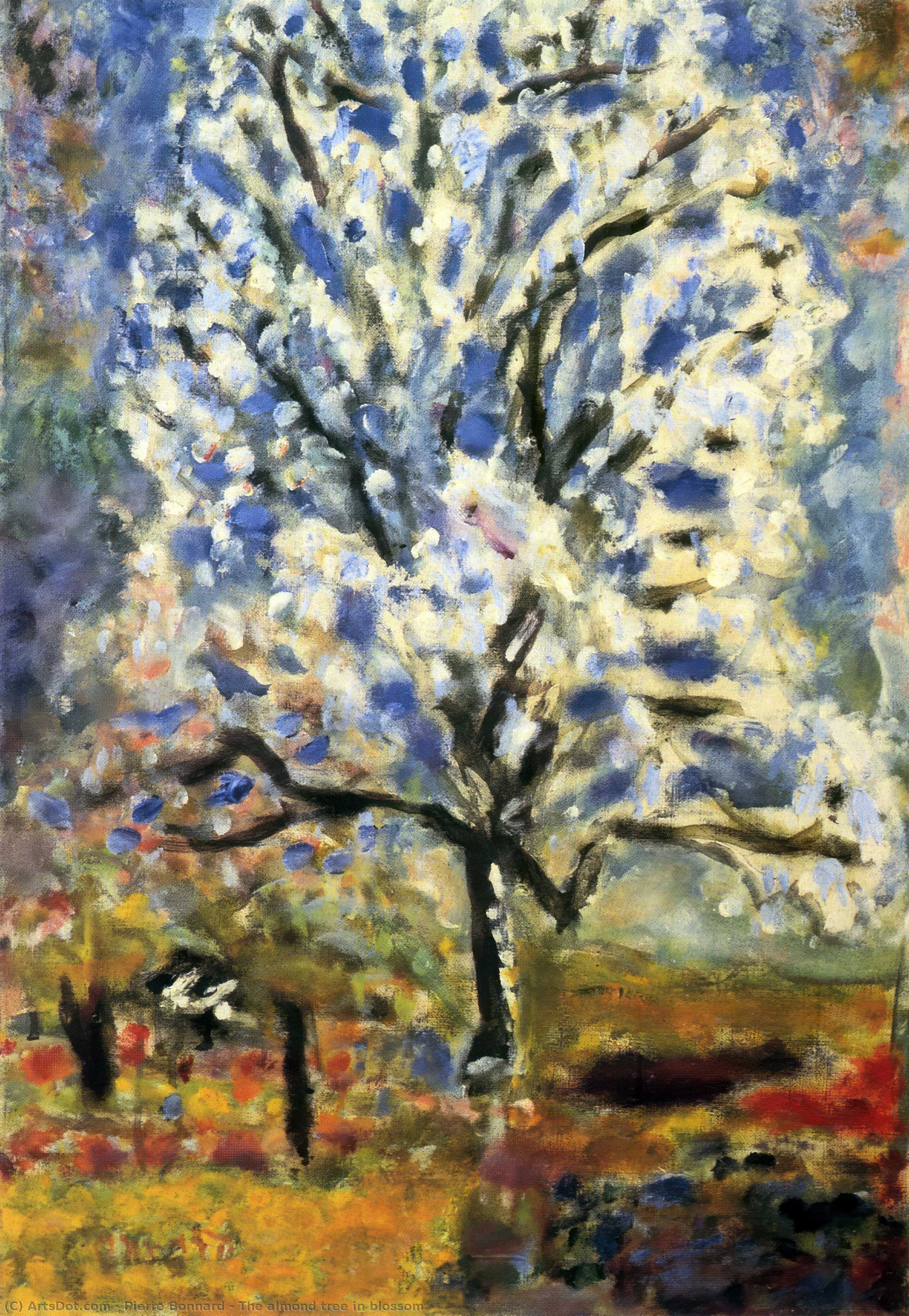
A Symphony of Color and Quiet Observation
Pierre Bonnard’s “The Almond Tree in Blossom” isn't merely a depiction of nature; it’s an embodiment of Impressionism’s lingering influence blended with the subtle introspection characteristic of Intimism. Painted sometime between 1890 and 1920, this artwork captures a moment of serene beauty—a single almond tree bursting forth with blossoms against a hazy Parisian backdrop.
Style and Technique: Bonnard's Distinctive Vision
Bonnard’s artistic approach departed significantly from the academic traditions of his time. He prioritized color above all else, employing bold hues that shimmered and blended seamlessly—a technique directly inherited from Impressionists like Monet and Sisley. However, unlike Impressionists who sought to capture fleeting impressions of light, Bonnard deliberately flattened perspective, creating a stylized decorative effect reminiscent of Japanese prints. This deliberate simplification wasn’t an abandonment of observation but rather a focused distillation of essence; as Bonnard himself famously remarked, “Today I saw the first almond tree blooming, and the mimosas are starting to make yellow spots.”
Historical Context: The Nabis Movement and Artistic Rebellion
Bonnard’s work flourished within the context of Les Nabis—a group of artists who challenged the prevailing artistic conventions. Influenced by Gauguin's expressive use of color and symbolism, they rejected realism in favor of capturing inner emotion and exploring subjective experience. The Intimism movement mirrored this ethos, prioritizing domestic scenes and conveying a sense of quiet contemplation – themes powerfully conveyed in “The Almond Tree.” Bonnard’s exploration of light and color served as a deliberate counterpoint to the grand narratives favored by earlier generations.
Symbolism: Blossoms as Representations of Renewal
Beyond its aesthetic beauty, "The Almond Tree in Blossom" carries symbolic weight. The almond tree itself is associated with rebirth and fertility—a motif frequently employed by artists throughout history. Bonnard’s masterful brushwork captures the delicate texture of the blossoms and branches, emphasizing their fragility yet radiating vibrancy. This careful attention to detail underscores the artist's desire to convey not just what he saw but also how he felt – a profound appreciation for the simple joys of existence.
Emotional Impact: A Moment Frozen in Time
Viewing “The Almond Tree in Blossom” evokes a feeling of tranquility and nostalgia. Bonnard’s palette—dominated by yellows, greens, and blues—creates an atmosphere of hazy warmth, inviting contemplation. The painting's understated composition draws the viewer inward, encouraging reflection on themes of beauty, solitude, and the cyclical rhythms of nature. It stands as a testament to Bonnard’s ability to transform ordinary subjects into expressions of profound emotion – a skill that continues to resonate with audiences today.