A Symphony of Joy: Rediscovering Bruegel’s Masterpiece
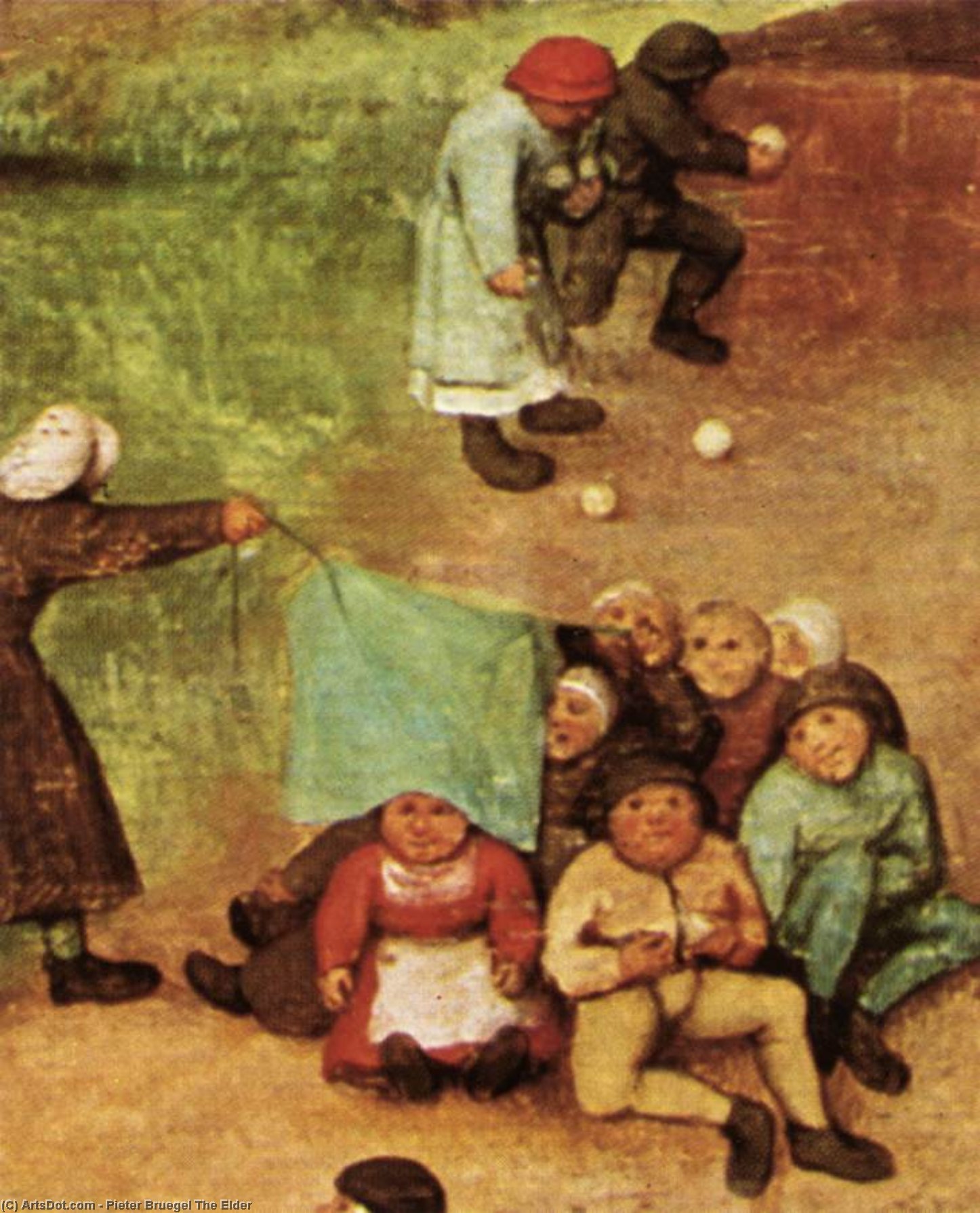
To gaze upon Pieter Bruegel the Elder’s Children's Games is to step through a portal into the vibrant, bustling heart of the sixteenth-century Flemish world. Completed around 1560, this monumental oil-on-panel work serves as much more than a mere collection of figures; it is an encyclopedic celebration of life in its most uninhibited form. Bruegel, a master of the Northern Renaissance, possessed a rare ability to elevate the mundane to the level of the magnificent. In this composition, he eschews the grand portraits of nobility to focus instead on the rhythmic, chaotic, and beautiful energy of youth. The painting unfolds with a bird's-eye perspective that allows the viewer to drift over a wide square, where the transition from urban architecture to a soft, rural horizon creates a sense of infinite possibility.
The sheer scale of human activity within the frame is nothing short of breathtaking. Bruegel meticulously documented what is often described as an encyclopaedia of Flemish childhood, capturing over eighty—some scholars suggest even more—distinct games that were played during his era. From the focused intensity of children rolling hoops and walking on stilts to the spontaneous laughter found in chasing pigeons or playing with knucklebones, every inch of the canvas pulses with movement. For the modern collector or interior designer, this piece offers a profound sense of vitality; it is a work that breathes, bringing an atmosphere of nostalgic warmth and communal spirit into any space it inhabits.
Technique and the Art of Observation
Bruegel’s technical prowess lies in his ability to manage immense complexity without sacrificing clarity. Using a sophisticated mastery of perspective, he guides the eye from the immediate, detailed foreground—where we might spot a discarded handbag or a stray ball—toward the distant, soaring church steeple that anchors the city center. His use of color is both earthy and evocative, utilizing a palette of ochres, deep browns, and soft sky blues that ground the scene in a tangible, historical reality. The figures themselves, though small in scale, are rendered with an incredible psychological depth; they are not mere decorations but individuals caught in moments of pure, unadultered concentration or glee.
The technique reflects the humanist ideals of the Renaissance, where the observation of the natural world and human behavior became a primary source of artistic truth. Bruegel does not embellish the lives of these children with fantastical elements; instead, he finds the extraordinary within the ordinary. He captures the textures of period clothing—the aprons and bonnets that mirror the adults of the time—and the humble nature of the toys, which were often fashioned from simple objects like pig's bladders or wooden sticks. This commitment to realism creates a powerful emotional resonance, bridging the gap between the sixteenth century and our contemporary experience of play and community.
A Timeless Legacy for the Discerning Collector
Beyond its historical significance, Children's Games offers a profound symbolic narrative. While some art historians have debated whether the painting serves as a parable for the foolishness of human behavior, a more tender reading suggests it represents the "Ages of Man," specifically the stage of Youth. It is a meditation on the cyclical nature of life and the foundational importance of play in shaping character. This duality—the ability to be both a complex historical document and an emotionally uplifting masterpiece—is what makes a high-quality reproduction of this work so coveted.
For those looking to curate a collection or design a room with a sense of narrative depth, this artwork provides an unparalleled focal point. It invites conversation, encourages slow looking, and infuses a room with a sense of historical grandeur and lightheartedness. Whether placed in a sophisticated gallery setting or as a centerpiece in a family home, Bruegel’s vision of childhood remains an enduring emblem of human connection, making it a timeless investment for any lover of fine art.