A Luminous Window into the Dutch Golden Age
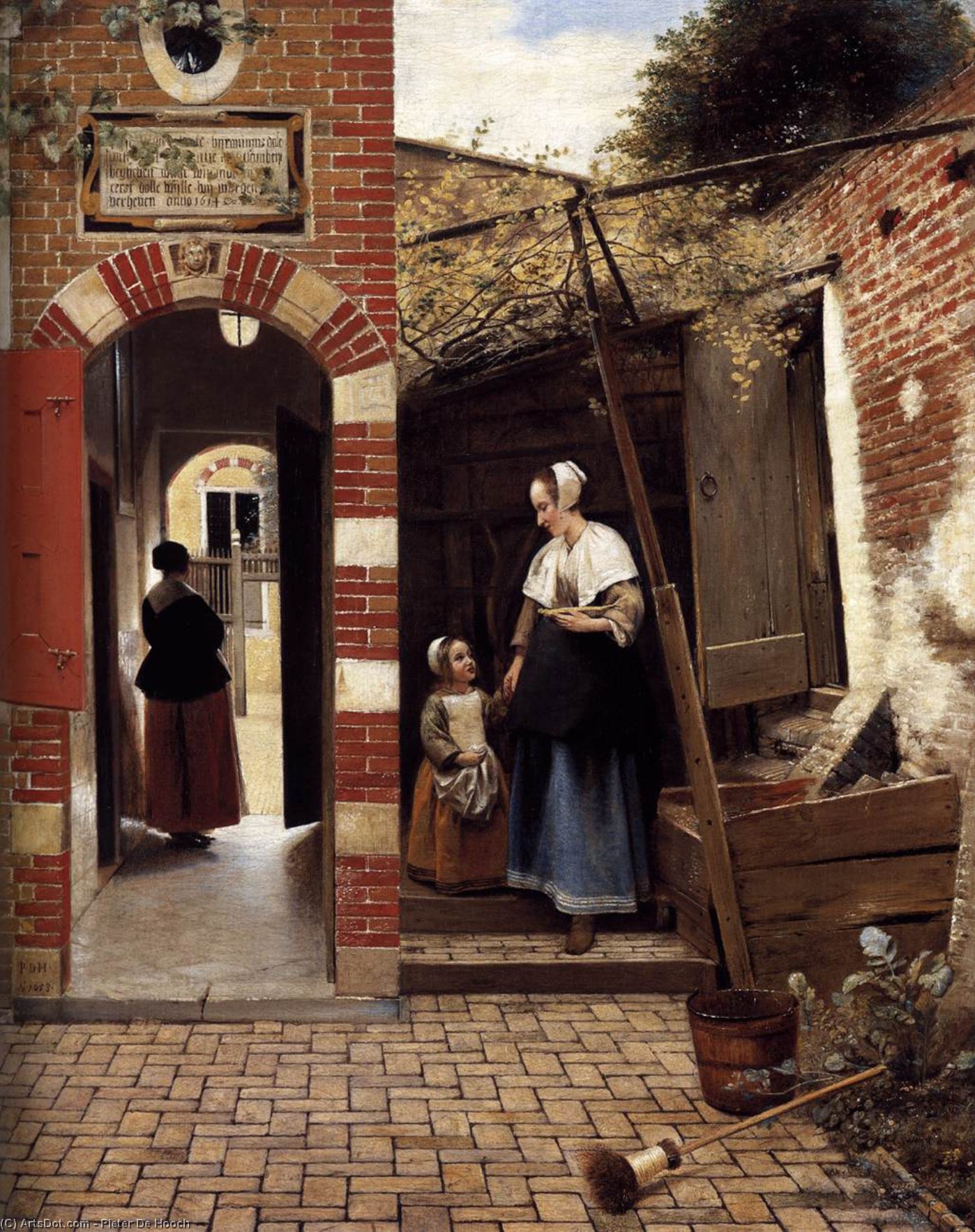
In the quiet corners of seventeenth-century Delft, where the light of the Netherlands dances through narrow streets and over brickwork, Pieter de Hooch captured a world of profound domestic serenity. His 1658 masterpiece, The Courtyard of a House in Delft, serves as more than a mere depiction of architecture; it is an invitation into a sanctuary of peace. As one gazes upon this canvas, the bustle of the outside world fades, replaced by the rhythmic, gentle pulse of everyday life. The scene unfolds within a sun-drenched courtyard, where the interplay of light and shadow creates a sense of depth so palpable that the viewer feels they might step through the frame and onto the cool, weathered stones of the Dutch pavement.
The composition is anchored by a tender moment of human connection: a young maid holding the hand of a small girl. This subtle interaction, far from being a staged portrait, breathes life into the stillness, suggesting a continuity of generations and the quiet dignity found in routine. Scattered throughout the courtyard, other figures move with a natural grace, their presence adding layers of social texture to this idealized domestic space. A single potted plant rests to the side, a small burst of greenery that punctuates the earthy tones of the brick and stone, reminding us of the care and cultivation inherent in the Dutch middle-class ideal.
The Mastery of Light and Atmospheric Depth
What truly distinguishes De Hooch from his contemporaries is his revolutionary approach to illumination. While many artists of the era sought drama through heavy shadows, De Hooch pursued a more ethereal, diffused glow. He utilized the delicate technique of glazing—applying thin, translucent layers of oil paint—to allow light to penetrate the surface and reflect back with an inner radiance. This method allows the sunlight filtering into the courtyard to feel soft and pervasive, rather than harsh, creating an atmosphere that feels almost breathable.
This mastery of light serves a structural purpose as well, guiding the eye through the complex layers of the courtyard. De Hooch uses light to define boundaries and create perspective, leading the viewer from the sunlit foreground toward the shaded recesses of the architecture. This technique foreshadows the Impressionist movement by centuries, prioritizing the sensory experience of atmosphere over rigid line work. For the collector or interior designer, this quality of light offers a unique psychological benefit; the painting does not merely occupy space, it transforms the ambiance of a room, infusing it with a sense of calm, clarity, and timelessness.
A Symbol of Stability and Refined Living
To understand this painting is to understand the soul of the Dutch Golden Age. During this period, the burgeoning middle class found pride in the stability of their homes and the order of their domestic environments. The courtyard depicted by De Hooch is a symbol of prosperity, cleanliness, and social harmony. Every element, from the well-maintained brickwork to the orderly arrangement of the figures, reflects the values of a society that found beauty in the mundane and sanctity in the private sphere.
For those seeking to curate an environment of sophistication, a high-quality reproduction of this work offers much more than decoration. It provides a focal point of historical depth and emotional resonance. Whether placed in a sunlit morning room or a quiet study, The Courtyard of a House in Delft acts as a window into a lost era of tranquility. It is an investment in atmosphere, bringing the enduring elegance of Dutch masterworks into the modern home, reminding us that even in our most hurried moments, there is profound beauty to be found in the stillness of a courtyard.