Discover Quentin Matsijs, founder of the Antwerp School! Explore his religious & satirical paintings, innovative techniques, & influential legacy in early Netherlandish art.
Otkrijte evropsku umetnost od 13. do 19. veka u Nacionalnoj galeriji Londona! Saznajte više o remek-delima Van Goga, Rembranta i drugih – ulaz je besplatan!
Ujedinjeno Kraljevstvo
London
Nacionalna Galerija
Rembrandtova 'Devica sa staklenikom'
Preko 2.300 slika
Muzej umetnosti
1824
Da bi se prikazala savremena britanska umetnost.
2
Koji je osnovni cilj Nacionalne Galerije?
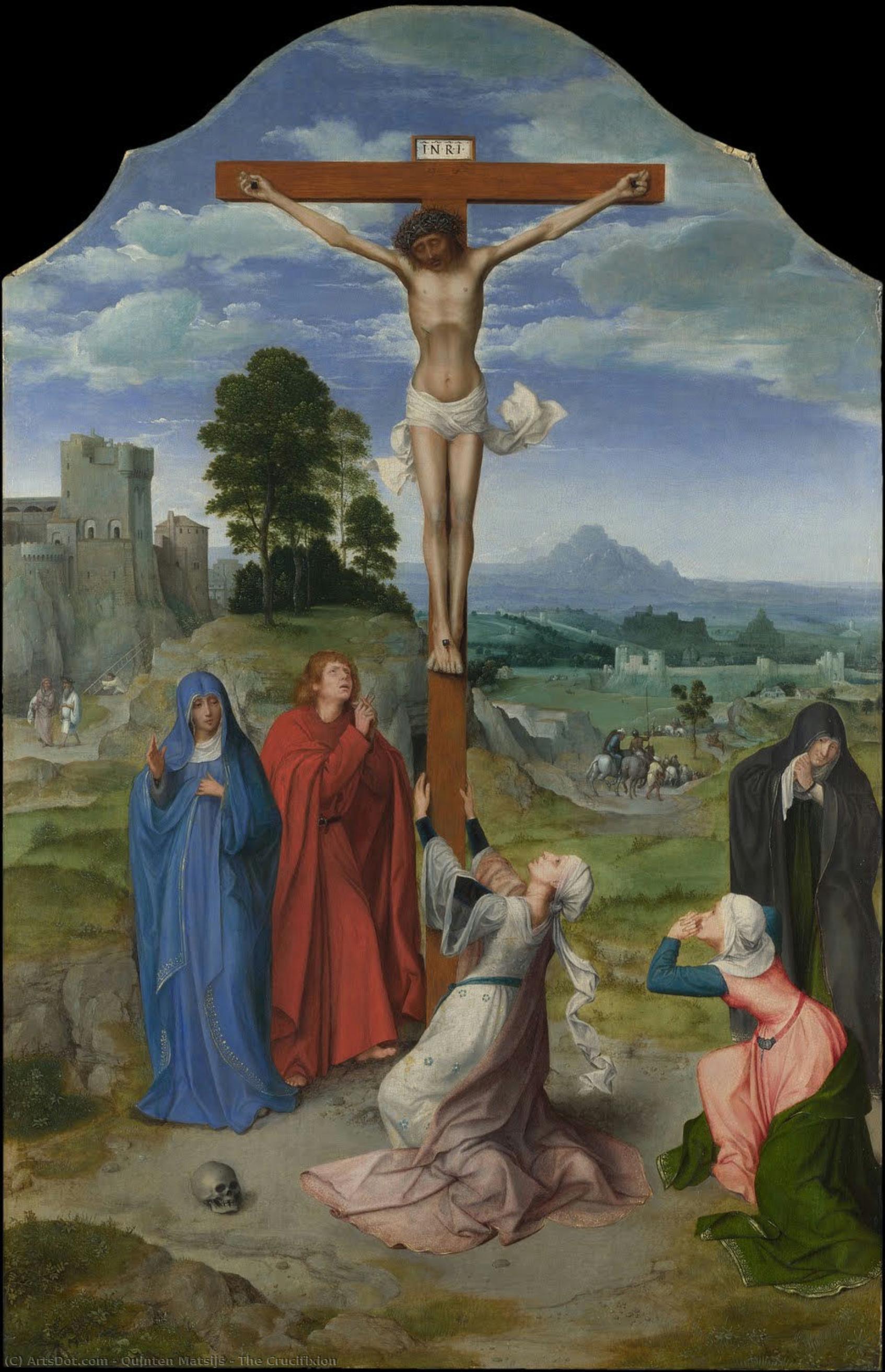
A Moment of Profound Piety: The Crucifixion
To stand before this depiction of The Crucifixion is to be enveloped in an atmosphere thick with solemnity and profound human emotion. This painting captures the ultimate sacrifice, a scene rendered with the meticulous detail characteristic of the early Netherlandish masters. At its heart hangs the figure of Christ, suspended against a backdrop that suggests both earthly drama and eternal contemplation. The composition is not merely a record of an event; it is a deeply felt meditation on suffering, redemption, and unwavering faith. One can almost feel the weight of history pressing down upon the figures gathered at the foot of the cross.
Mastery in Early Netherlandish Technique
Painted around 1515 by Quinten Matsijs, this work stands as a testament to his skill and influence during the burgeoning Antwerp School. Matsijs, whose career spanned the early decades of the sixteenth century, imbued his religious subjects with an almost palpable realism. Observe the handling of the drapery; each fold seems weighted with narrative significance, catching the light in ways that suggest both oil paint mastery and a deep understanding of human anatomy. The background, hinting at distant mountains, provides necessary depth, pulling the viewer's eye through the assembled figures—the grieving Virgin, Saint John the Evangelist, and Mary Magdalene clutching the foot of the cross—while simultaneously anchoring them to the central tragedy.
Symbolism Woven into the Scene
The narrative complexity is breathtaking. Beyond the immediate grief surrounding the cross, the periphery teems with symbolic weight. To the left, Joseph of Arimathaea and Nicodemus prepare for the descent, their presence speaking to ritual duty and quiet support. On the right, the returning soldiers add a touch of worldly contrast to the spiritual gravity of the moment. The inclusion of multiple Mary figures suggests layers of devotion—a visual chorus of sorrow echoing through history. These elements transform the painting from a simple depiction into a rich theological tapestry, inviting contemplation on different facets of piety and loss.
An Emotional Resonance for the Modern Collector
For those seeking art that speaks directly to the soul, this reproduction offers an unparalleled connection to the Renaissance spirit. The emotional impact is immediate; it demands reverence. Whether adorning a chapel, a study, or a grand hall, this piece carries the weight of centuries of devotion. Owning a high-quality rendition allows one to bring home not just paint on canvas, but a carefully preserved moment of profound human and divine drama—a focal point for quiet reflection in any sophisticated interior setting.