A Glimpse into the Heart of Craftsmanship
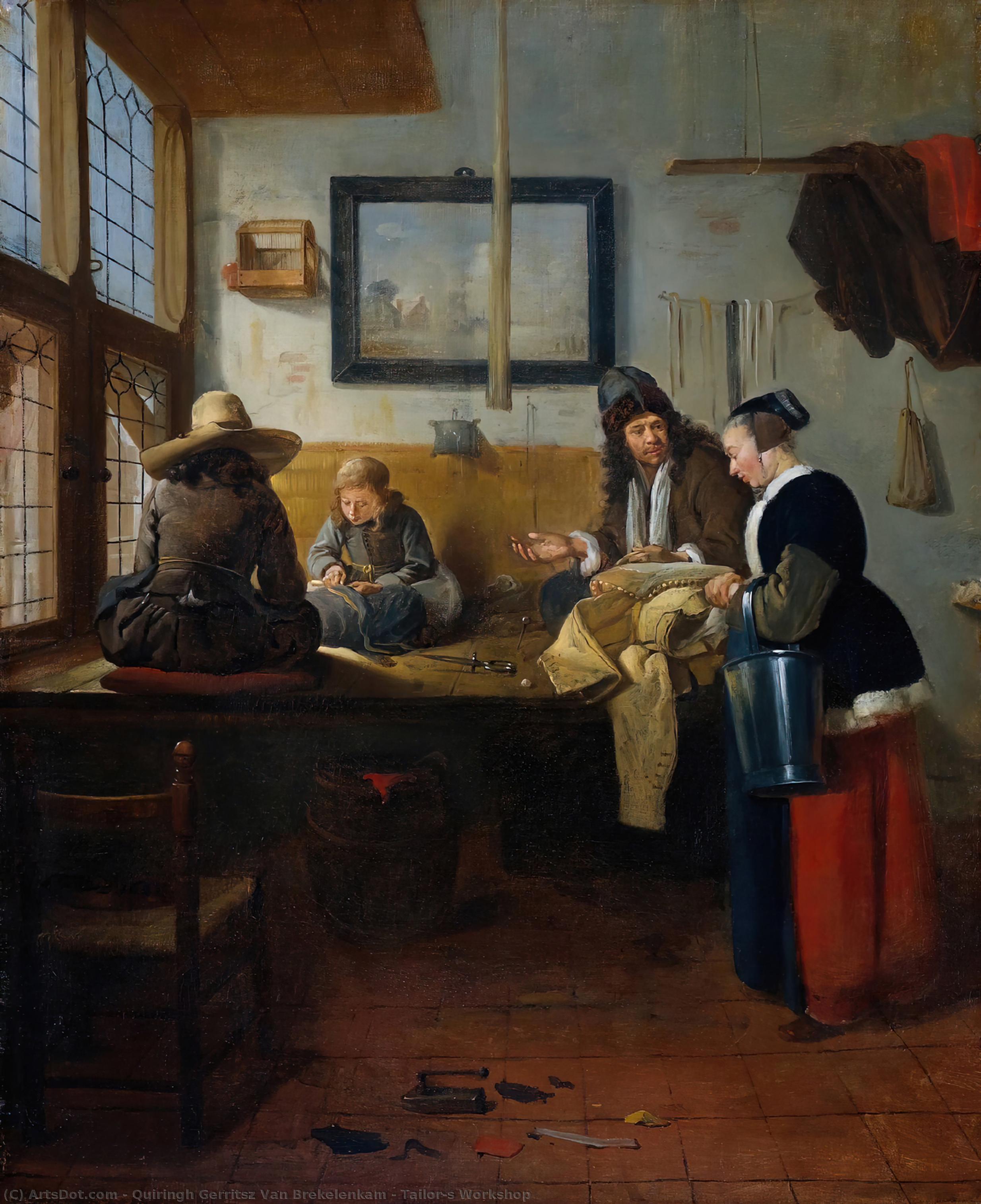
Step back with us into the bustling, intimate world depicted in this masterful scene, Tailor's Workshop by Quiringh Gerritsz. van Brekelenkam. This painting is far more than a mere depiction of industry; it is a vibrant tableau vivant, capturing the very pulse of life within a specialized artisan’s domain during the Dutch Golden Age. One can almost hear the rhythmic snip of scissors and the low murmur of conversation echoing off the walls. The composition draws the viewer deep into the activity, presenting a meticulously ordered chaos where human endeavor meets tangible creation.
The Art of Everyday Life in Miniature
Brekelenkam, trained in the exacting tradition of the Leiden fijnschilders, possessed an unparalleled gift for rendering the minute details of daily existence. Here, that skill shines through with breathtaking clarity. Observe the array of tools scattered across the tables—the gleaming scissors resting near a pile of books, the various bottles suggesting inks or specialized dyes. Every object seems imbued with purpose, contributing to the narrative tapestry of textile creation. The inclusion of multiple figures, engaged in conversation or focused on their tasks, grounds the work in palpable human interaction. It speaks to a community built around skill and exchange.
Historical Context and Technical Brilliance
Dating from 1661, this piece situates itself firmly within the zenith of Dutch mercantile prosperity. The workshop itself serves as a microcosm of the era’s economic engine—the burgeoning trade in fine goods, particularly textiles. Technically, Brekelenkam employs a precision that borders on the scientific; his handling of light and shadow allows the textures—be it the weave of cloth or the polished wood of the furniture—to leap out from the canvas. This masterful technique ensures that even the most peripheral elements contribute to the overall richness, inviting prolonged study from the appreciative collector.
Symbolism of Labor and Community
Beyond its documentary quality, Tailor's Workshop carries subtle symbolic weight. The act of tailoring itself symbolizes transformation—taking raw material and shaping it into something beautiful and functional for another life. Furthermore, the gathering of people around shared work speaks to the profound value placed on community and skilled labor during this period. For the modern admirer or designer, the painting offers a powerful meditation on craftsmanship in an increasingly mechanized world; it is a quiet celebration of human hands at work.
Bringing the Workshop Home
To own a reproduction of this piece is to invite a pocket of 17th-century Dutch vitality into your contemporary space. Its rich narrative depth and exquisite detail make it a stunning focal point for any room, particularly those designed with an appreciation for history or artisanal quality. It does not merely decorate; it tells a story of dedication, precision, and the enduring beauty found in human skill.