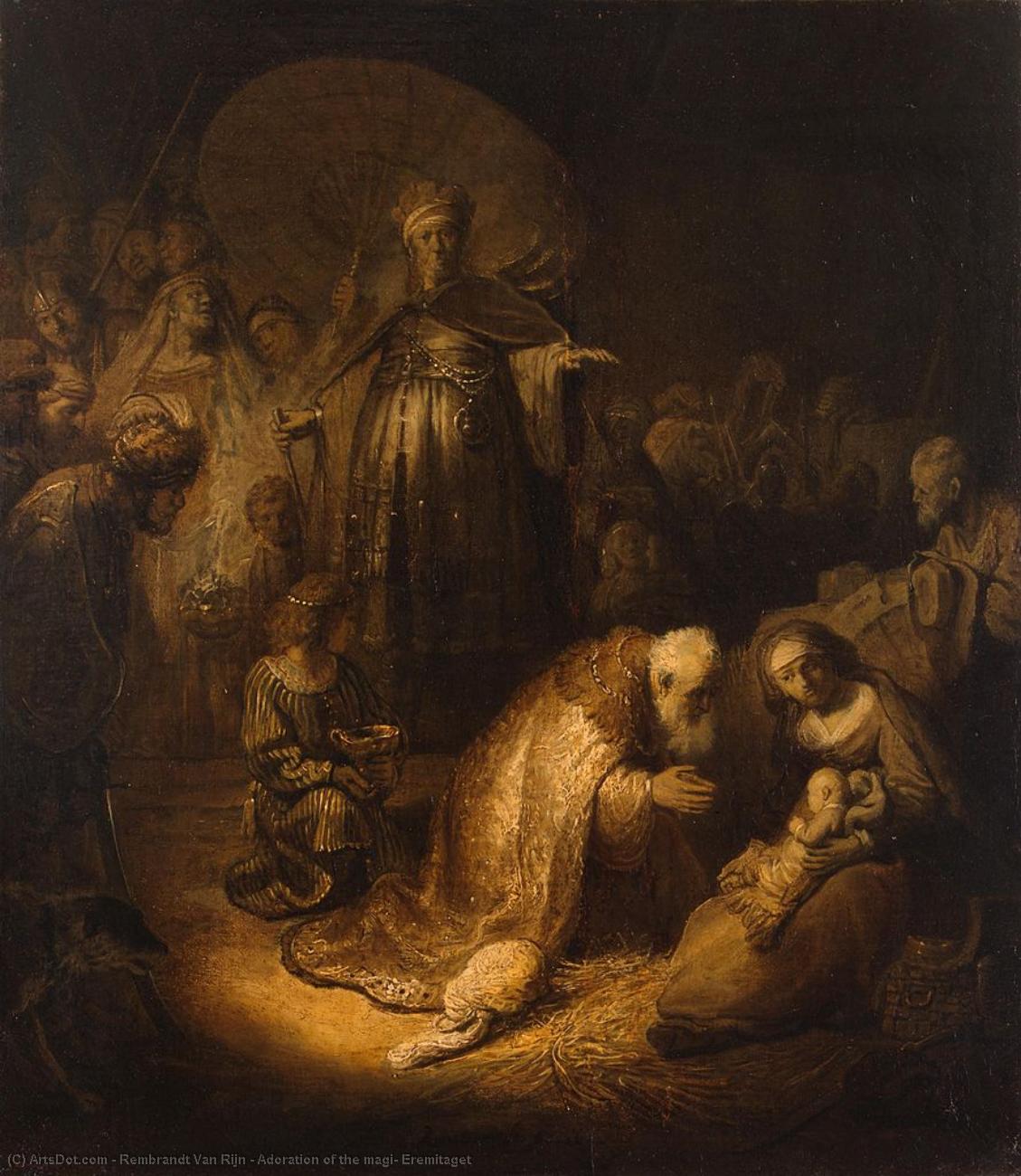
Experience Rembrandt's 'Adoration of the Magi,' a masterpiece brimming with light & shadow. Witness the biblical scene brought to life with profound emotion at ArtsDot.com.
Otkrijte Rembrandta van Rajna (1606-1669), holandskog baroknog majstora svetlosti i senke! Istražite ikonične autoportrete, biblijske prizore i revolucionarne gravure. Doživite Holandska zlatna dob.
A Window Into Faith: Rembrandt’s ‘Adoration of the Magi,’ Eremitaget
Rembrandt Harmenszoon van Rijn's “Adoration of the Magi,” housed at The Hermitage Museum in St. Petersburg, Russia, stands as a cornerstone of Dutch Baroque art and an enduring testament to Rembrandt’s unparalleled ability to convey profound emotion through masterful manipulation of light and shadow—a technique that would forever define his artistic legacy. Completed in 1632, this oil painting transcends mere depiction; it invites contemplation on themes of piety, humility, and divine grace.
Composition and Dramatic Light
Measuring 45 x 39 cm, the canvas presents a meticulously crafted scene from Matthew’s Gospel account—the arrival of the Magi bearing gifts for newborn Jesus Christ. Rembrandt eschews grand theatricality, opting instead for a deliberately subdued palette dominated by browns, ochres, and muted reds, creating an atmosphere of solemn reverence. However, it is the painting's illumination that truly captivates the eye. Rembrandt employs chiaroscuro—the dramatic interplay between light and dark—to sculpt figures from darkness, highlighting Mary’s serene countenance and Jesus’ infant form as focal points. The careful positioning of candlelight casts elongated shadows, emphasizing the depth of the room and drawing viewers into the intimate tableau.
Symbolism Embedded in Detail
Beyond its visual splendor, “Adoration of the Magi” is rich in symbolic significance. Rembrandt's inclusion of two birds—one perched atop a candlestick on the left and another nestled at Jesus’ feet on the right—adds layers of interpretation. Scholars believe these birds represent the Holy Spirit and the soul’s aspiration towards spiritual enlightenment – concepts central to Christian theology. The figures surrounding Mary and Joseph are rendered with remarkable realism, conveying individual expressions of awe and devotion. Each gesture and posture contributes to the overall narrative, reinforcing the painting's message of humility before God.
Influences from Venetian Masters
Rembrandt’s artistic vision was undeniably shaped by the prevailing stylistic currents of his time, particularly the influence of Venetian painters like Titian. Like Titian, Rembrandt prioritized capturing fleeting moments of emotion and conveying psychological depth rather than adhering to strict anatomical accuracy. This preference for expressive realism distinguishes “Adoration of the Magi” from earlier Northern Renaissance art forms, establishing it firmly within the burgeoning Dutch Golden Age aesthetic.
A Legacy Preserved: The Hermitage Collection
The painting’s current location at The Hermitage Museum underscores its importance as a cultural treasure—a masterpiece that continues to inspire admiration and scholarly debate centuries after its creation. Visitors can experience Rembrandt's genius firsthand, appreciating the enduring power of his artistic vision within this historic collection. Explore more masterpieces from Dutch Golden Age artists on ArtsDot.com for high-quality reproductions.