Rembrandt’s Tranquility: An Examination of Diana at Her Bath
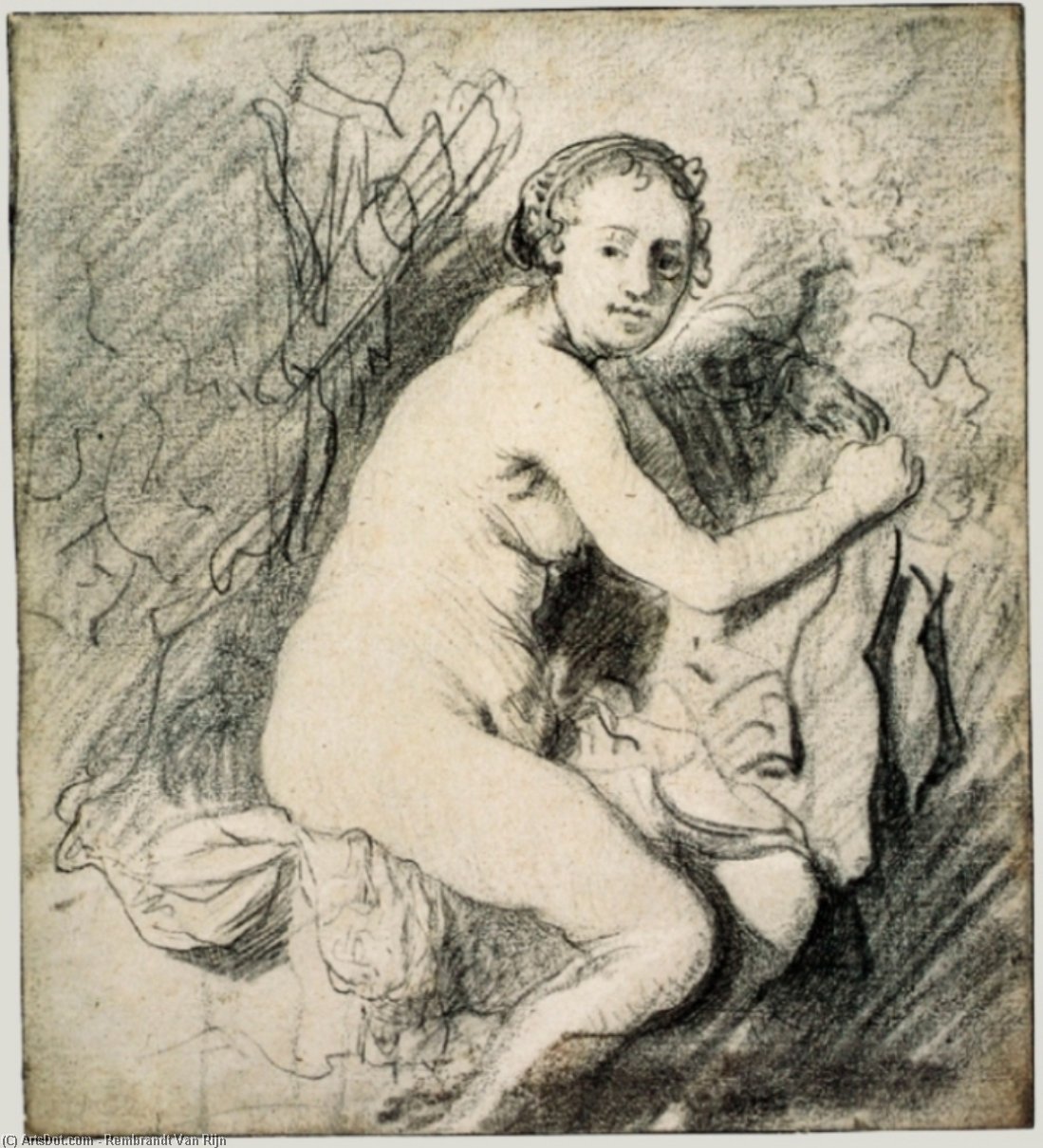
Rembrandt Harmenszoon van Rijn, arguably the most influential artist of the Dutch Golden Age, gifted us with an enduring image of serenity and contemplation – “Diana at Her Bath,” completed in 1630. Currently residing within the British Museum’s collection in London, this deceptively simple drawing transcends mere depiction; it embodies Rembrandt's unparalleled command of chiaroscuro and speaks volumes about the humanist ideals prevalent during his era.
- Subject Matter: The artwork portrays Diana, Roman goddess of the hunt and protector of chastity, seated gracefully on the ground. Accompanying her are three chairs—a deliberate inclusion that underscores themes of repose and domestic tranquility.
- Style & Technique: Rembrandt’s signature technique – chiaroscuro – dominates the composition. Dramatic contrasts between light and dark sculpt the figure and background, creating a palpable sense of volume and texture. The artist meticulously renders delicate lines with graphite, capturing subtle nuances of form and expression.
Historical Context: Created during Rembrandt’s formative years, “Diana at Her Bath” reflects the burgeoning interest in classical mythology within Dutch artistic circles. It aligns perfectly with the broader humanist movement that championed reason and observation alongside faith—a trend evident across numerous artistic endeavors of the period.
Symbolism & Emotional Impact: Beyond its aesthetic beauty, the drawing carries profound symbolic weight. Diana’s posture symbolizes self-sufficiency and inner peace, a deliberate counterpoint to the turbulent political landscape of Holland at the time. Rembrandt skillfully conveys this mood through understated gestures and facial expressions, inviting viewers into a moment of quiet reflection.
Further Exploration: For those seeking deeper insight into Rembrandt’s artistic vision or wishing to discover similar masterpieces, Museo de Arte de São Paulo (Brazil) – A Comprehensive Guide offers invaluable resources for art enthusiasts. Consider examining reproductions from ArtsDot to experience the brilliance of this iconic artwork firsthand.
- Recommended Reproduction: Explore high-quality reproductions of “Diana at Her Bath” on ArtsDot for a stunning visual experience.