Rembrandt’s Dramatic Intercession: Unveiling “Esther Preparing to Intercede with Assuerus”
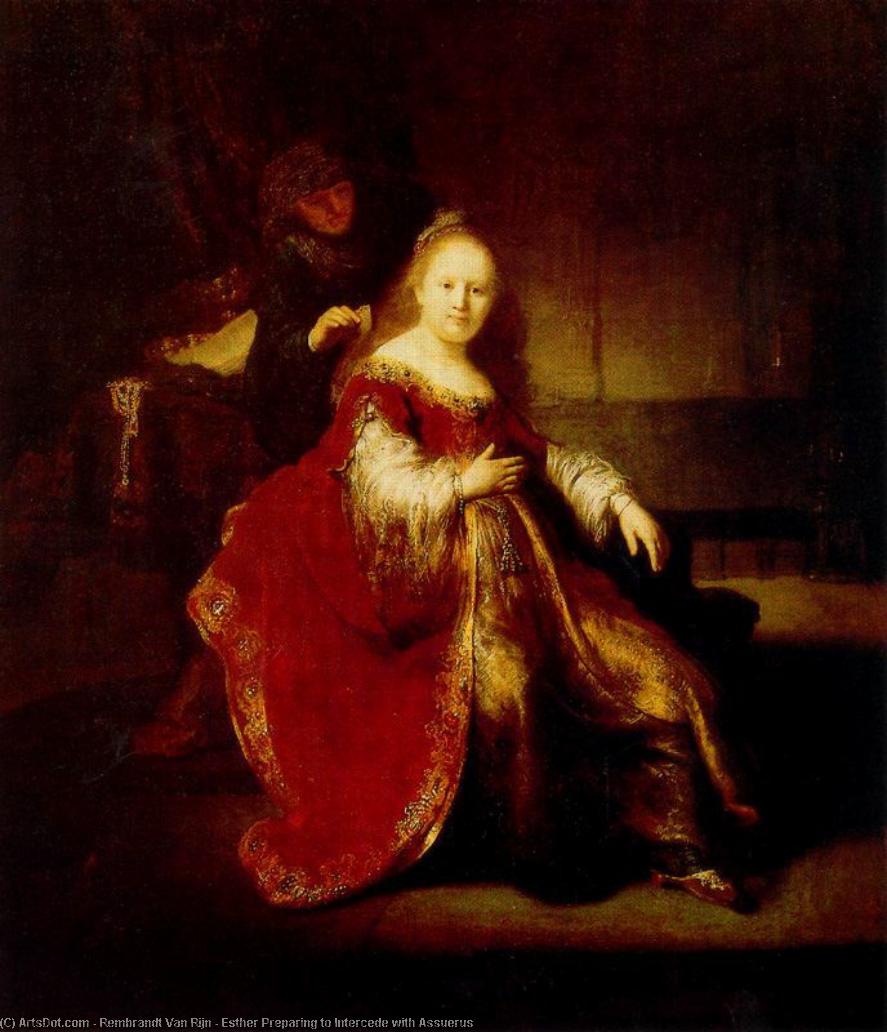
Rembrandt van Rijn's "Esther Preparing to Intercede with Assuerus," painted around 1635, is not merely a depiction of a biblical narrative; it’s a profound exploration of power, vulnerability, and the delicate balance between fate and human agency. This oil on canvas masterpiece transcends its historical subject matter, offering a timeless meditation on courage, faith, and the weight of responsibility. The painting captures a pivotal moment – Esther's quiet preparation before entering the opulent court of King Assuerus to plead for her people’s survival – and invites us into a world of carefully constructed shadows and luminous highlights, characteristic of Rembrandt’s signature style.
The scene unfolds within a richly appointed interior, though details are deliberately obscured. Esther, clad in a flowing crimson gown that immediately draws the eye, sits on a series of steps, her posture radiating both determination and apprehension. Her hands, clasped gently before her, suggest a controlled composure masking an inner turmoil. The use of chiaroscuro – Rembrandt’s masterful manipulation of light and dark – is utterly central to the painting's impact. A single, unseen source illuminates Esther’s face and upper body, casting the surrounding space into deep shadow. This dramatic contrast not only sculpts her form with remarkable volume but also emphasizes her isolation within the vastness of the royal court, highlighting the immense pressure she carries on behalf of her people.
A Biblical Narrative Illuminated
The story of Esther, a Jewish orphan who rose to become queen and bravely saved her people from annihilation at the hands of Haman, has resonated through art for centuries. Rembrandt’s interpretation departs subtly from traditional depictions, focusing less on the grand spectacle of royal courtly life and more on the intimate moment of preparation. He eschews overt heroism in favor of a nuanced portrayal of Esther's internal struggle – her quiet strength tempered by a deep awareness of the perilous situation she faces. The painting speaks to the universal experience of facing adversity with courage, relying on faith and inner resilience.
The historical context is crucial to understanding Rembrandt’s choices. Painted during a period of significant social and political upheaval in the Dutch Republic, the work likely reflects anxieties about religious persecution and the precariousness of power. The story of Esther served as a potent symbol of Jewish resistance against oppression, and Rembrandt's painting taps into this enduring narrative thread. The inclusion of two figures behind Esther – their faces partially obscured – adds an element of mystery and suggests the support network she relies upon, subtly reinforcing the theme of community and solidarity.
Symbolism and Artistic Technique
Beyond its narrative content, “Esther Preparing to Intercede with Assuerus” is rich in symbolic detail. The crimson gown, a color associated with royalty and sacrifice, underscores Esther’s elevated status and the weighty responsibility she carries. Her posture – seated rather than standing – conveys humility and deference while simultaneously projecting an aura of quiet authority. Rembrandt's meticulous attention to texture is equally noteworthy. He employs a layering technique, building up thin glazes of paint to create a velvety surface that seems to shimmer with light. The subtle variations in color and tone contribute to the painting’s overall sense of depth and realism.
Rembrandt’s use of brushwork is particularly striking. Notice the loose, expressive strokes that define the folds of Esther's gown and the shadows that envelop the background. This technique, known as “impasto,” adds a tactile quality to the painting, inviting viewers to engage with its surface on a visceral level. The overall composition—the diagonal lines created by the steps, the central focus on Esther’s figure—creates a dynamic tension that draws the eye and reinforces the drama of the scene.
Owning a Masterpiece: A Reproduction from ArtsDot.com
If you are captivated by Rembrandt's profound artistry and wish to bring this iconic image into your home, ArtsDot.com offers exquisite handmade oil painting reproductions that capture the essence of “Esther Preparing to Intercede with Assuerus.” Our skilled artists meticulously recreate every detail – from the subtle nuances of Rembrandt’s chiaroscuro to the rich textures of his brushwork – using only the finest materials and techniques. You can explore our extensive collection of Rembrandt's works, including this powerful portrait, on our website. We invite you to visit the Museum Boijmans Van Beuningen in Rotterdam to experience the original firsthand and appreciate Rembrandt’s genius. Furthermore, you can delve deeper into his life and work on Wikipedia for a comprehensive overview of this remarkable artist.