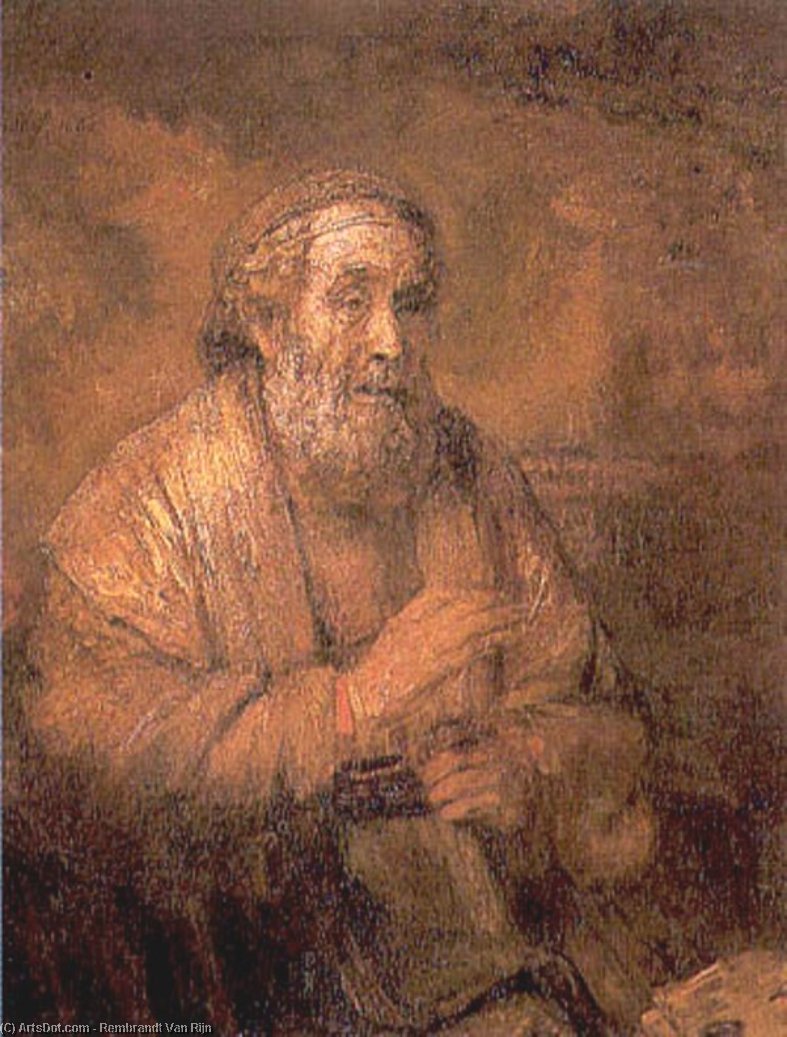
A Masterful Gaze: Unveiling Rembrandt’s “Homer”
Rembrandt van Rijn's 1663 portrait, “Homer,” is a captivating study in age, intellect, and the power of contemplation. Housed within the prestigious Mauritshuis Royal Picture Gallery in The Hague, Netherlands, this painting offers a profound glimpse into Rembrandt’s unparalleled ability to capture not just likeness, but *essence*. Measuring 108 x 82 cm, it's an intimate work that rewards close observation and invites deep reflection.
Subject & Historical Context
The subject is traditionally identified as the ancient Greek poet Homer, though this attribution remains somewhat speculative. Regardless of precise identity, Rembrandt presents a figure embodying wisdom and artistic legacy. Painted during the Dutch Golden Age – a period of immense prosperity and cultural flourishing in the Netherlands – “Homer” reflects the era’s growing interest in classical antiquity alongside its burgeoning self-awareness as a center of intellectual and artistic innovation. Rembrandt, while never traveling abroad, was deeply influenced by Italian masters, blending their techniques with uniquely Dutch sensibilities. The painting's creation also falls within a period of personal hardship for Rembrandt, adding layers of emotional resonance to the work.
Style & Technique: A Symphony of Light and Shadow
“Homer” is quintessential Rembrandt – a prime example of his masterful use of
chiaroscuro, the dramatic interplay between light and shadow. This technique isn’t merely aesthetic; it directs the viewer's eye, emphasizing the subject’s face and hands—the instruments of thought and creation. The blurred background further isolates the figure, intensifying the sense of intimacy and concentration. Rembrandt employed a thick impasto technique, layering paint to create texture and depth, particularly noticeable in the beard and clothing. This tactile quality brings the portrait to life, making it feel remarkably present. The loose, expressive brushstrokes contribute to an overall feeling of immediacy and emotional honesty.
Symbolism & Interpretation
While not overtly symbolic, “Homer” is rich with suggestive meaning. The book held by the figure represents knowledge, learning, and the enduring power of storytelling. His deeply furrowed brow and contemplative gaze suggest a mind wrestling with complex ideas – perhaps even composing verses in his imagination. The aged appearance of the subject speaks to the accumulation of wisdom that comes with time and experience.
It’s a portrait not just *of* an intellectual, but *about* intellect itself.
Emotional Impact & Artistic Legacy
“Homer” evokes a sense of quiet dignity and profound introspection. The painting doesn't shout for attention; it draws you in with its subtle power and emotional depth. It’s a work that invites viewers to contemplate their own thoughts, experiences, and the enduring human quest for knowledge and understanding. Rembrandt’s influence on subsequent generations of artists is immeasurable. His innovative techniques, psychological insight, and commitment to portraying humanity in all its complexity continue to inspire awe and admiration today.
Exploring Rembrandt's Wider Oeuvre
- The Night Watch: A monumental masterpiece showcasing Rembrandt’s skill in group portraiture and dynamic composition.
- Self-Portrait with Two Circles: Demonstrating his innovative use of light, shadow, and symbolic imagery.
- Bathsheba at Her Bath: A poignant depiction of a biblical scene, revealing Rembrandt’s sensitivity to human emotion.
For those seeking to experience more of Rembrandt's genius, numerous resources are available online, including the Mauritshuis Royal Picture Gallery website and ArtsDot.com, which offers high-quality reproductions of his iconic works.