Rembrandt’s Flight into Egypt: A Dutch Masterpiece of Light and Shadow
Rembrandt van Rijn's “La Fuite En Egypte, tours Mba,” painted in 1627, isn’t merely a depiction of the biblical story; it’s a profound exploration of faith, fear, and familial love rendered with the artist’s signature mastery. This early work, now available as a meticulously crafted hand-painted reproduction from ArtsDot.com, offers a captivating glimpse into the nascent stages of Rembrandt's revolutionary style – a style defined by its dramatic use of chiaroscuro, emotional intensity, and an unparalleled ability to capture the human spirit within a seemingly simple narrative.
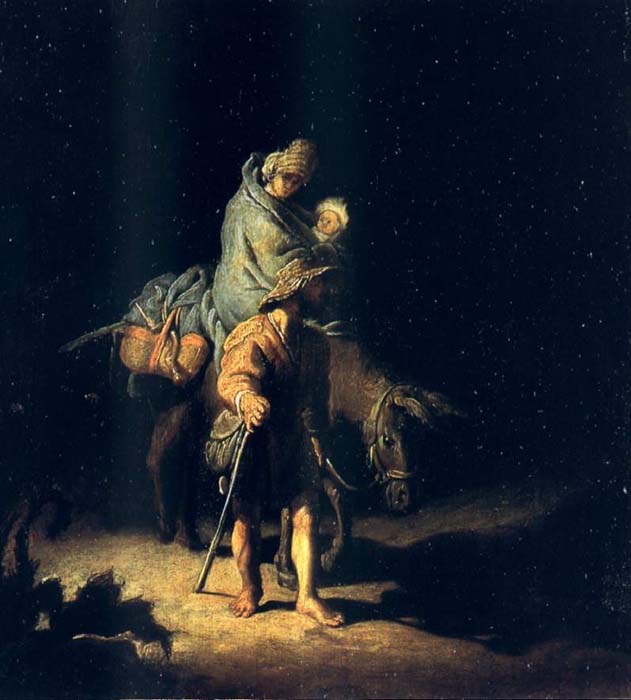
The scene unfolds against a backdrop of impenetrable darkness, a deliberate choice that immediately establishes a sense of urgency and vulnerability. A man, presumably Joseph, rides a horse with two figures – Mary and the infant Jesus – perched precariously atop it. The composition is strikingly diagonal, guiding the viewer’s eye from the lower left corner where Joseph stands, resolute and protective, towards the upper right, where Mary and the child are positioned amidst what appears to be a fleeting sense of hope. Two dogs flank the group, adding an element of dynamic movement and perhaps symbolizing loyalty or vigilance in this perilous journey. Rembrandt's genius lies not just in the literal representation but in the way he uses these elements to create a palpable atmosphere of anxiety and determination.
The Language of Light: Chiaroscuro and Emotional Resonance
Rembrandt’s masterful manipulation of light and shadow, or chiaroscuro, is arguably the painting's most defining characteristic. The figures are bathed in an ethereal glow, emerging from the darkness as beacons of hope. This dramatic contrast isn’t simply a technical device; it serves to amplify the emotional weight of the scene. The strong directional lighting highlights Joseph’s face, conveying his unwavering resolve and protective instincts. Mary's expression is one of quiet sorrow and profound love, while the infant Jesus appears serene amidst the chaos. The darkness itself becomes symbolic – representing the threat posed by Herod, the uncertainty of their future, and perhaps even the spiritual shadows that accompany such a momentous flight.
A Window into Dutch Golden Age Art
"La Fuite En Egypte" is a quintessential example of Rembrandt’s early Baroque style, firmly rooted in the flourishing artistic environment of the Dutch Golden Age. His apprenticeship under Pieter Lastman, known for his dramatic lighting and dynamic compositions, undoubtedly influenced this work. However, Rembrandt quickly surpassed his mentor, developing a uniquely personal approach that prioritized emotional truth over mere imitation. This painting demonstrates his experimentation with texture – the rough fabric of Joseph’s clothing contrasts with the smooth skin of the child – and his growing confidence in capturing the subtle nuances of human expression. It's important to note that this piece was created during a period of significant religious upheaval, and Rembrandt’s work often reflects these complex social and spiritual currents.
Symbolism and the Journey of Faith
Beyond its narrative content, “La Fuite En Egypte” is rich in symbolic meaning. The dark background can be interpreted as representing the dangers and uncertainties that lie ahead, while the light symbolizes divine protection and hope. The journey itself – a desperate flight from persecution – becomes a metaphor for the human condition: a constant struggle against adversity, fueled by faith and love. Rembrandt’s ability to imbue such a familiar biblical story with such profound emotional depth is what elevates this painting beyond mere illustration and establishes it as a timeless masterpiece of Western art. Consider also the significance of the dogs; they are often associated with loyalty and guardianship, reinforcing the protective role Joseph plays in safeguarding his family.