A Titan of Light and Shadow: Encountering Rembrandt’s Moses
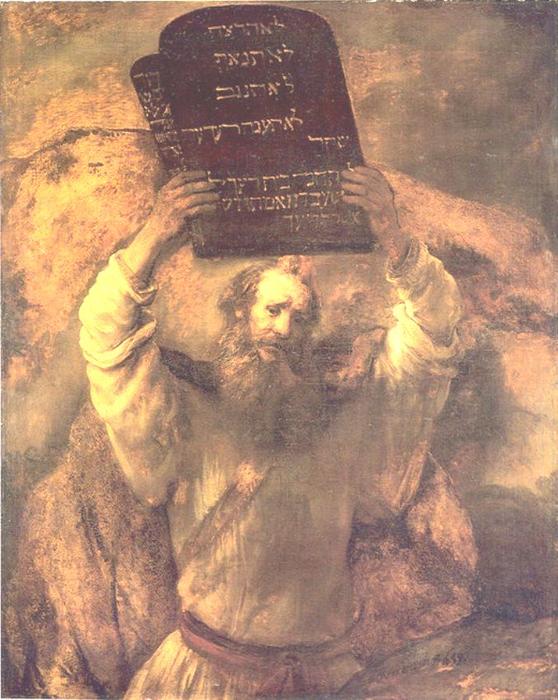
In the pantheon of the Dutch Golden Age, few works command the room with such visceral authority as Rembrandt van Rijn’s Moses. Completed in 1656, this monumental canvas is far more than a mere biblical illustration; it is a profound psychological study rendered in oil and light. As the viewer approaches this imposing figure, they are immediately struck by the sheer scale of the composition. Standing at an impressive 169 x 137 cm, the painting does not merely sit upon a wall—it inhabits the space, projecting a presence that is both intimate and overwhelming. Rembrandt captures the prophet Moses not as a distant icon, but as a man gripped by the weight of divine revelation, his weathered face and flowing beard serving as a testament to a life shaped by spiritual struggle and leadership.
The technical brilliance of this masterpiece lies in Rembrandt’s unparalleled mastery of chiaroscuro. The artist orchestrates a dramatic interplay between profound darkness and an ethereal, singular light source that seems to emanates from within the scene itself. This light bathes Moses' forehead and hands in a celestial glow, drawing the eye irresistibly toward the Ten Commandments held aloft. Through the painstaking application of translucent glazes, Rembrandt builds layers of depth that allow subtle tonal variations to emerge, creating a skin texture so realistic it feels palpable. The rugged, mountainous backdrop, shrouded in deep, velvety shadows, provides a stark, textural contrast to the illuminated figure, heightening the emotional tension and grounding the divine moment in a tangible, earthly reality.
Symbolism and the Weight of Divine Law
Beyond its technical virtuosity, the painting serves as a rich tapestry of theological and political symbolism. Moses, depicted with a three-quarter view that lends him an expressive, larger-than-life presence, embodies the virtues of faith, righteousness, and the heavy burden of authority. The stone tablets he holds, inscribed with the Hebrew alphabet, represent the immutable law of God. There is a lingering, scholarly debate regarding whether this moment captures the destruction of the first tablets or the presentation of the new ones, yet this ambiguity only adds to the painting's evocative power. Whether we witness an act of righteous fury or a moment of solemn delivery, the emotional stakes remain palpably high.
For the discerning collector or interior designer, incorporating a high-quality reproduction of this work offers more than just aesthetic beauty; it introduces a sense of historical gravity and intellectual depth to a space. The painting’s ability to evoke contemplation makes it a centerpiece for sophisticated environments—be it a private library, a grand study, or a curated gallery wall. It is a piece that invites the gaze to linger, prompting reflections on themes of justice, morality, and the enduring human connection to the divine. To possess such an image is to hold a fragment of the Dutch Golden Age, a window into a period where art reached its zenith in capturing the very essence of the human soul through the manipulation of light and shadow.