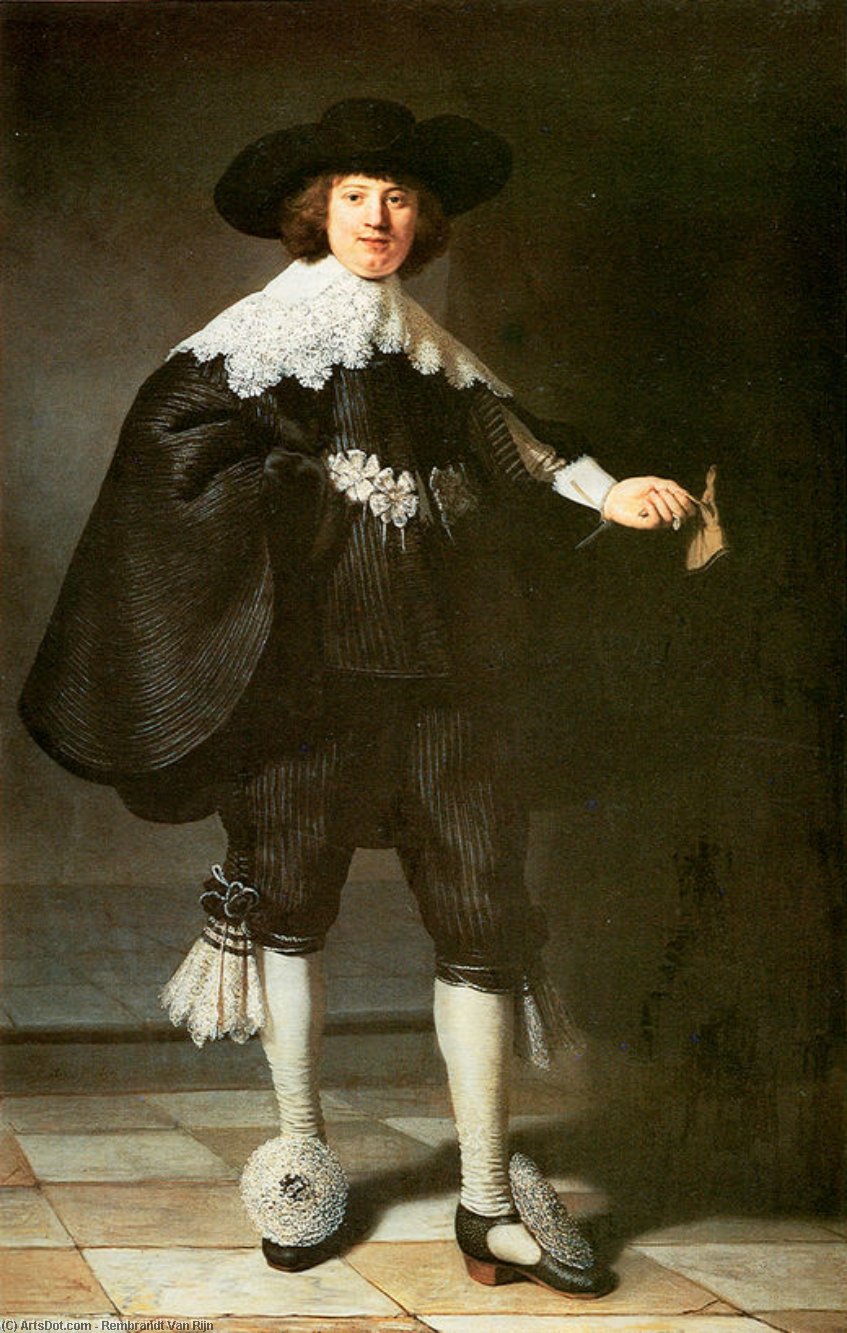
A Window Into Dutch Elegance: Rembrandt’s Portrait of Marten Soolmans
Rembrandt van Rijn's "Portrait of Marten Soolmans," painted in 1634, stands as a cornerstone of the Dutch Golden Age and an enduring testament to his unparalleled ability to convey psychological depth through masterful technique. More than just a depiction of a wealthy merchant, this painting delves into the complexities of human emotion and embodies the artistic ideals prevalent during Rembrandt’s formative years. Captured in oil on canvas measuring 207 x 132 cm, it's a visual narrative that continues to fascinate scholars and collectors alike.
The Subject: A Reflection of Status and Character
Marten Soolmans, a prominent Antwerp-born businessman who sought refuge in Amsterdam following the Protestant Reformation, is portrayed with dignified composure. His attire—a sumptuous black coat adorned with intricate white lace trim—immediately communicates his social standing and reflects the opulent tastes of the era. The hat, meticulously crafted, adds to the portrait’s formality, while the ruffled collar speaks volumes about fashion sensibilities during Rembrandt's time. Beyond mere ornamentation, however, Rembrandt skillfully captures Soolmans’ gaze – a subtle hint of melancholy that invites contemplation on inner thoughts and feelings. This careful observation distinguishes Rembrandt from many of his contemporaries who prioritized idealized representations.
Technique: The Dance of Light and Shadow - Chiaroscuro Mastery
Rembrandt's signature technique—chiaroscuro—is brilliantly executed in this portrait. He employs dramatic contrasts between light and dark to sculpt Soolmans’ form, creating a palpable sense of volume and dimensionality. Light illuminates the face and upper torso, highlighting key features while casting deep shadows across the clothing and background. This masterful manipulation of light isn't merely decorative; it serves as an emotional tool, conveying introspection and hinting at hidden anxieties—a characteristic that defines Rembrandt’s artistic vision. The artist meticulously blended pigments to achieve subtle gradations of tone, demonstrating a profound understanding of optical illusion and furthering his goal of capturing the essence of human experience.
Historical Context: Religious Influence and Artistic Renaissance
The painting emerged during a period marked by significant religious upheaval—the Dutch Reformation—yet Rembrandt’s work transcends doctrinal concerns. The Christian art movement championed biblical themes and imagery, influencing artists to portray saints and narratives with reverence and emotional intensity. However, Rembrandt's approach is distinctly humanist; he prioritizes capturing the individual character of his subjects rather than adhering rigidly to religious dogma. This reflects a broader artistic trend toward psychological realism that distinguished the Dutch Golden Age from other European nations.
Symbolism: Beyond Appearance – An Exploration of Inner Life
While outwardly representing wealth and status, “Portrait of Marten Soolmans” operates on multiple symbolic levels. The dark clothing symbolizes seriousness and contemplation, mirroring Soolmans’ gaze. The lace trim signifies refinement and aristocratic taste—a visual shorthand for social prestige. Rembrandt's subtle use of shading contributes to the portrait’s emotional impact by suggesting an inner turmoil beneath a veneer of composure. He invites viewers to consider not just what is seen but also what lies hidden within the subject’s psyche – a hallmark of Rembrandt’s artistic genius.
Emotional Impact: A Timeless Portrait
Ultimately, “Portrait of Marten Soolmans” resonates with audiences centuries later because it succeeds in conveying profound emotion. Rembrandt's ability to capture the complexities of human psychology remains unparalleled. The portrait compels us to confront questions about identity, vulnerability, and the elusive nature of inner life—themes that continue to captivate artists and viewers alike. It stands as a poignant reminder of Rembrandt’s enduring legacy as one of history’s greatest painters and an exemplar of artistic excellence.
- Explore more Rembrandt masterpieces at ArtsDot: Portrait of Oopjen Coppit
- Discover similar artistic styles and techniques on our website.