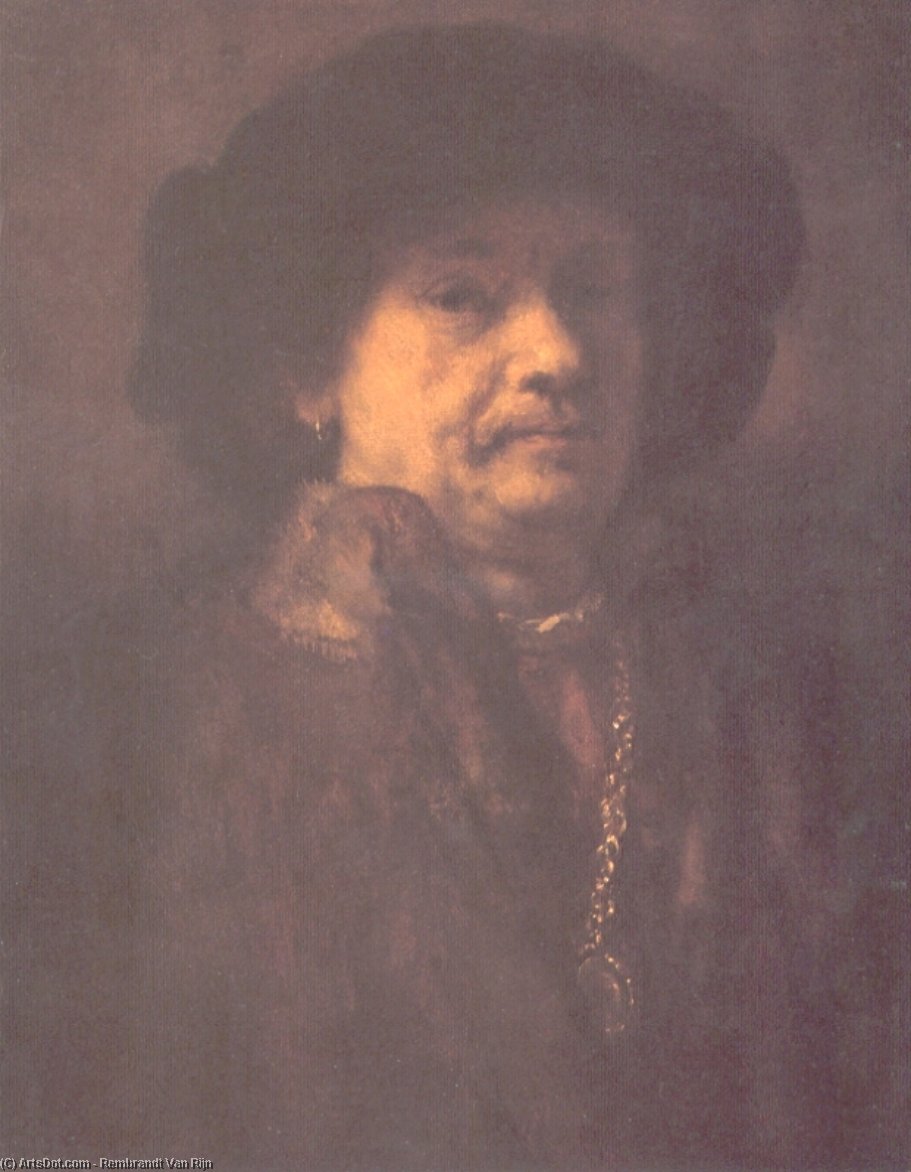
Self Portrait (19) – Rembrandt’s Introspective Vision
Rembrandt van Rijn, arguably the most celebrated artist of the Dutch Golden Age, bequeathed to posterity an unparalleled legacy of artistic achievement. Among his prolific output, Self Portrait (19) stands as a cornerstone of his oeuvre—a poignant meditation on identity and artistic vocation executed with breathtaking precision.
Size: 66 x 53 cm – Medium: Oil on panel – Location: Kunsthistorisches Museum, Vienna, Austria
This painting transcends mere representation; it’s a window into Rembrandt's psyche. He presents himself with a dignified posture, adorned by a feathered hat—a symbol of status and artistic aspiration—and encircled by a chain representing wealth and worldly success. Yet, his gaze is directed outwards, engaging the viewer in an unspoken dialogue about contemplation and self-awareness.
Artistic Significance: Mastery of Light and Shadow
Rembrandt’s mastery of chiaroscuro – the dramatic interplay between light and dark – elevates this portrait beyond a likeness to an embodiment of artistic philosophy. As Christopher White eloquently describes, “one of the most magisterial and sombre of these (late) pictures,” reflecting Rembrandt's profound understanding of human emotion.
The artist skillfully utilizes subtle gradations of tone to sculpt the face, highlighting the contours of his cheekbones and emphasizing the melancholic expression in his eyes. This technique wasn’t merely stylistic; it served as a conduit for conveying inner turmoil—a characteristic prevalent throughout Rembrandt's oeuvre.
Historical Context: Habsburg Vienna and Artistic Patronage
The Kunsthistorisches Museum, Vienna, provides invaluable context for appreciating Self Portrait (19) within the broader artistic landscape of Habsburg Europe. During Rembrandt’s lifetime, Vienna was a vibrant center for aristocratic patronage—a realm where artists like Rembrandt sought commissions to elevate their reputations and solidify their positions.
The museum's collection showcases masterpieces from across centuries, mirroring Rembrandt’s own ambition to capture the essence of his time and transmit it to future generations.
Beyond Technique: Symbolism and Emotional Resonance
Microscopic analysis reveals a fascinating detail—a local imprimatura beneath the surface paint layer—practiced by artists like Vermeer. This technique wasn't merely decorative; it served as a means of intensifying color and conveying emotional depth.
Like Rembrandt’s other self-portraits, Self Portrait (19) speaks to the universal human experience of introspection and vulnerability—themes that continue to resonate with audiences today.
Further Exploration
For those eager to delve deeper into Rembrandt’s artistic world, consider visiting The Hofmuseum Vienna, Austria – where you can admire reproductions of his celebrated works alongside other masterpieces from Habsburg art history. Explore the legacy of Rembrandt and discover similar artistic expressions at museums like Rijksmuseum Vincent Van Gogh and Kunsthistorisches Museum.