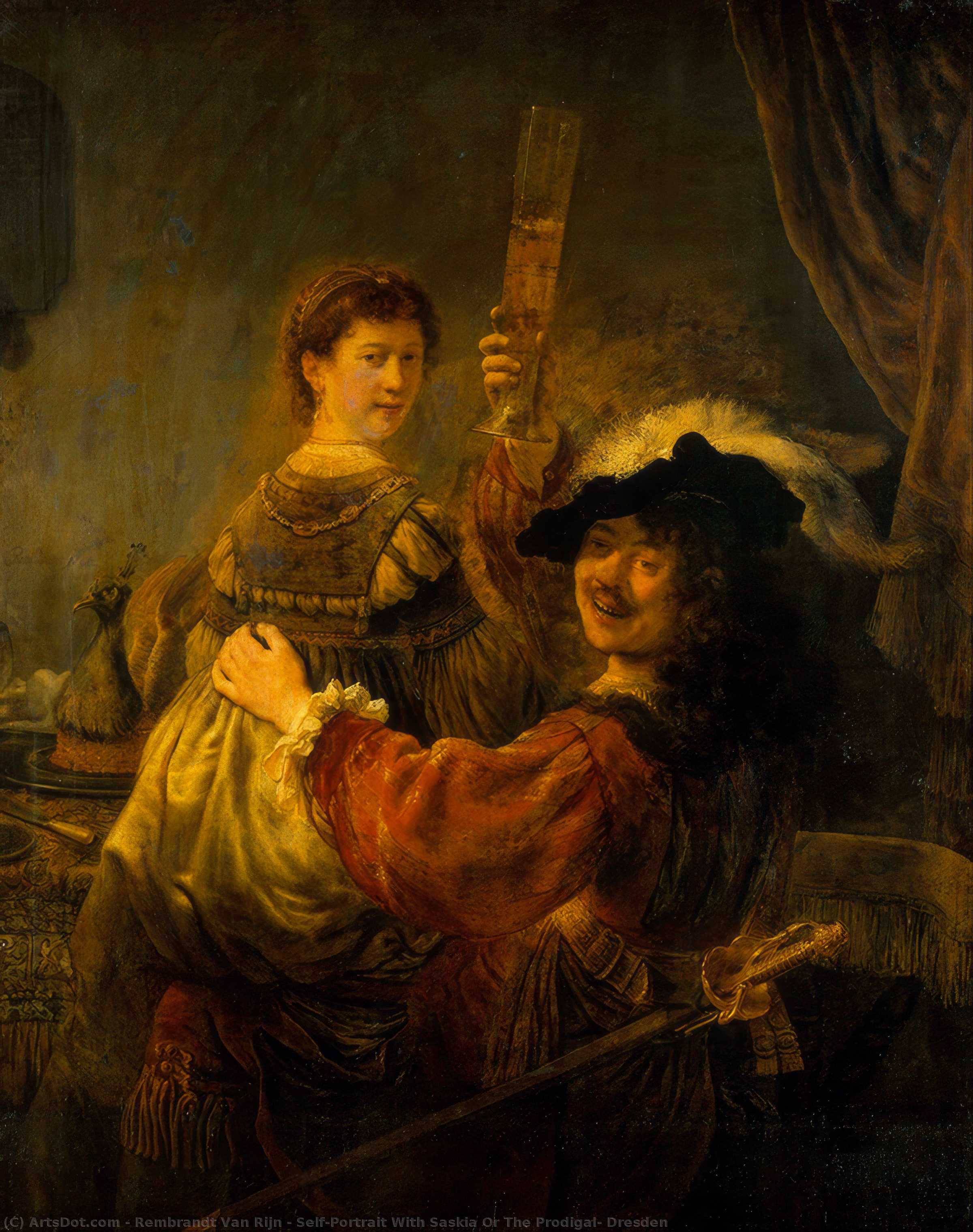
A Moment of Intimacy & Narrative: Rembrandt’s Self-Portrait With Saskia
Rembrandt van Rijn's 1638 *Self-Portrait with Saskia* (also known as *The Prodigal Son*) is a captivating work that transcends the typical portrait, offering a glimpse into the artist’s personal life and artistic preoccupations during the Dutch Golden Age. Housed in the Gemäldegalerie Alte Meister in Dresden, this painting isn't merely a depiction of Rembrandt and his wife Saskia; it’s a carefully constructed narrative brimming with symbolism and emotional resonance – a window into the very soul of a genius grappling with love, loss, and the profound questions of human existence.
Subject & Composition: A Shared Gaze
The painting immediately draws you in with its intimate portrayal of Rembrandt and Saskia standing closely together. Their bodies are angled towards the viewer, yet their gazes are directed off-canvas – as if observing something just beyond our sightline, perhaps a shared memory or an unspoken understanding. Rembrandt holds a painter’s brush in his right hand, subtly asserting his profession, while his left arm gently encircles Saskia. This isn't simply a pose; it’s a deliberate act of connection, a tangible expression of their deep bond. The composition is deliberately cropped on the left side, a detail believed to have been altered by Rembrandt himself – a masterful stroke that focuses attention squarely on the couple’s interaction and the implied narrative unfolding before us. A simple chair and table with a bowl in the background provide context, but they remain secondary to the central figures, acting as anchors for our gaze rather than distracting elements. It's this careful framing, this focused intimacy, that elevates the portrait beyond a mere likeness.
Style & Technique: Master of Light and Shadow
This work exemplifies Rembrandt’s mastery of *chiaroscuro* – the dramatic interplay of light and shadow – with breathtaking skill. Light falls selectively on Rembrandt and Saskia, illuminating their faces and clothing with an almost ethereal glow while leaving much of the background shrouded in darkness. This isn't just a technique; it’s a language. The light doesn’t simply reveal form; it sculpts emotion, highlighting the tenderness in Saskia’s expression and the quiet intensity in Rembrandt’s eyes. The brushwork is loose and expressive, particularly evident in the textures of the fabrics – the rich velvet of Rembrandt's robe, the delicate folds of Saskia’s dress – and skin tones. Rembrandt’s use of impasto – applying paint thickly – adds a tactile quality to the surface, enhancing the realism and vibrancy of the scene; you can almost feel the weight of the brushstrokes. It’s this masterful manipulation of light and texture that gives the painting its enduring power.
Historical Context & Symbolism: The Prodigal Son
Created during a period of personal and professional success for Rembrandt – though shadowed by increasing financial difficulties – the painting is layered with meaning. While ostensibly a marriage portrait celebrating his union with Saskia van Uylenburgh, it’s widely interpreted as an allusion to the biblical story of *The Prodigal Son*. Rembrandt would later paint a monumental version of this very subject in 1669, demonstrating the enduring power of this narrative. The shared gaze and intimate setting suggest the couple are witnessing or enacting a scene from the parable – perhaps contemplating the son’s return, repentance, and forgiveness. Saskia’s presence is particularly poignant given her tragically early death just a few years later, adding another layer of emotional depth to the work; it's as if she embodies the fleeting nature of beauty and happiness.
Emotional Impact & Legacy
*Self-Portrait with Saskia* evokes a profound sense of warmth, intimacy, and quiet contemplation. It’s more than just a portrait; it’s a window into the heart of a marriage, a meditation on love, loss, and redemption. The painting invites viewers to share in Rembrandt and Saskia’s private moment, prompting reflection on universal themes that resonate across time. It stands as a testament to Rembrandt's ability to capture not just physical likeness but also the inner lives of his subjects – their hopes, fears, and vulnerabilities.
This masterpiece continues to captivate audiences today, inspiring both art lovers and interior designers seeking to bring a touch of Dutch Golden Age elegance and emotional depth into their spaces.
Its enduring appeal lies in its ability to connect with viewers on a deeply human level, reminding us of the beauty and fragility of life itself.
- Ideal for collectors appreciating Baroque portraiture and narrative painting.
- A stunning focal point for living rooms, libraries, or studies seeking a classic yet emotionally resonant aesthetic.
- Complements interiors featuring warm color palettes, rich textures, and traditional furnishings.
movement: Baroque
topics: Portraiture, Dutch Golden Age, Rembrandt, Saskia, Biblical Theme, Chiaroscuro, Intimacy, Family
creative_period: Mature Period
corpus_context: Italian Old Masters influence, Dutch Golden Age portraiture, Human emotion & vulnerability, Personal tragedy & reflection, Self-portrait exploration"