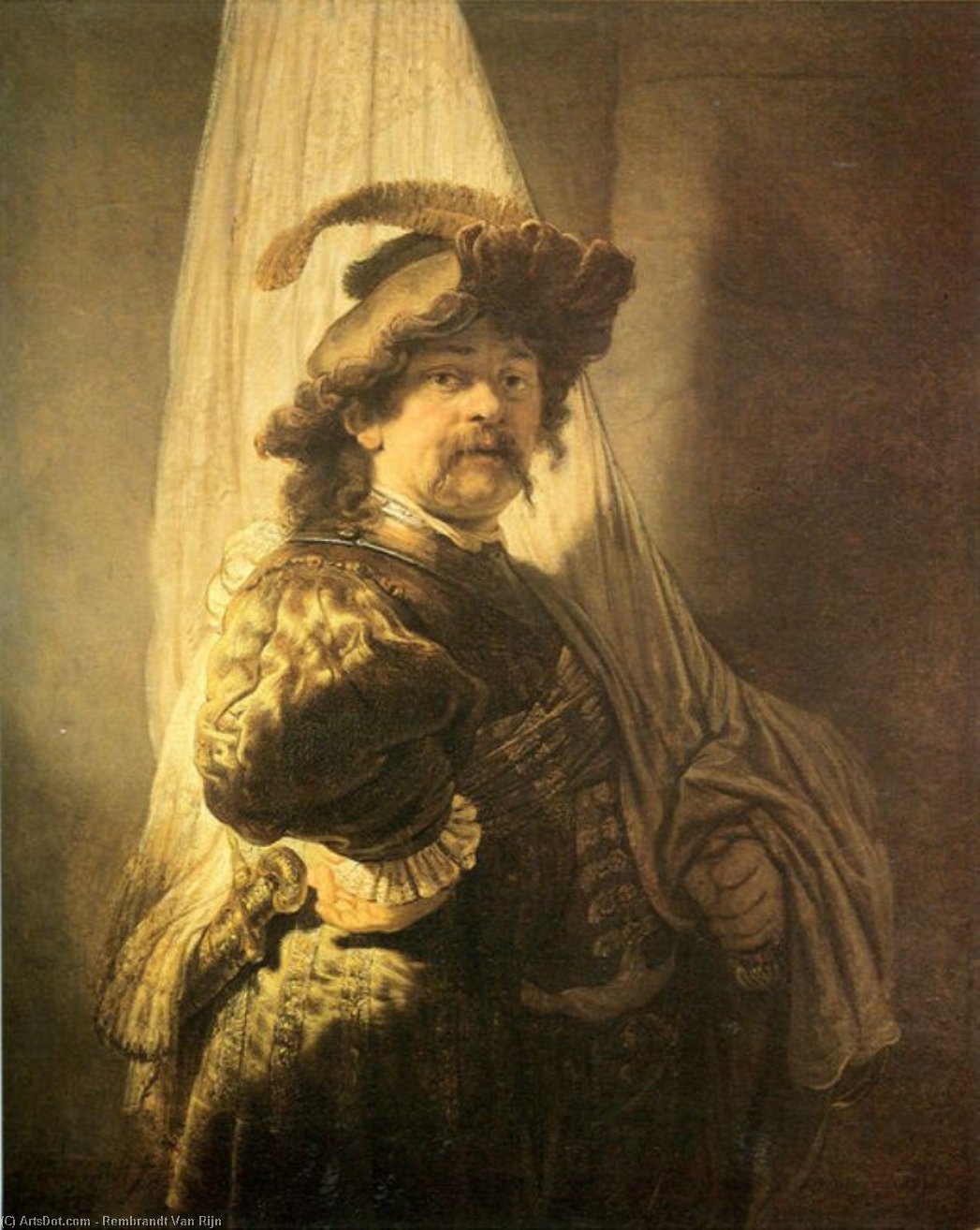
Part of the Museum Victoria Art Gallery’s collection, this reproduction honors Rembrandt's legacy as a pioneer in capturing human emotion and artistic brilliance.
Otkrijte Rembrandta van Rajna (1606-1669), holandskog baroknog majstora svetlosti i senke! Istražite ikonične autoportrete, biblijske prizore i revolucionarne gravure. Doživite Holandska zlatna dob.
A Portrait of Dignity: Exploring Rembrandt’s Standard Bearer
The painting “Standard Bearer” by Rembrandt van Rijn stands as a testament to the artist's unparalleled ability to capture not just likeness, but also the very essence of human character—a skill that cemented his place among the titans of Baroque art and continues to resonate with audiences today. Executed in 1636 during the zenith of Dutch artistic achievement, this portrait transcends mere representation; it’s a profound meditation on leadership, faith, and the quiet strength inherent in noble bearing.
Subject Matter and Composition
At its core, “Standard Bearer” depicts a man dressed in opulent attire—likely a knight or herald—a figure embodying authority and responsibility. Rembrandt meticulously rendered his subject's costume with painstaking detail: a ruffled collar, lace-up jacket, and a striking feathered hat that commands attention. The gaze of the sitter is direct, unwavering, establishing an intimate connection between artist and viewer – a hallmark of Rembrandt’s psychological realism. Crucially positioned before a textured stone wall, he anchors the composition, symbolizing stability and grounding amidst the grandeur of his surroundings. This deliberate framing reinforces the figure's importance as both a visual focal point and a representation of steadfast conviction.
Technique: Mastery of Light and Shadow
Rembrandt’s signature technique—chiaroscuro—is brilliantly deployed throughout “Standard Bearer.” The artist skillfully manipulates light to sculpt the man’s form, highlighting musculature and creating dramatic contrasts between illuminated areas and deep shadows. This masterful use of light isn't merely decorative; it serves as a conduit for conveying emotion. The subtle shading around the eyes suggests introspection and contemplation, hinting at the inner life beneath the surface composure. Rembrandt’s meticulous brushwork contributes to the painting’s textural richness, capturing the nuances of fabric and stone with remarkable accuracy.
Historical Context: The Dutch Golden Age
“Standard Bearer” emerged during the Dutch Golden Age (approximately 1600-1700), a period characterized by unprecedented economic prosperity, artistic innovation, and intellectual ferment. Rembrandt’s work reflects the humanist ideals of the era—a fascination with human anatomy, emotion, and psychological complexity—as well as a deep engagement with religious themes prevalent in Dutch society at the time. The painting's commission likely stemmed from a desire to commemorate an individual of distinction, aligning with the artistic patronage practices of wealthy merchants and nobles during this transformative period.
Symbolism: Faith and Leadership
The flag held by the subject is laden with symbolic significance—representing loyalty, duty, and adherence to ideals. The feather on his hat symbolizes nobility and prestige, reinforcing the man’s elevated status. Rembrandt's portrayal speaks to broader themes of faith and moral fortitude, qualities valued in leaders and revered throughout Dutch culture. Through careful observation and artistic interpretation, viewers can appreciate the painting as a reflection of humanist values and spiritual contemplation.
Emotional Impact: A Window into Human Soul
Ultimately, “Standard Bearer” succeeds in conveying a powerful emotional resonance. Rembrandt’s depiction captures not just physical appearance but also inner character—a quiet dignity underpinned by unwavering resolve. The painting invites viewers to contemplate the complexities of human experience, prompting reflection on themes of honor, responsibility, and the enduring quest for spiritual understanding. It remains an unforgettable image, embodying the artistic brilliance of Rembrandt van Rijn and securing its place as a cornerstone of Baroque art history.