Introduction to the Painting
The
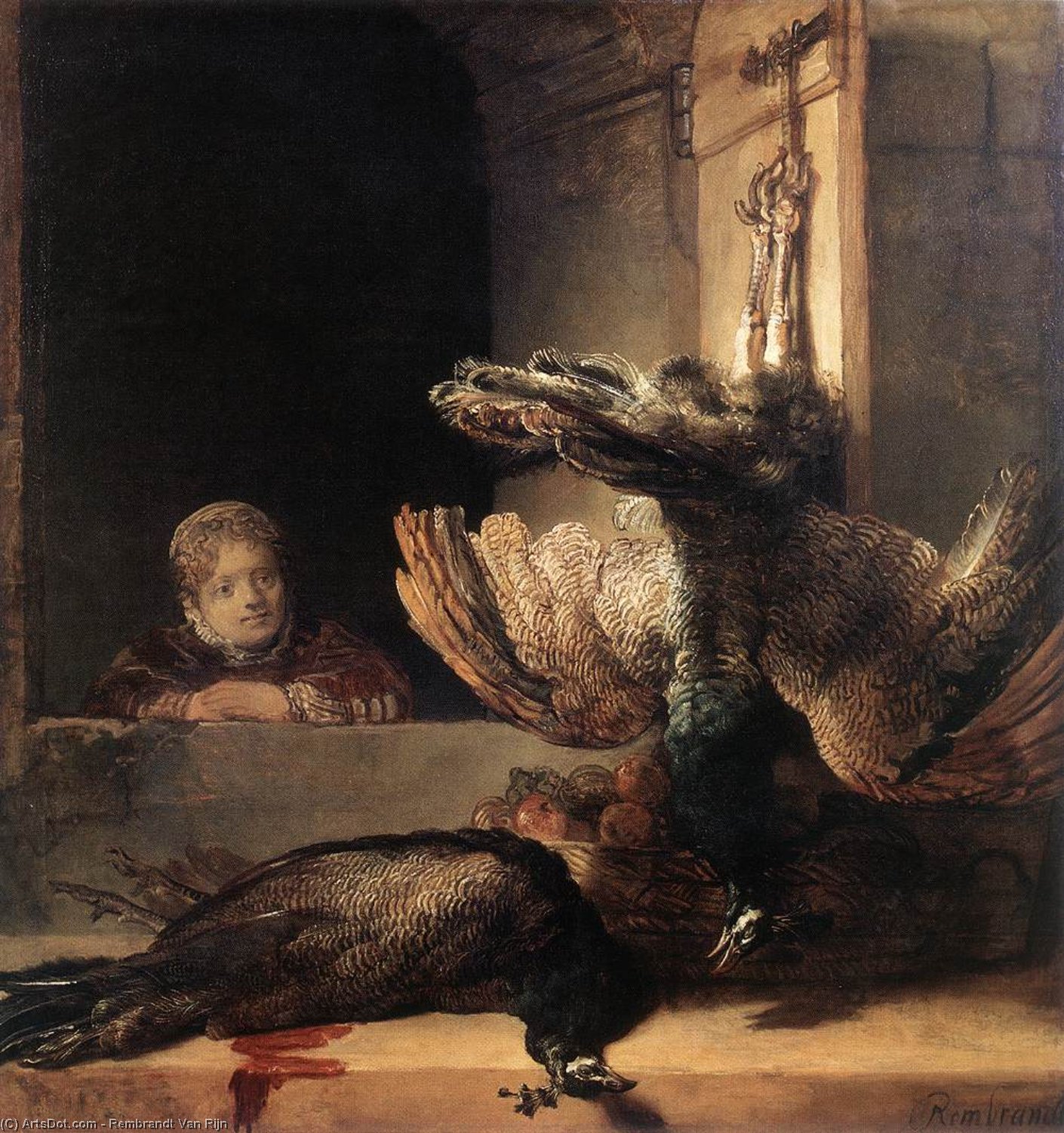
Still-Life with Two Dead Peacocks and a Girl is an oil painting on canvas created by the renowned Dutch master painter,
Rembrandt van Rijn, in 1639. This exquisite piece of art is currently housed at the
Mauritshuis Museum in The Hague, Netherlands. As a prominent figure in the Dutch Golden Age,
Rembrandt van Rijn has left an indelible mark on the world of art.
Description of the Painting
The painting features a young girl holding two dead peacocks, surrounded by various objects such as a basket of fruit, a vase, and a book. The use of light and shadow in the painting creates a sense of depth and realism, making it a captivating piece of art. The
Still-Life with Two Dead Peacocks and a Girl is a testament to
Rembrandt van Rijn's exceptional skills as an artist.
Historical Context
During the Dutch Golden Age, still-life paintings were highly sought after by collectors and patrons. The inclusion of dead animals in still-life paintings was a common practice during this time, symbolizing the transience of life.
Rembrandt van Rijn's work is characterized by his ability to capture emotional depth and complexity in his subjects.
Interpretation
The
Still-Life with Two Dead Peacocks and a Girl is open to various interpretations. Some art historians suggest that the painting represents the fragility of life, while others believe it symbolizes the triumph of beauty over death. The inclusion of the young girl in the painting adds a layer of complexity, as she appears both innocent and knowing at the same time.
Related Paintings by Rembrandt van Rijn
Some notable works by
Rembrandt van Rijn include:
- The Anatomy Lesson of Dr. Nicolaes Tulp
- The Night Watch
- Self-Portrait with Two Circles
For more information on
Rembrandt van Rijn's works, visit
https://ArtsDot.com. To learn more about the
Mauritshuis Museum, visit
https://ArtsDot.com.
You can also view high-quality reproductions of the painting on our website,
https://ArtsDot.com.