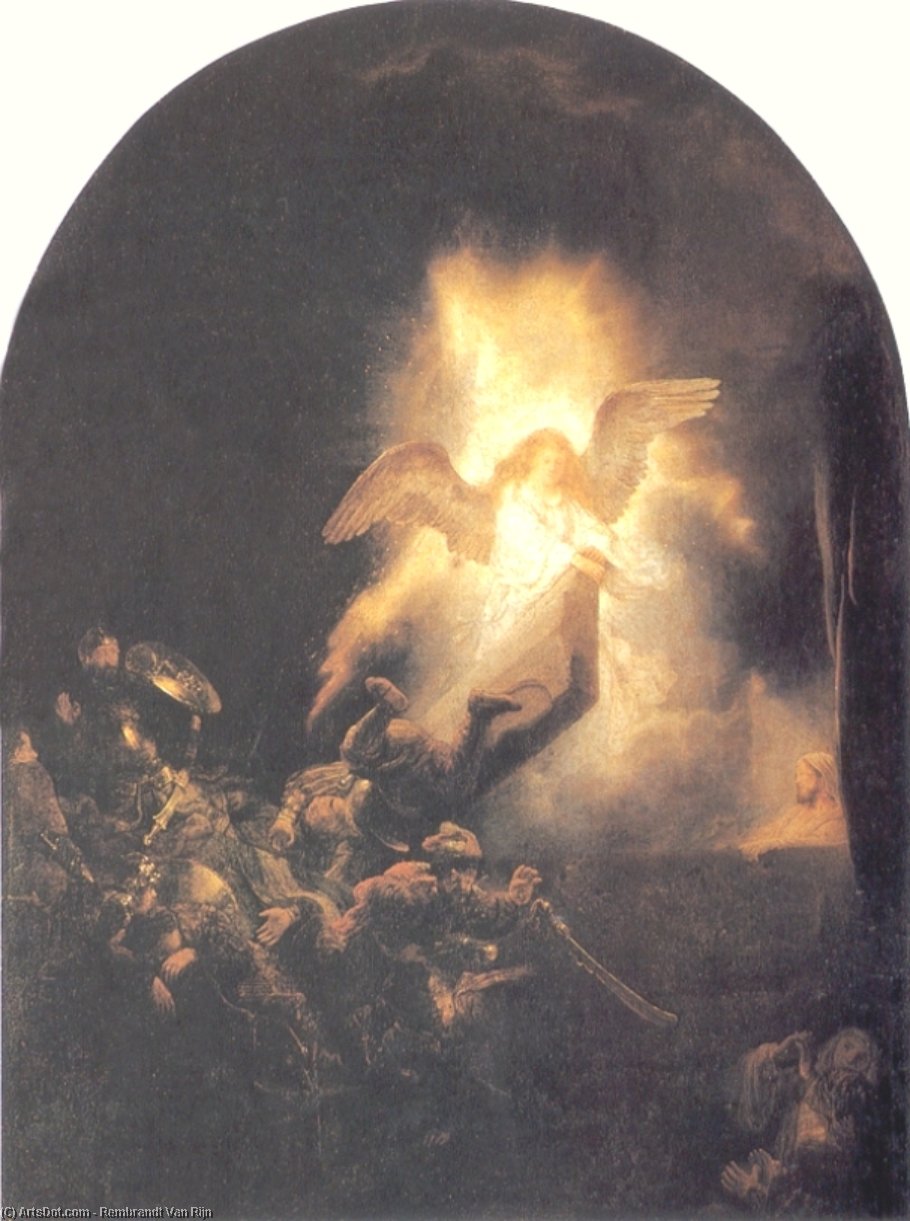
The Resurrection of Christ: A Masterpiece of Faith and Light
Rembrandt van Rijn's "The Resurrection of Christ," painted in 1635, is a profoundly moving oil painting that encapsulates the artist’s unparalleled ability to portray dramatic religious scenes. Measuring 94 x 67 cm, this significant work resides within the esteemed Alte Pinakothek in Munich, Germany. The artwork depicts the pivotal moment when Jesus rises from the dead, surrounded by celestial beings and witnesses, showcasing Rembrandt's mastery of light, shadow, and human emotion.
Composition and Symbolism: A Dynamic Narrative
The composition is strikingly dynamic, immediately drawing the viewer into the heart of the event. Central to the scene is Jesus Christ, depicted in a powerful upward motion as he ascends from his tomb. He is encircled by several angels, their forms rendered with swirling drapery and expressive gestures, symbolizing divine intervention and the triumph over death. The angels are positioned at varying heights, creating a sense of movement and energy that amplifies the drama. The inclusion of numerous figures representing onlookers adds depth to the scene; some stand in awe, others appear overwhelmed by the spectacle, reflecting the profound impact of this miraculous event on humanity.
Symbolism is richly woven throughout the painting. The light emanating from Jesus signifies divine grace and hope, contrasting with the darkness surrounding the tomb, representing death and despair. The angels' upward movement symbolizes ascension to heaven, while their expressions convey reverence and joy. Even the positioning of the onlookers—some reaching out in disbelief, others kneeling in prayer—contributes to the narrative’s emotional depth.
Artistic Technique: Chiaroscuro and Emotional Depth
Rembrandt's masterful use of oil on canvas allows for a rich palette of colors and textures that enhance the painting's emotional impact. His signature technique, chiaroscuro—the dramatic interplay of light and shadow—is prominently displayed. Strong contrasts highlight Jesus and the angels, drawing the viewer’s eye to these central figures while simultaneously creating an atmosphere of awe and mystery. The brushwork is loose and expressive in some areas, conveying a sense of immediacy and movement, while more detailed rendering is used for key elements like facial expressions, emphasizing the emotional weight of the scene.
Historical Context and Lasting Impact
"The Resurrection of Christ" was created during Rembrandt's early career, a period marked by his exploration of religious themes. It reflects the artistic trends of the Dutch Golden Age, characterized by realism, dramatic storytelling, and a focus on human emotion. The painting’s commission likely stemmed from the desire to depict scenes from the Passion of Christ in a visually compelling manner for private devotion or public display.
Today, "The Resurrection of Christ" remains a testament to Rembrandt's genius and continues to inspire viewers with its powerful depiction of faith, hope, and the triumph of life over death. It stands as a cornerstone of Western art history and a prime example of Baroque artistry at its finest.