René Lalique (1860-1945) bio je francuski zlatar i dizajner stakla poznat po Art Nouveau i Art Deco remek-delima. Istražite njegov nakit inspirisan prirodom, bočice parfema, vaze i kultnu umetnost od stakla.
Otkrijte bogato umetničko nasleđe Mađarske u Muzeju primenjenih umetnosti u Budimpešti! Istražite zadivljujuće kolekcije nameštaja, tekstila, metalni radovi i staklo u zapanjujućem remek-delu Art Nouveau od Ödön Lechnera. Tekuća renovacija.
A Symphony in Glass and Gold: Exploring René Lalique’s “Pendant with Chain”
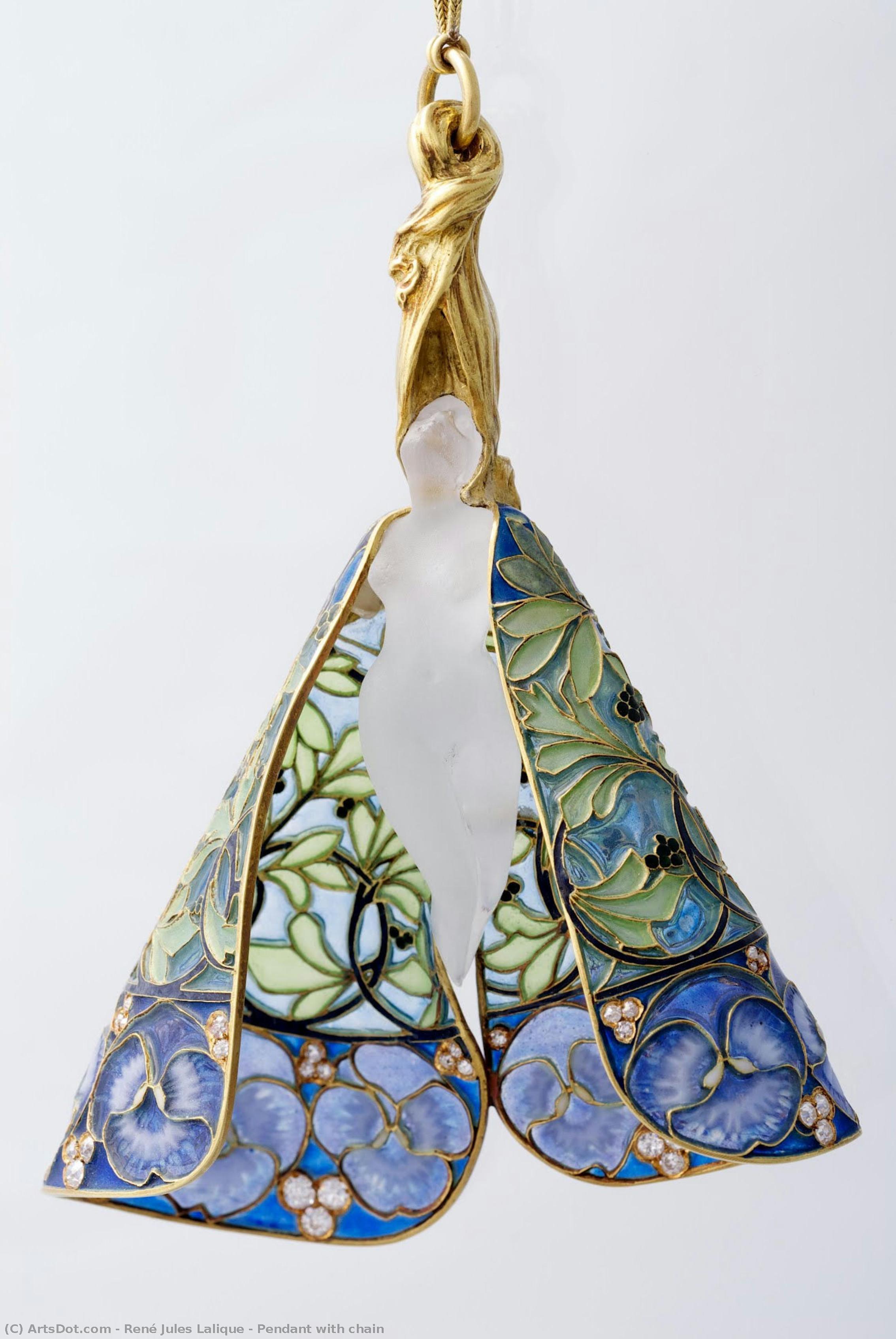
The artwork "Pendant with Chain" by René Jules Lalique, crafted around 1905, stands as a quintessential emblem of Art Nouveau jewelry—a testament to the movement's fascination with organic forms, delicate craftsmanship, and opulent embellishment. More than just an adornment, it embodies a profound artistic vision rooted in Parisian culture and inspired by the celebrated dancer Loie Fuller’s mesmerizing performances. Lalique’s genius lay not merely in manipulating materials but in orchestrating them into a harmonious whole that speaks to both beauty and intellectual curiosity.
- Subject Matter: The pendant depicts a stylized female nude figure, rendered with remarkable precision in etched glass—a deliberate choice reflecting the Art Nouveau preoccupation with idealized femininity and naturalistic representation.
- Style & Technique: Lalique’s signature style is characterized by flowing lines, curvilinear contours, and an exquisite attention to detail. The etching process itself imparts a subtle textural quality to the glass, enhancing its luminosity and capturing the ethereal essence of Art Nouveau ideals.
- Material Composition: Constructed from gold—a symbol of prestige and refinement—the pendant is complemented by a delicate chain passed through the woman’s golden cascade of hair. Furthermore, miniature diamonds meticulously placed in groups of three among flowers contribute to the overall decorative richness.
The Enamel Masterpiece: Plique-à-Jour Technique Revisited
A cornerstone of Lalique's artistic prowess was his masterful application of plique-a-jour enamel—a technique rediscovered by Lalique in the 1870s after its abandonment during the Renaissance. This method involves fusing powdered glass onto a metal surface, creating translucent enamel panels that shimmer with internal luminescence when illuminated from behind. The cloak’s framework is adorned with an openwork floral pattern executed in greenish, bluish and violet-coloured plique-a-jour enamel—a deliberate homage to medieval stained glass windows and symbolizing spiritual aspiration. This painstaking process elevates the pendant beyond mere ornamentation; it transforms it into a captivating visual experience.
- Historical Context: Lalique’s revival of plique-a-jour enamel coincided with Loie Fuller's groundbreaking choreography, “The Dance Serpentine,” which utilized flowing silk veils to mimic the undulating movements of serpents—a motif prevalent in Art Nouveau symbolism representing rebirth and transformation.
- Symbolism: The floral motifs within the cloak’s enamel pattern evoke notions of fecundity, beauty, and harmony—values central to Art Nouveau aesthetics. The shimmering luminescence of the enamel panels symbolizes enlightenment and spiritual grace.
A Celebration of Craftsmanship & Artistic Vision
The pendant's intricate design exemplifies Lalique’s unwavering commitment to virtuoso technique—a dedication that resulted in a jewel possessing unparalleled beauty and sophistication. The jeweler Andre Fernand Thesmar, who championed plique-a-jour enamel, recognized its capacity to produce powerful, glowing colours, mirroring Lalique’s own artistic sensibilities. “Pendant with Chain” remains an enduring symbol of Art Nouveau elegance and a captivating reminder that true artistry lies in the harmonious fusion of form, material, and technique—creating objects that transcend mere decoration and resonate deeply within the viewer's imagination.
Size & Dimensions
Size: 37 x 7 cm
Provenance
Date: 1900