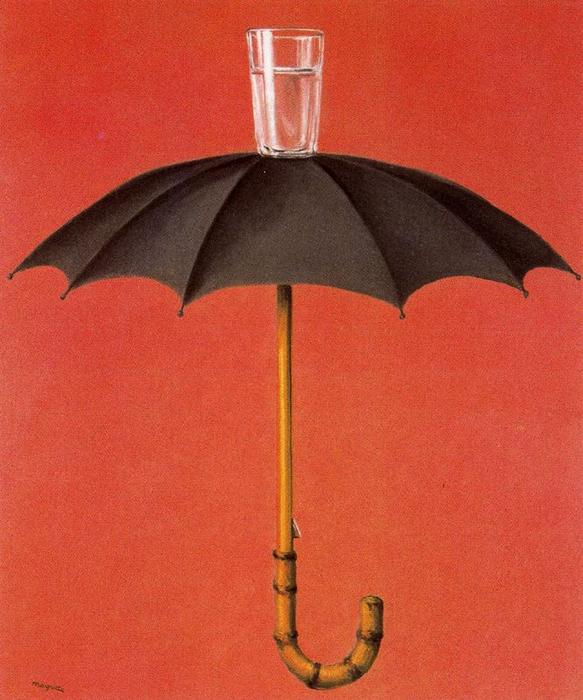
René Magritte je belgijski umetnik koji je poznat po svojim surrealističkim slikama koje izazivaju pitanja o stvarnosti i percepciji. Najpoznatije su njegove slike kao što su „Ljubavnici“, „La trahèrie des images“ i „Čovek u stanju“.
A Silent Invitation: Unpacking René Magritte’s *Hegel’s Holiday*
René Magritte's *Hegel’s Holiday*, painted in 1958, isn’t merely a visual puzzle; it’s an invitation to dismantle the very foundations of how we perceive reality. This deceptively simple image – a solitary green apple suspended just above a tranquil sea beneath a brooding sky – possesses a depth that resonates long after the initial glance. It's a quintessential example of Magritte’s surrealist approach, a deliberate disruption of expectations designed to provoke contemplation and challenge our ingrained assumptions about the world around us. The painting speaks volumes through its quiet stillness, hinting at philosophical inquiries and the elusive nature of truth itself.
The Seeds of Surrealism: Trauma and Perception
Born in Lessines, Belgium, in 1898, René Magritte’s artistic journey was profoundly shaped by a deeply personal tragedy – the death of his mother from suicide when he was just thirteen years old. The image of her body recovered from the River Sambre, her dress concealing her face, became an enduring motif within his work, manifesting as veiled figures and a persistent exploration of what lies hidden beneath the surface. This early experience instilled in him a fascination with mystery, loss, and the unsettling power of the unseen. It’s this preoccupation with obscured realities that fuels *Hegel’s Holiday*, prompting us to question whether what we see is truly what is there, or merely a carefully constructed representation. Magritte's artistic development moved beyond Impressionism early on, demonstrating an innate ability to manipulate visual language and create works that deliberately defied conventional logic.
Symbolic Layers: Apple, Sea, and the Unreachable
The painting’s composition is rich with symbolic weight. The prominent green apple, a recurring motif in Magritte's oeuvre, immediately evokes notions of knowledge, temptation, and forbidden fruit – a direct reference to the biblical story of Adam and Eve. However, its placement above the sea suggests something more complex: an unattainable ideal, a glimpse of wisdom just beyond our grasp. The vast, dark expanse of the sea represents the unknown, the subconscious, and perhaps even the limitations of human understanding. The rocky shoreline in the distance serves as a stark reminder of earthly constraints, anchoring the fantastical image to a tangible reality while simultaneously highlighting its detachment from it. It’s a visual representation of the struggle between our desire for enlightenment and the obstacles that stand in our way.
Technique and Atmosphere: A Masterclass in Quiet Disruption
Magritte's meticulous technique is crucial to the painting’s impact. He employed a precise, almost photographic realism – a deliberate contrast to the dreamlike subject matter. The smooth application of paint, the careful rendering of light and shadow, creates an unsettling sense of familiarity that only amplifies the strangeness of the scene. The muted color palette—primarily greens, blues, and grays—contributes to the painting’s somber mood, reinforcing the feeling of isolation and contemplation. The lack of any human figures further emphasizes this sense of detachment, leaving the viewer alone with their interpretation of the image. It's a testament to Magritte’s skill that he can create such profound emotional resonance through seemingly simple forms and colors.
An Enduring Enigma: *Hegel’s Holiday* as a Reflection on Reality
Ultimately, *Hegel’s Holiday* is more than just a beautiful painting; it's an invitation to engage in a philosophical dialogue with the viewer. It questions our assumptions about representation and reality, prompting us to consider how we construct meaning from the world around us. Like many of Magritte’s works, it resists easy interpretation, encouraging multiple readings and fostering a sense of ongoing discovery. It's a piece that rewards repeated viewing, revealing new nuances with each encounter. ArtsDot offers exceptional hand-painted reproductions of *Hegel’s Holiday*, allowing you to bring this iconic image into your home or office – a silent invitation to contemplate the mysteries of existence.