A Masterpiece of Moral Tension and Grace
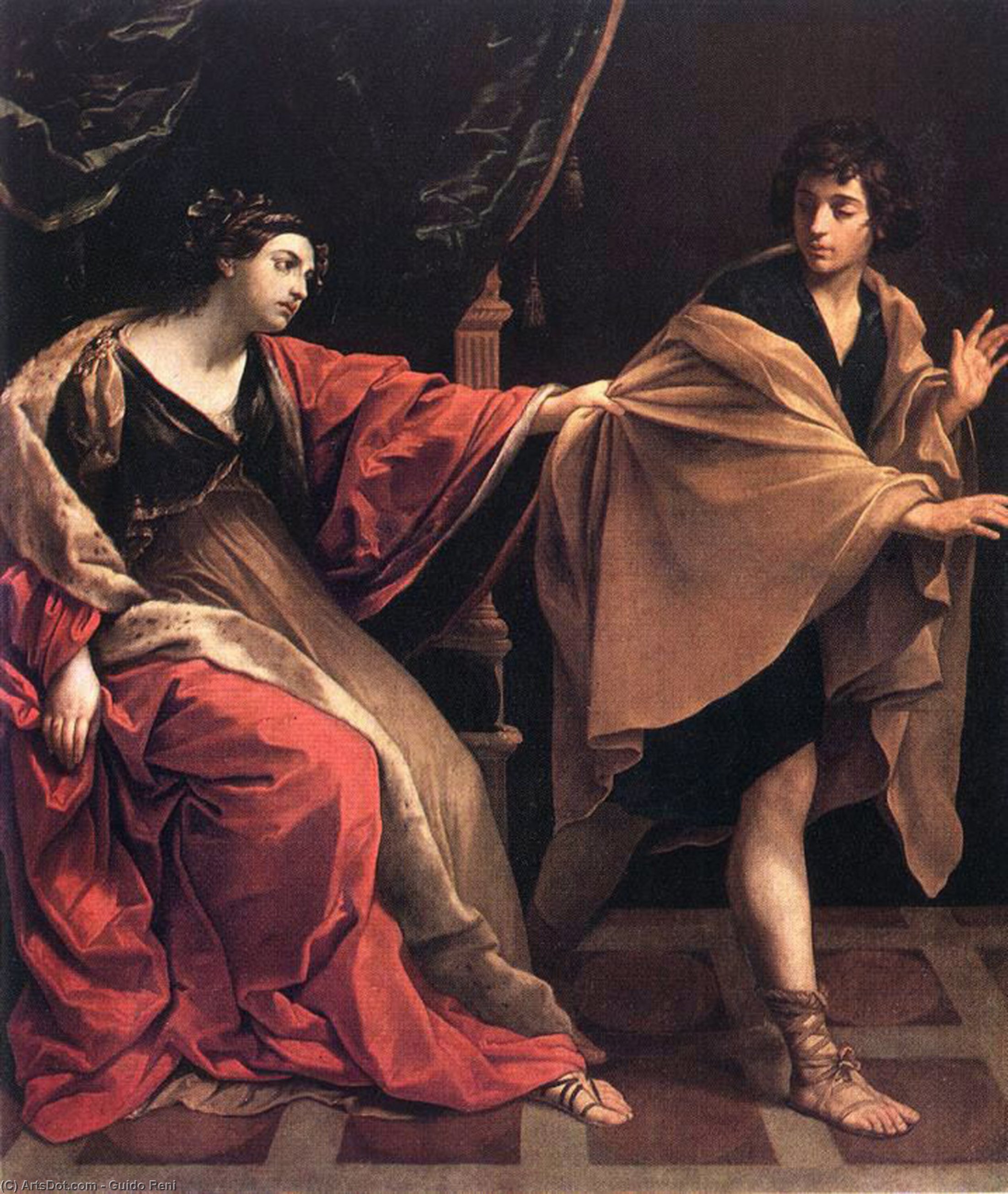
In the grand tapestry of the Baroque era, few works capture the delicate friction between earthly temptation and spiritual fortitude as exquisitely as Guido Reni’s "Joseph and Potiphar's Wife." Executed around 1631, this monumental canvas serves as a profound window into a pivotal biblical moment, rendered not with the jarring violence of some of his contemporaries, but with a refined, classical elegance. The scene depicts the fateful encounter between Joseph, the virtuous son of Jacob, and the wife of Potiphar, whose unrequited desire for him would eventually lead to his unjust imprisonment. Reni, often celebrated as Le Guide, masterfully avoids the sensationalism typically associated with such scandalous narratives, choosing instead to focus on a quiet, psychological intimacy that invites the viewer into a deeply contemplative space.
The composition is anchored by a deliberate use of architectural depth, placing the figures upon a staircase that serves as more than just a setting. This ascent symbolizes the moral climb and the steadfastness of Joseph’s character amidst the swirling pressures of temptation. As the eye wanders through the scene, one notices the subtle interplay of light and shadow—a hallmark of Reni's ability to breathe life into flesh and fabric. The woman, draped in a rich, commanding red dress, represents the visceral pull of passion, while Joseph, clad in somber black, embodies a resolute, quiet piety. This visual contrast creates a silent dialogue, a tension that is felt rather than shouted, making the painting an essential study in human emotion.
The Elegance of Venetian Classicism
Technically, this work stands as a triumph of Venetian Classicism within the broader Baroque movement. Reni eschews the turbulent, chaotic energy found in the works of Caravaggio, opting instead for a more restrained and harmonious palette dominated by muted reds, earthy browns, and soft creams. This choice of color contributes to an atmosphere of serene dignity, allowing the viewer to focus on the anatomical precision and the smooth, luminous glazing that characterizes his technique. The surface of the canvas possesses an almost ethereal quality, where light seems to glide over the musculature of Joseph and the flowing silks of Potiphar's wife with remarkable accuracy.
For the discerning collector or interior designer, this painting offers a rare opportunity to possess a piece that embodies artistic perfection. Its scale—measuring an impressive 227 x 195 cm—commands attention in any grand hall or curated gallery space, providing a sophisticated focal point that stimulates intellectual conversation. The artwork does not merely decorate a room; it transforms it, bringing with it the historical weight of the 17th century and the timeless beauty of the Bolognese school. Whether viewed as a study in religious history or an exemplar of classical technique, "Joseph and Potiphar's Wife" remains a breathtaking testament to the power of art to capture the eternal struggle between the soul and the senses.