A Symphony of Tragedy and Grace
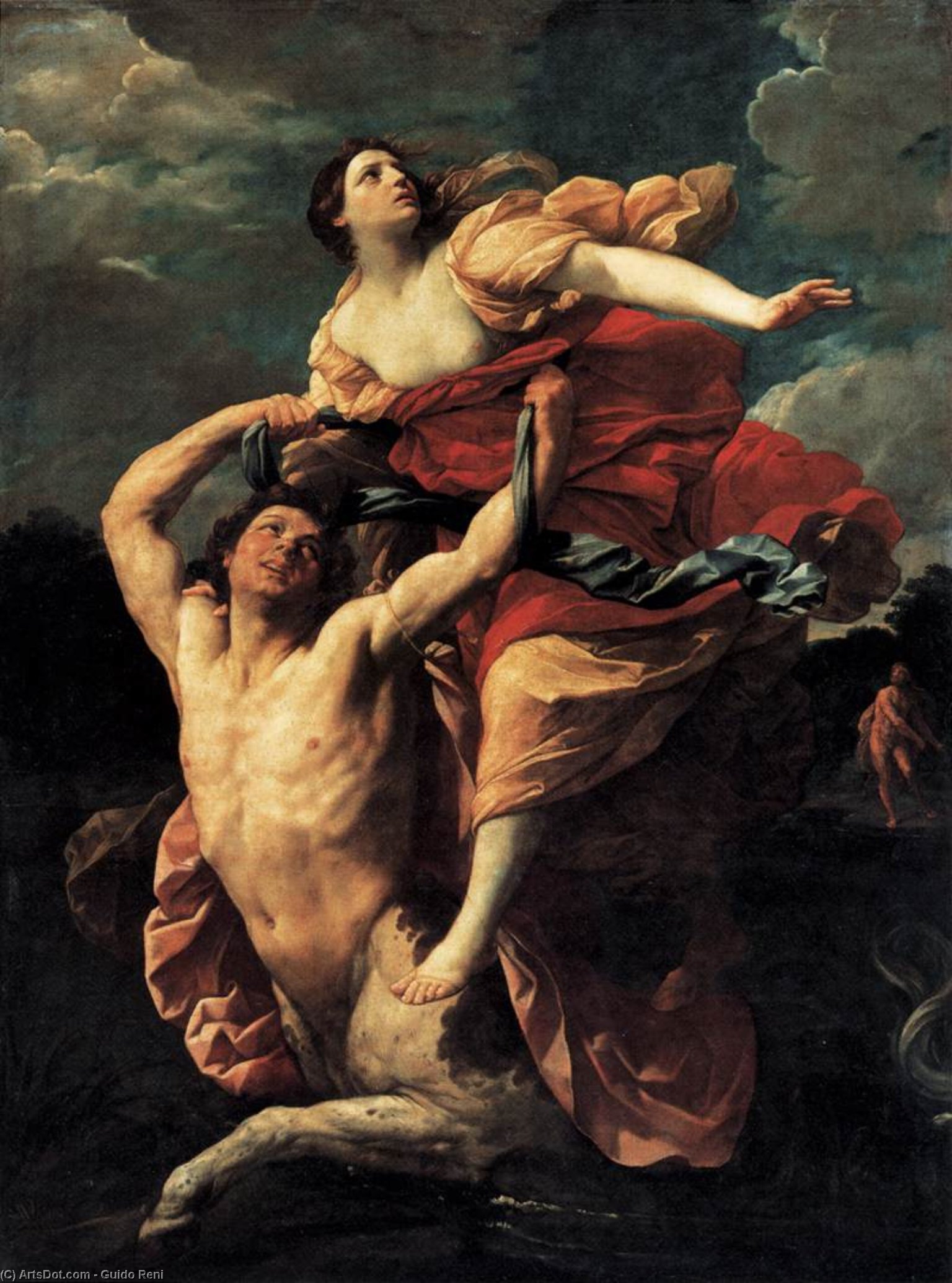
In the grand tapestry of Baroque classicism, few works capture the visceral tension between divine whim and human suffering as poignantly as Guido Reni’s The Rape of Deianira. Completed between 1617 and 1621, this masterpiece serves as a breathtaking window into the mythological world of Ovid’s Metamorphoses. The scene is one of profound upheaval: Hercules, the legendary hero, finds himself locked in an agonizing struggle as Zephyr, the tempestuous west wind god, violently sweeps Deianira from his grasp. It is a moment frozen in time, where the strength of a demigust is rendered helpless against the invisible, swirling forces of fate. For the discerning collector or interior designer, this painting offers more than mere decoration; it provides a commanding focal point that invites deep contemplation and commands the atmosphere of any sophisticated space.
The emotional resonance of the piece lies in its ability to balance extreme movement with an almost statuesque elegance. As Deianira struggles against her husband's grip, the viewer is drawn into a narrative of unintended betrayal. The painting subtly alludes to the tragic irony of her situation—the very love she sought to use to rekindle Hercules’ affection through a poisoned robe would ultimately become the instrument of his demise. This layer of tragic foresight adds a haunting depth to the composition, transforming a scene of physical abduction into a profound meditation on the fragility of human happiness and the inexorable march of destiny.
Mastery of Light and Baroque Grandeur
Guido Reni, often celebrated as Le Guide for his ability to lead viewers through complex emotional landscapes, employs a technical virtuosity that defines the height of the Bolognese School. His use of chiaroscuro—the dramatic interplay between piercing light and deep, enveloping shadows—is nothing short of masterful. This technique does not merely illuminate the figures; it sculpts them. The musculature of Hercules is rendered with anatomical precision, conveying a palpable sense of tension and physical exertion, while the soft, luminous skin of Deianira provides a delicate contrast that heightens the drama of the encounter.
The color palette is a deliberate study in opulence and passion. Reni utilizes rich, saturated reds and shimmering golds to evoke the regal nature of the myth and the fiery intensity of the characters' emotions. These warm tones are balanced by more muted, atmospheric hues that suggest the swirling, unseen presence of the wind god. His brushwork remains smooth and deliberate, creating a refined surface texture that exudes a sense of classical perfection. For those seeking to adorn a gallery or a luxury residence, a high-quality reproduction of this work brings with it an air of historical prestige and an unparalleled level of artistic sophistication.
A Timeless Legacy for the Modern Collector
Beyond its technical brilliance, The Rape of Deianira stands as a testament to the enduring power of classical storytelling. Reni’s ability to harmonize the raw energy of the Baroque style with the refined grace of classicism makes this work uniquely versatile. It possesses a monumental presence that can anchor a large-scale installation, yet its intricate details and emotional nuances reward close, intimate inspection. Whether placed in a setting of contemporary minimalism or within a more traditional, ornate interior, the painting acts as a bridge between the ancient myths of antiquity and the aesthetic sensibilities of the modern era.
Owning a reproduction of such a significant work from the Louvre’s collection allows one to participate in a long tradition of art appreciation. It is an investment in beauty, history, and the profound human experience of drama and loss. Through Reni's eyes, we are reminded that even in the midst of chaos and abduction, there is a divine order and a breathtaking aesthetic harmony that transcends time.