A Portrait of Rustic Grandeur: Unpacking Bonington’s “Don Quixote in His Study”
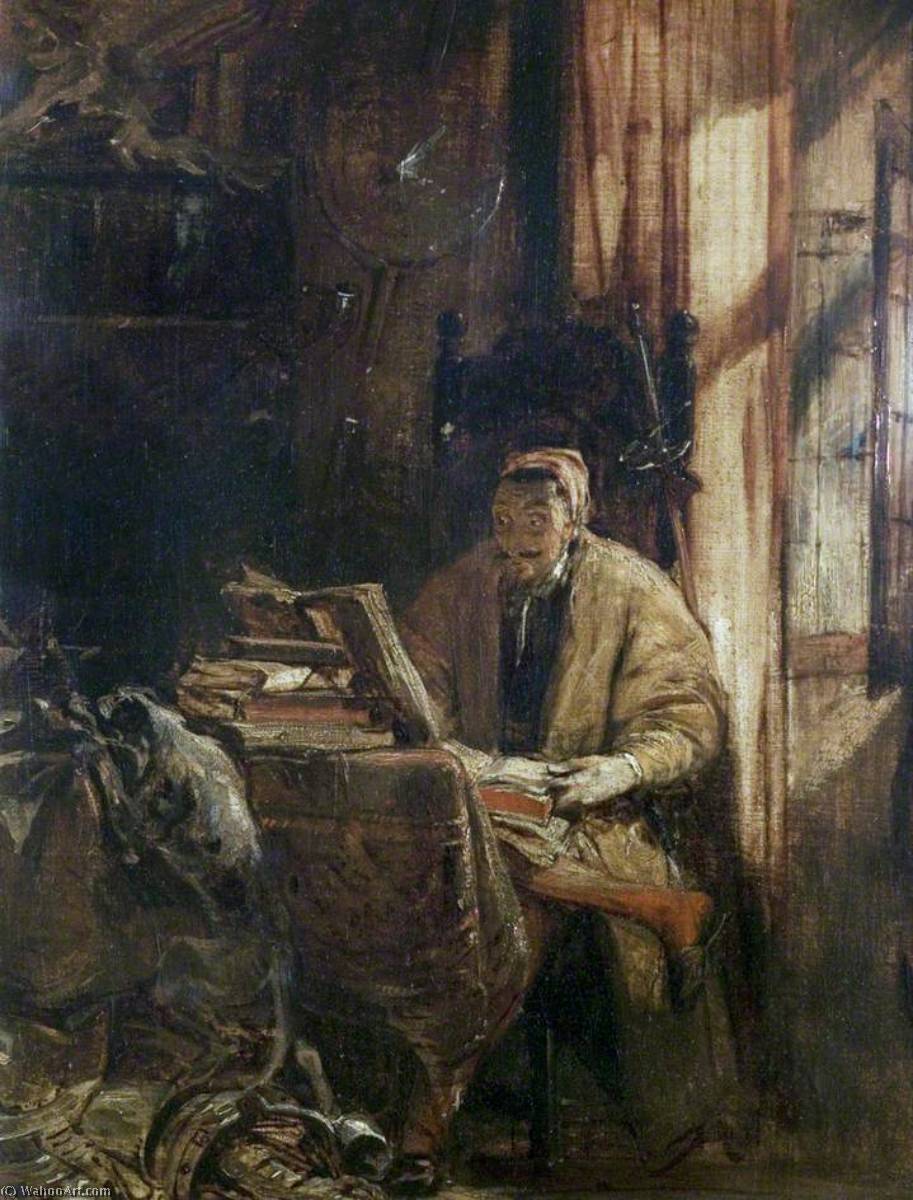
Richard Parkes Bonington's "Don Quixote in His Study," painted in 1826, isn’t merely a depiction of an elderly man; it’s a carefully constructed tableau brimming with quiet contemplation and the weight of a life lived within the confines of memory and imagination. The painting immediately draws the viewer into a dimly lit interior, dominated by a rich, earthy palette – ochres, browns, and deep reds—that speaks to both the warmth of domesticity and the encroaching shadows of age. Bonington masterfully employs chiaroscuro, a dramatic contrast between light and dark, to sculpt the figure of Don Quixote, lending him an almost sculptural quality while simultaneously emphasizing his vulnerability. The scene is not one of heroic action, but rather of introspective stillness; we are invited to witness a moment of profound solitude.
- Compositional Harmony: The arrangement of objects—the stacked books, the overflowing bags, the ticking clock—creates a sense of controlled chaos, mirroring perhaps the mental landscape of the subject.
- Color Palette: The muted tones evoke a feeling of nostalgia and the passage of time, while the strategic use of red draws attention to the woman’s headscarf, subtly hinting at her character and story.
- Light & Shadow: Bonington's skillful manipulation of light creates depth and drama, highlighting the subject’s face and casting long shadows that suggest both age and a certain melancholy.
The Artist and His Influences: A Bridge Between Romanticism and Tradition
Richard Parkes Bonington stands as a fascinating figure in the transition between the last vestiges of English Romanticism and the burgeoning influences of French Realism. Born in Nottingham, England, in 1802, he spent much of his formative artistic years in France, absorbing the techniques and philosophies of masters like Jean-Auguste Dominique Ingres and, crucially, Eugène Delacroix. Bonington’s style is a unique synthesis of these influences; he retains the Romantic emphasis on light and atmosphere but grounds it in a meticulous observation of form and detail reminiscent of the Old Masters. His early training with François Louis Thomas Francia, who had returned from studying Girtin's watercolors in England, instilled in him a deep appreciation for the delicate handling of color and brushwork that would become hallmarks of his work.
Historical Context:** Bonington’s painting was created during a period of significant artistic change. The Romantic movement was waning, giving way to new approaches to representation. Bonington navigated this shift with remarkable grace, producing works that were both deeply personal and technically sophisticated. His brief but brilliant career is marked by a poignant sense of unrealized potential – he died at the young age of 26 from tuberculosis.
Decoding Symbolism: Layers of Meaning in a Simple Scene
Beyond its immediate visual appeal, “Don Quixote in His Study” is rich with symbolic layers. The cluttered room itself represents the accumulated weight of memory and experience—the books, the bags, the clock all speak to a life lived fully, yet perhaps somewhat wistfully. Don Quixote’s posture – slumped slightly, his gaze fixed inward – suggests a man lost in thought, grappling with the remnants of a bygone era. The red headscarf is particularly intriguing; it could symbolize both resilience and vulnerability, hinting at the woman's strength and her own quiet struggles. The painting subtly evokes themes of aging, memory, solitude, and the enduring power of imagination.
A Legacy in Reproduction: Bringing Bonington’s Vision to Life
Reproductions of “Don Quixote in His Study” offer a remarkable opportunity to experience the depth and nuance of Bonington's artistry. The meticulous detail, the evocative lighting, and the subtle symbolism are all faithfully captured in high-quality reproductions. Whether adorning a study or a gallery wall, this painting invites contemplation and offers a glimpse into the mind of a truly exceptional artist. The rich textures and carefully rendered details translate beautifully to canvas, creating a timeless piece that speaks to the enduring power of art to transport us to another time and place.