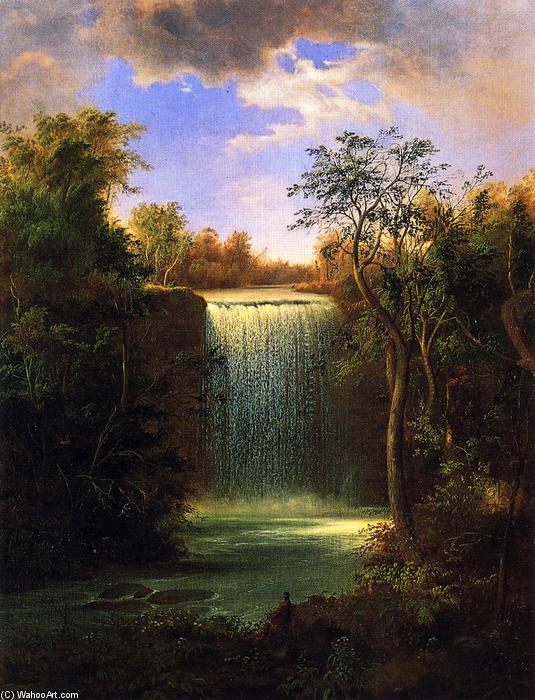
A Glimpse of Nature’s Majesty: Robert Duncanson’s *Falls of Minnehaha*
Robert Scott Duncanson’s Falls of Minnehaha (1862) is a captivating landscape painting that transports viewers to the serene beauty of Minnesota's iconic waterfall. This work exemplifies the Hudson River School style, celebrated for its romantic depictions of American landscapes and their ability to evoke a sense of awe and wonder in nature.
Subject & Style: Romantic Landscape Tradition
- The Scene: The painting centers on the dramatic cascade of Minnehaha Falls, skillfully rendered with attention to detail. Lush trees frame the waterfall, creating depth and perspective within the composition. Two figures are subtly included, providing a sense of scale and inviting viewers into the scene.
- Hudson River School Influence: Duncanson’s work aligns strongly with the Hudson River School movement, which flourished in the mid-19th century. This style emphasized detailed realism combined with an idealized view of nature, often imbued with spiritual or emotional significance. Like his contemporaries such as Thomas Cole, Duncanson sought to capture not just a visual representation but also the sublime power and beauty of the natural world.
- Romanticism: The painting embodies Romantic ideals by prioritizing emotion and imagination over strict adherence to classical rules. It aims to evoke feelings of tranquility, awe, and connection with nature.
Technique & Historical Context
- Oil on Canvas: Duncanson employed oil paints on canvas, allowing for rich color saturation and subtle gradations in tone. His technique demonstrates a mastery of light and shadow, enhancing the realism and depth of the scene.
- Antebellum America: Created in 1862, during the lead-up to the American Civil War, *Falls of Minnehaha* reflects a yearning for peace and harmony amidst societal tensions. Duncanson's success as a Black artist operating within this context is remarkable; he skillfully navigated elite cultural circles in America and Europe, utilizing abolitionist support to promote his work.
- Ohio River Valley Tradition: Duncanson played a key role in developing the Ohio River Valley landscape tradition, bringing a unique perspective to the genre.
Symbolism & Emotional Impact
Beyond its aesthetic appeal, *Falls of Minnehaha* carries layers of potential symbolism. The waterfall itself can be interpreted as representing the relentless passage of time or the purifying power of nature. The inclusion of figures suggests humanity's relationship with the natural world – a sense of reverence and belonging.
- Tranquility & Awe: The painting evokes a profound sense of tranquility and awe, inviting viewers to escape into a peaceful natural setting.
- Sublime Beauty: Duncanson’s skillful rendering of light and shadow creates a feeling of the sublime – that overwhelming yet beautiful experience of encountering nature's grandeur.
- Racial Significance (Potential): As noted by art historians, there is ongoing debate regarding whether Duncanson subtly incorporated racial metaphors into his work, reflecting the complexities of his identity as a free Black man in antebellum America. This adds another layer of depth and intrigue to the painting's interpretation.
*Falls of Minnehaha* remains a testament to Robert Duncanson’s artistic talent and a valuable window into 19th-century American landscape painting, offering both visual beauty and thought-provoking historical context.