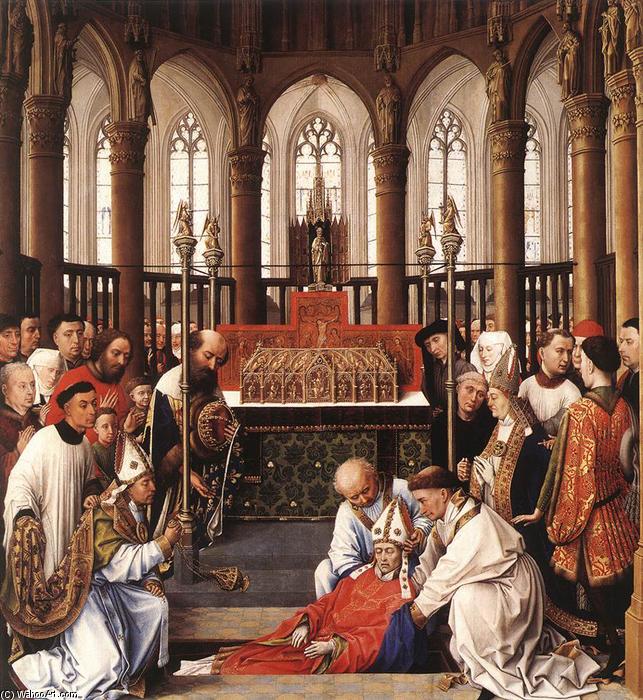
Istražite „Ekshumaciju Svetog Huberta“ (1437) Rogiera van der Weydena. Zadivljujuće рано-нетољанско remek-delo koje prikazuje bogate detalje, dramatično osvetljenje i religijsku simboliku. Otkrijte ovo kultno umetničko delo!
Roge van der Vejden (1400-1464): Flandrijski majstor rane renesanse poznat po emotivnim religijskim slikama, bogatim bojama i naturalističkim detaljima. Otkrijte 'Zaljubljenost' i još mnogo toga!
Otkrijte evropsku umetnost od 13. do 19. veka u Nacionalnoj galeriji Londona! Saznajte više o remek-delima Van Goga, Rembranta i drugih – ulaz je besplatan!
Ujedinjeno Kraljevstvo
London
Nacionalna Galerija
Rembrandtova 'Devica sa staklenikom'
Preko 2.300 slika
Muzej umetnosti
1824
Da bi se prikazala savremena britanska umetnost.
2
Koji je osnovni cilj Nacionalne Galerije?
A Solemn Rite: Unveiling Rogier van der Weyden’s ‘Exhumation of St Hubert’
‘Exhumation of St Hubert’ (1437) by Rogier van der Weyden is a captivating example of Early Netherlandish painting, offering a glimpse into the religious fervor and artistic innovation of 15th-century Europe. This meticulously crafted oil on canvas (88 x 81 cm) transports viewers to a grand cathedral setting where a significant ecclesiastical event unfolds.
Subject & Narrative
The painting depicts the solemn exhumation – the uncovering and ceremonial rediscovery – of the relics of Saint Hubert, the patron saint of hunters. A large gathering of clergymen, officials, and onlookers are clustered around an altar, their attention focused on the unseen event taking place within. The scene isn’t a dramatic action shot; rather, it's a carefully orchestrated moment of reverence and ritual. Van der Weyden masterfully conveys the weight of tradition and the importance of these sacred proceedings.
Style & Technique
Van der Weyden was renowned for his distinctive style, characterized by rich coloration, expressive figures, and a remarkable attention to detail. In ‘Exhumation of St Hubert’, this is evident in the luxurious fabrics, intricately rendered architectural elements, and individualized faces within the crowd. He employs oil paint with exceptional skill, building up layers to create textures that appear almost tangible. The composition, while densely populated, maintains a sense of order through its predominantly straight lines and geometric shapes – mirroring the cathedral’s architecture. The perspective is somewhat flattened, typical of the period, prioritizing clarity and narrative over strict realism.
Symbolism & Iconography
Every element within the painting carries symbolic weight. The altar itself represents religious devotion and serves as the focal point of the ceremony. The elaborate robes worn by the clergy signify their status and authority within the Church hierarchy. While the specific details surrounding Saint Hubert’s life (as a hunter who experienced a vision of Christ) aren't directly depicted, his importance is underscored by the solemnity of the event. The dramatic lighting, streaming through arched windows, can be interpreted as divine illumination highlighting the sacred nature of the occasion.
Historical Context
Created in 1437, ‘Exhumation of St Hubert’ reflects a period of growing religious devotion and artistic patronage in Northern Europe. Rogier van der Weyden was a leading figure in the Early Netherlandish school, which pioneered innovations in oil painting technique and realistic representation. His work gained acclaim not only in his native Belgium but also in Italy and Spain. This painting would have originally been commissioned for a specific religious context – likely a church or chapel dedicated to Saint Hubert – serving as both a devotional object and a testament to the patron’s piety. The artwork is currently housed at St Janskerk, Middelburg, Belgium.
Emotional Impact & Aesthetic Appeal
‘Exhumation of St Hubert’ evokes a sense of reverence, solemnity, and formality. The painting's rich color palette – dominated by deep reds, blues, and golds – contributes to its majestic and imposing atmosphere. While the scene is not overtly emotional, there’s an underlying current of piety and awe that resonates with viewers. Its meticulous detail and masterful composition make it a compelling work for art lovers, collectors, and those seeking inspiration for interior design schemes—particularly spaces aiming for a classic, sophisticated aesthetic.