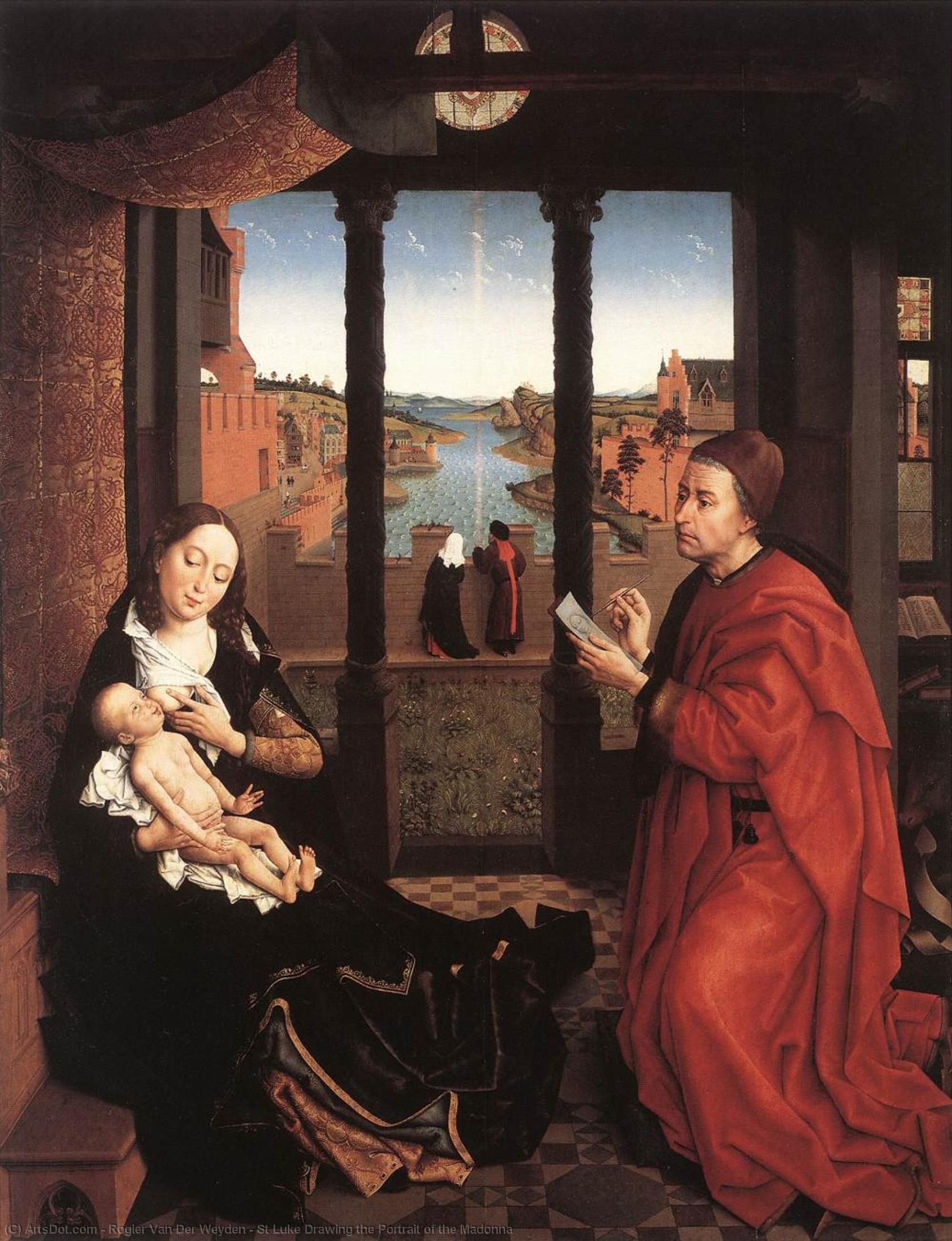
Explore Rogier van der Weyden’s ‘St Luke Drawing a Portrait.’ A Renaissance masterpiece showcasing meticulous detail & dramatic lighting in a serene religious scene.
Roge van der Vejden (1400-1464): Flandrijski majstor rane renesanse poznat po emotivnim religijskim slikama, bogatim bojama i naturalističkim detaljima. Otkrijte 'Zaljubljenost' i još mnogo toga!
Otkrijte zlatno doba Flandrijske umetnosti u Groeninge Muzeju u Brugu! Istražite remek-dela Van Eycka, Memlinga i drugih – putovanje kroz šest vekova belganskog umetničkog nasleđa.
Belgija
Dirk Devynck
Brug
Groeninge Muzej
Van Eyck
150.000
600 slika
Flandrijska umetnost
1930
Stari egipatski artefakti
2
Na čemu je primarni fokus Groeninge Muzeja?
A Moment of Divine Inspiration: Rogier van der Weyden’s ‘St Luke Drawing the Portrait of the Madonna’
This exquisite oil on panel painting by Rogier van der Weyden (c. 1400-1464) offers a captivating glimpse into a revered religious narrative and showcases the pinnacle of Early Netherlandish artistry. Measuring 133 x 107 cm, this work beautifully encapsulates the piety and meticulous detail characteristic of the period.
Subject & Narrative
The scene depicts the legendary moment when Saint Luke, considered the patron saint of artists, is portrayed painting a portrait of the Virgin Mary while holding the Christ Child. This wasn’t merely an artistic endeavor; it was believed to be the first iconographic representation of Mary, imbued with divine authenticity. The composition features St. Luke diligently at work, capturing the serene beauty of the Madonna and Child, while a presenting figure – possibly a donor or representative of the Guild of Saint Luke – offers a rolled document or scroll, perhaps symbolizing the authority and sacredness of the commission.
Style & Technique
Van der Weyden’s style is immediately recognizable through its rich coloration, precise linework, and masterful rendering of textures. He employed oil paint with exceptional skill, achieving a smooth surface that allows for subtle modeling and luminous effects. The composition is carefully balanced, creating a triangular arrangement that draws the eye to the central figures. The artist’s attention to detail – from the folds in the drapery to the delicate features of Mary and Jesus – demonstrates his commitment to naturalism within a deeply spiritual context. He avoids repeating tones, adding depth and complexity to the composition.
Historical Context & Symbolism
Created around 1435, this painting reflects the burgeoning artistic climate of the Northern Renaissance. Van der Weyden was a leading figure in this movement, known for his ability to infuse religious scenes with emotional resonance and human empathy. The subject itself – St. Luke as artist – elevated the status of painters during a time when they were increasingly recognized for their skill and creativity. The inclusion of architectural elements—arched windows framing a landscape view—demonstrates the Renaissance interest in perspective and realistic spatial representation. Symbolically, Mary’s pose is a traditional depiction of nursing, emphasizing her role as mother and nurturer. The presenting figure's gesture suggests divine communication or official sanction.
Emotional Impact & Interpretation
The painting evokes a sense of reverence, solemnity, and quiet contemplation. Van der Weyden’s figures possess an inner dignity and grace that invites viewers to share in their spiritual experience. The restrained emotion and meticulous detail create an atmosphere of profound peace and devotion. It's a work that speaks not only to religious faith but also to the power of art to capture beauty, truth, and the divine.
For Collectors & Designers
‘St Luke Drawing the Portrait of the Madonna’ is an iconic example of Early Netherlandish painting. Its balanced composition, rich colors, and profound symbolism make it a compelling addition to any collection. Its serene atmosphere and elegant aesthetic also lend themselves beautifully to interior design schemes, adding a touch of timeless sophistication and spiritual depth to both traditional and contemporary spaces. A high-quality reproduction would serve as a stunning focal point in a library, study, or living room, inviting contemplation and inspiring artistic appreciation.