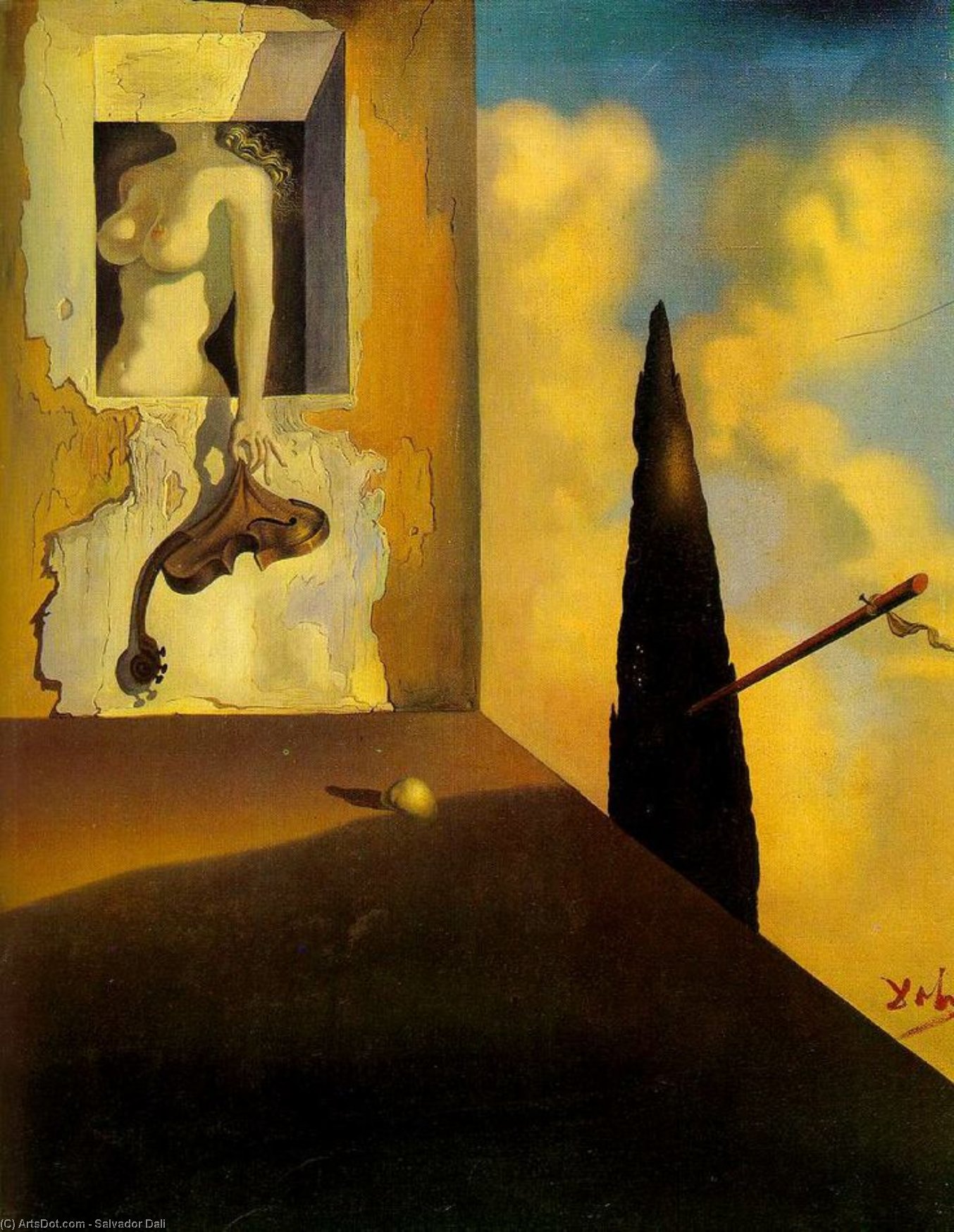
Introduction to the Painting and its Creator
Salvador Dalí, a renowned Spanish Surrealist artist, created the painting
Dalí Masochistic Instrument in 1933-34. This captivating piece is an exemplary representation of his unique style and vision, which often delved into the subconscious mind and explored complex psychological themes. As seen on
ArtsDot.com, this painting showcases Dalí's mastery of artistic techniques.
Historical Context and Interpretation
During this period, Dalí was heavily influenced by Sigmund Freud's psychoanalytic theories, particularly the concept of masochism. The painting reflects these interests, as it portrays a distorted female figure with exaggerated facial features and an unusual mechanical device attached to her body. This imagery suggests a critique of societal expectations and norms surrounding femininity and sexuality.
Artistic Techniques and Style
Dalí's mastery of artistic techniques is evident in
Dalí Masochistic Instrument. He employs precise brushwork, vivid colors, and intricate details to create a dreamlike atmosphere that invites viewers to question the reality of what they see. The painting's surrealist style challenges traditional notions of form and perspective, further emphasizing its psychological undertones.
Relevance in Art History
As an essential work in Dalí's oeuvre,
Dalí Masochistic Instrument contributes to the broader discourse on Surrealism and its impact on modern art. The painting reflects the movement's emphasis on exploring the irrational mind and challenging conventional perceptions of reality. For more information on Surrealism, visit
ArtsDot.com.
To learn more about
Salvador Dalí and his works, including
Dalí Masochistic Instrument, explore the collection on
ArtsDot.com.