A Surrealist Vision: Decoding Dalí’s ‘Dionysus Spitting the Complete Image of Cadaqués’
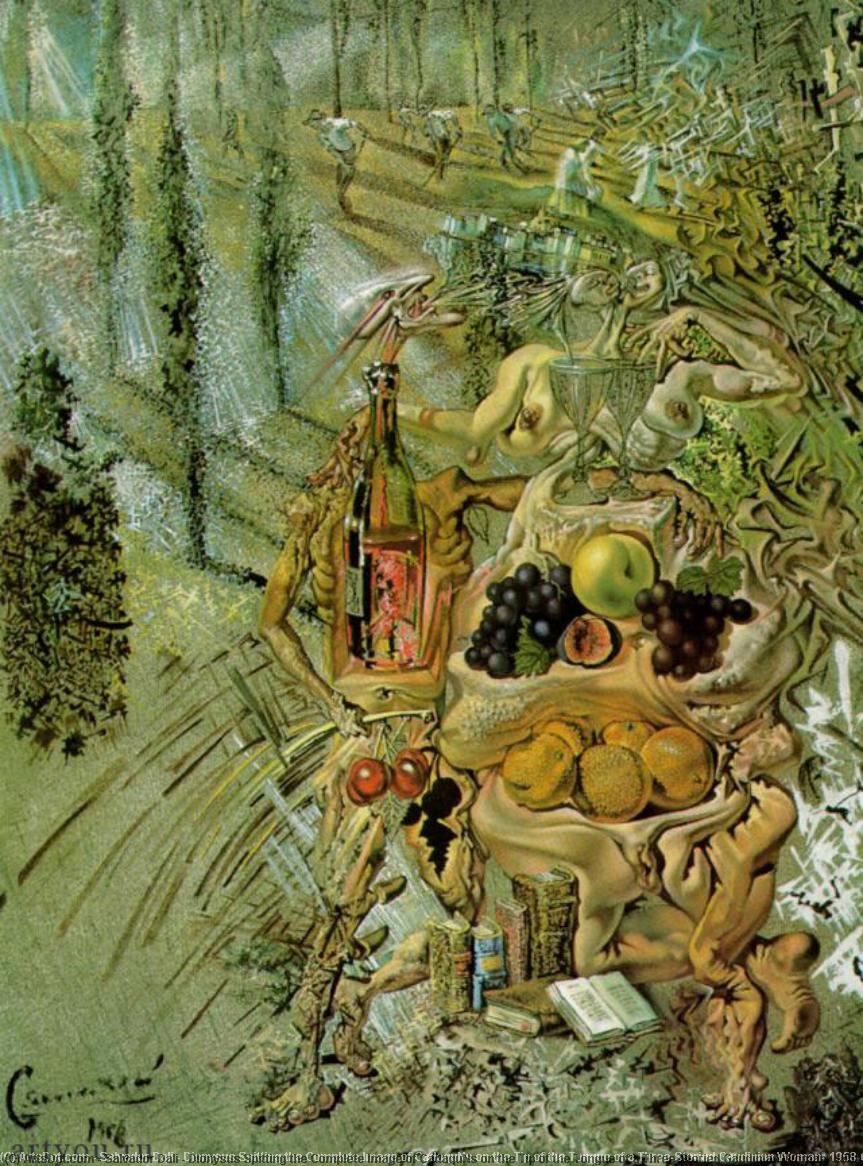
Salvador Dalí's *Dionysus Spitting the Complete Image of Cadaqués on the Tip of the Tongue of a Three-Storied Gaudinian Woman* (1958-60) is a tour de force of Surrealist imagination, a painting that simultaneously delights and disorients. It’s not merely an image; it's a meticulously constructed dreamscape brimming with personal symbolism and artistic innovation. This work exemplifies Dalí at his most playful and intellectually challenging, inviting viewers to delve into the depths of his subconscious mind.
Subject Matter & Composition
The painting presents a bizarre yet captivating scene. The central figure is an imposing woman constructed in the architectural style of Antoni Gaudí – her form literally *built* as a three-story structure, echoing the fantastical buildings of Barcelona. From the tip of her tongue erupts the entire town of Cadaqués, Dalí’s beloved coastal home in Spain, seemingly expelled by the Greek god Dionysus. Dionysus, associated with wine, ecstasy, and theatricality, acts as the catalyst for this impossible act of creation/expulsion. The composition is deliberately unsettling; perspective shifts are employed to create a sense of spatial ambiguity, enhancing the dreamlike quality.
Style & Technique: Paranoiac-Critical Method in Action
This painting is deeply rooted in Dalí’s “paranoiac-critical method,” a technique he developed to access and translate his subconscious thoughts onto canvas. This involved inducing a self-induced paranoid state, allowing for the creation of images based on double meanings and hallucinatory associations. Dalí's technical skill is undeniable; despite the fantastical subject matter, the painting exhibits meticulous detail and precise rendering. He masterfully blends realistic depiction with illogical juxtaposition, creating an image that feels both tangible and utterly unreal. The smooth application of oil paint contributes to a hyperrealistic quality, further amplifying the unsettling effect.
Historical Context & Influences
Created in the late 1950s, this work reflects Dalí’s continued exploration of psychoanalysis, particularly the theories of Sigmund Freud. Surrealism, born from the aftermath of World War I, sought to liberate thought, language, and human experience from the constraints of reason. Dalí became a leading figure in the movement, pushing its boundaries with his provocative imagery and unconventional techniques. The inclusion of Gaudí as an architectural influence speaks to Dalí’s deep connection to Spain and his admiration for the architect's organic and imaginative designs. The reference to Dionysus adds a layer of classical mythology, grounding the surreal elements within a historical framework.
Symbolism & Interpretation
The symbolism in *Dionysus Spitting Cadaqués* is multi-layered. Cadaqués represents Dalí’s personal sanctuary and source of inspiration – its expulsion from the tongue suggests a complex relationship, perhaps reflecting both love and a desire to control or possess his muse. The Gaudinian woman could symbolize femininity, architecture as life form, or even Spain itself. Dionysus' act of "spitting" can be interpreted as a creative outburst, a violent birth of imagery, or a rejection of conventional artistic boundaries.
Ultimately, the painting resists a single definitive interpretation, encouraging viewers to engage with it on a personal and intuitive level.
Emotional Impact & Legacy
The painting evokes a range of emotions – wonder, unease, fascination, and perhaps even a touch of revulsion. It’s an image that stays with you long after viewing, prompting contemplation about the nature of reality, memory, and artistic creation. *Dionysus Spitting Cadaqués* remains one of Dalí's most iconic works, demonstrating his unique ability to blend technical mastery with psychological depth.
It continues to inspire artists, designers, and dreamers alike, solidifying Dalí’s place as a pivotal figure in 20th-century art history.
- A prime example of Surrealism's exploration of the unconscious mind.
- Demonstrates Dalí’s masterful technique and innovative “paranoiac-critical method.”
- Rich in personal symbolism relating to Dalí’s life, art, and influences.
- A visually striking piece that challenges conventional perceptions of reality.