Delve into Salvador Dalí's 'The Angelus of Gala,' a captivating blend of realism and surrealism housed at MoMA. Explore its symbolism, themes of memory & time, and masterful use of light.
The Angelus of Gala: A Surrealist Portrait of Memory and Spirituality
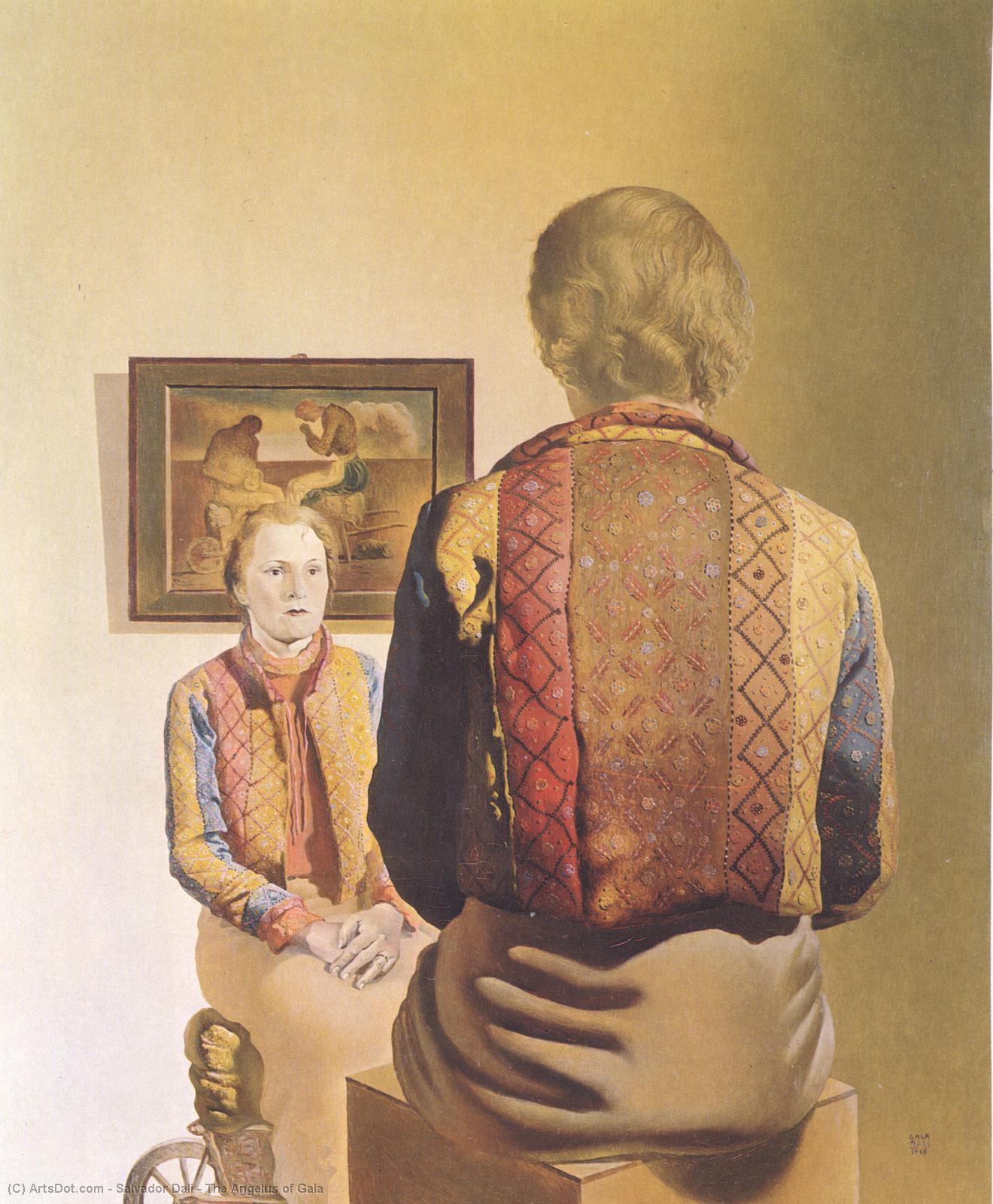
Salvador Dalí’s The Angelus of Gala, painted in 1935, is a captivating oil painting on wood that exemplifies Dalí’s mastery of Surrealism while retaining elements of Realism. Housed within the Museum of Modern Art (MoMA) in New York City, this piece transcends a simple portrait; it's an exploration of memory, spirituality, and the profound influence of Gala, Dalí’s wife and muse.
Composition and Symbolism: Layers of Meaning
The painting presents a seated woman, widely believed to be Gala, gazing directly at the viewer with an enigmatic expression. She is bathed in soft light against a neutral backdrop, drawing immediate attention to her figure. Her clothing features intricate patterns, hinting at the complexities beneath the surface. Clasped hands on her lap suggest contemplation and perhaps a quiet strength. Behind her, the depiction of another person’s back, head turned away, subtly directs our focus towards a framed painting hanging on the wall. This secondary artwork depicts two figures engaged in what appears to be a devotional act—a clear reference to Jean-François Millet's iconic The Angelus. This deliberate inclusion is not merely decorative; it’s a key element in the painting’s layered symbolism.
Dalí's Technique: Blending Realism and Surrealism
Dalí masterfully blends realism and surrealism within The Angelus of Gala. The realistic portrayal of Gala contrasts sharply with the surreal dimensions and distortions present in the background and within the framed painting. This juxtaposition highlights Dalí’s unique ability to capture the dreamscape of the mind while maintaining a grounded sense of reality. His use of light is particularly noteworthy, demonstrating an understanding of "luminism"—a technique emphasizing the expressive power of light—drawing from Baroque tenebrism and Impressionism. The careful rendering of textures and details in Gala’s figure further emphasizes this blend of styles.
Themes and Interpretations: Memory, Spirituality, and Time
The painting invites viewers to delve into its depths and explore profound themes. The juxtaposition of the figures—Gala and the unseen presence behind her—along with the symbolic content of Millet’s The Angelus within the painting, suggests a meditation on spirituality and memory. It's interpreted as Dalí reflecting on his personal history and relationship with Gala, perhaps contemplating the passage of time and its impact on their shared experiences. The reference to Millet’s work, a depiction of rural piety, adds another layer—a commentary on faith and tradition within a modern, surreal context.
Legacy and Artistic Significance
The Angelus of Gala stands as a testament to Salvador Dalí’s innovative and captivating style. It solidifies his reputation as a visionary artist capable of translating the subconscious into tangible form. This painting, along with other works by Dalí, can be found at https://ArtsDot.com, where you can explore and purchase handmade oil painting reproductions of famous artworks.