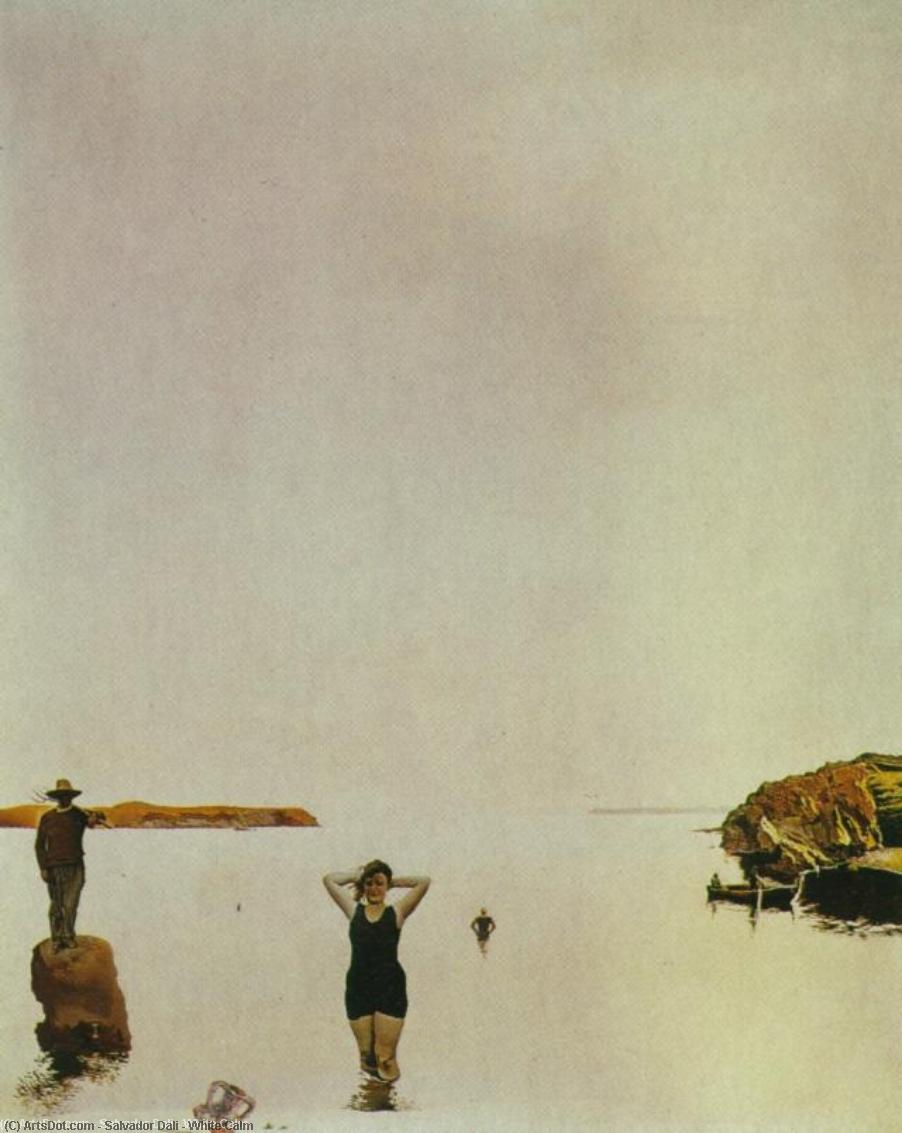
A Dreamscape of Stillness: The Ethereal World of White Calm
In the vast, silent theater of the subconscious, Salvador Dalí’s 1936 masterpiece, "White Calm," serves as a profound window into the soul of Surrealism. This painting is far more than a mere coastal landscape; it is a meticulously crafted dreamscape that invites the viewer to step away from the clamor of reality and enter a realm of profound introspection. As one gazes upon the canvas, the initial impression is one of overwhelming tranquility, yet beneath this surface of peace lies a complex layer of psychological depth. The artwork captures a moment suspended in time, where the boundaries between the physical world and the dream state begin to dissolve into a soft, misty haze.
The composition is a masterclass in balanced tension, utilizing a horizontal format that emphasizes the infinite breadth of the horizon. Dalí strategically anchors the lower-left corner with rugged rock formations, providing a sense of terrestrial weight that prevents the viewer from drifting too quickly into the sky. Along the shoreline, three simplified silhouettes are positioned with a deliberate imbalance, creating a rhythmic movement that guides the eye across the sand and toward the distant, silent boats. This arrangement evokes a powerful sense of solitude; the figures do not interact with one's gaze or each other, but rather exist as solitary witnesses to the immense, indifferent beauty of the natural world.
The Alchemy of Color and Technique
Dalí’s technical execution in "White Calm" is nothing short of extraordinary, showcasing his ability to marry hyper-realistic detail with an otherworldly atmosphere. Employing oil on canvas, the artist utilizes a muted, desaturated palette dominated by shades of beige, slate grey, and a ghostly, pale blue. This choice of color is essential to the painting's emotional resonance, as it strips away the vibrancy of life to reveal a melancholic, twilight essence. The transitions between colors are incredibly smooth, achieved through expert blending that mimics the soft, diffused light of an overcast dawn or a fading dusk.
The texture of the piece feels almost tactile; one can sense the fine grain of the sand and the cool, damp smoothness of the receding tide. By softening the outlines of the figures and the distant vessels, Dalí employs atmospheric perspective to create a sense of immense depth, making the horizon feel unreachable. This technique lends the work its signature surrealist quality—a "dream photography" effect where every element is rendered with clarity, yet the subject matter remains fundamentally impossible or hauntingly still. For the collector or interior designer, this subtle interplay of texture and tone offers a sophisticated aesthetic that provides a calming focal point without overwhelming a room's decor.
Symbolism and the Resonance of Solitude
Beyond its visual splendor, "White Calm" is laden with the symbolic preoccupations that defined Dalí’s mid-1930s period. The desolate landscape, characterized by its emptiness and vastness, serves as a metaphor for the human condition—specifically the themes of alienation and the search for identity within the infinite. The figures, rendered as mere shadows, represent the fragmentation of the self, lost in the overwhelming scale of existence. There is a haunting beauty in this isolation; it is not a frightening loneliness, but rather a meditative state of being.
For those seeking to bring a piece of art history into their personal spaces, "White Calm" offers an unparalleled emotional experience. It is a work that rewards long periods of contemplation, offering new layers of meaning with every viewing. Whether placed in a quiet study or as a centerpiece in a contemporary living space, this reproduction captures the essence of Dalí’s genius—a perfect equilibrium between the tangible reality of the landscape and the intangible mysteries of the human mind. It remains an enduring testament to the power of art to capture the silent, profound moments that define our inner lives.