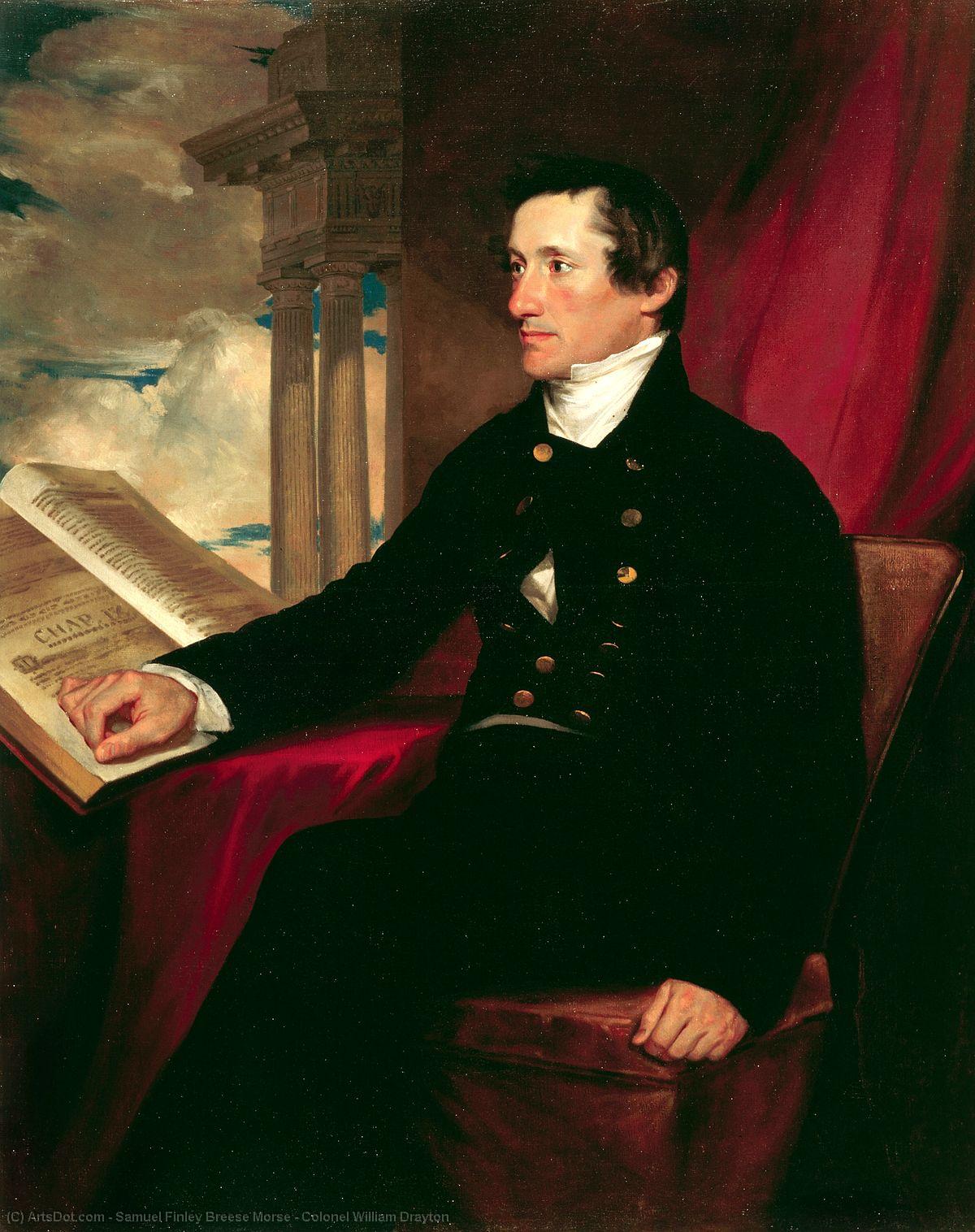
The
Colonel William Drayton painting, created by
Samuel Finley Breese Morse, is a stunning example of American portraiture from the early 19th century. This oil on canvas piece, dated 1818, showcases Morse's exceptional skill in capturing the essence of his subjects.
The Artist and His Style
Samuel Finley Breese Morse was a prominent American artist, known for his contributions to the development of American art. His style, characterized by
neoclassical and
realist elements, is evident in the
Colonel William Drayton painting. Morse's use of
chiaroscuro, a technique that emphasizes contrasts between light and dark, adds depth and dimension to the portrait.
The Painting's Composition
The
Colonel William Drayton painting features a formal, yet asymmetrical composition. The subject, Colonel William Drayton, is seated in a chair, surrounded by symbols of his status and dignity. The background, adorned with
columns and
red curtains, creates a sense of grandeur and elegance. A clock on the wall, near the top left corner of the painting, adds a touch of
realism to the scene.
Reproductions and Conservation
For art enthusiasts who appreciate the beauty of
Samuel Finley Breese Morse's work, https://ArtsDot.com offers handmade oil painting reproductions of the
Colonel William Drayton painting. These reproductions are created using high-quality materials and techniques, ensuring that they remain faithful to the original piece. Some notable museums, such as the
Musée Hébert, also feature works by prominent artists like
Ernest Hébert. You can learn more about these masterpieces on /art/list/?Filter=A@D3APKB-Discover-the-Museum-Musee-Hebert-(Paris-France)-and-its-Masterpieces.
- View the Colonel William Drayton painting on /art/list/?Filter=8CEGT7-Samuel-Finley-Breese-Morse-Colonel-William-Drayton
- Discover more about Samuel Finley Breese Morse and his works on Wikipedia: https://en.wikipedia.org/wiki/Samuel_Finley_Breese_Morse
The
Colonel William Drayton painting is a testament to
Samuel Finley Breese Morse's skill as an artist and his ability to capture the essence of his subjects. As a masterpiece of American portraiture, it continues to inspire art enthusiasts and historians alike.