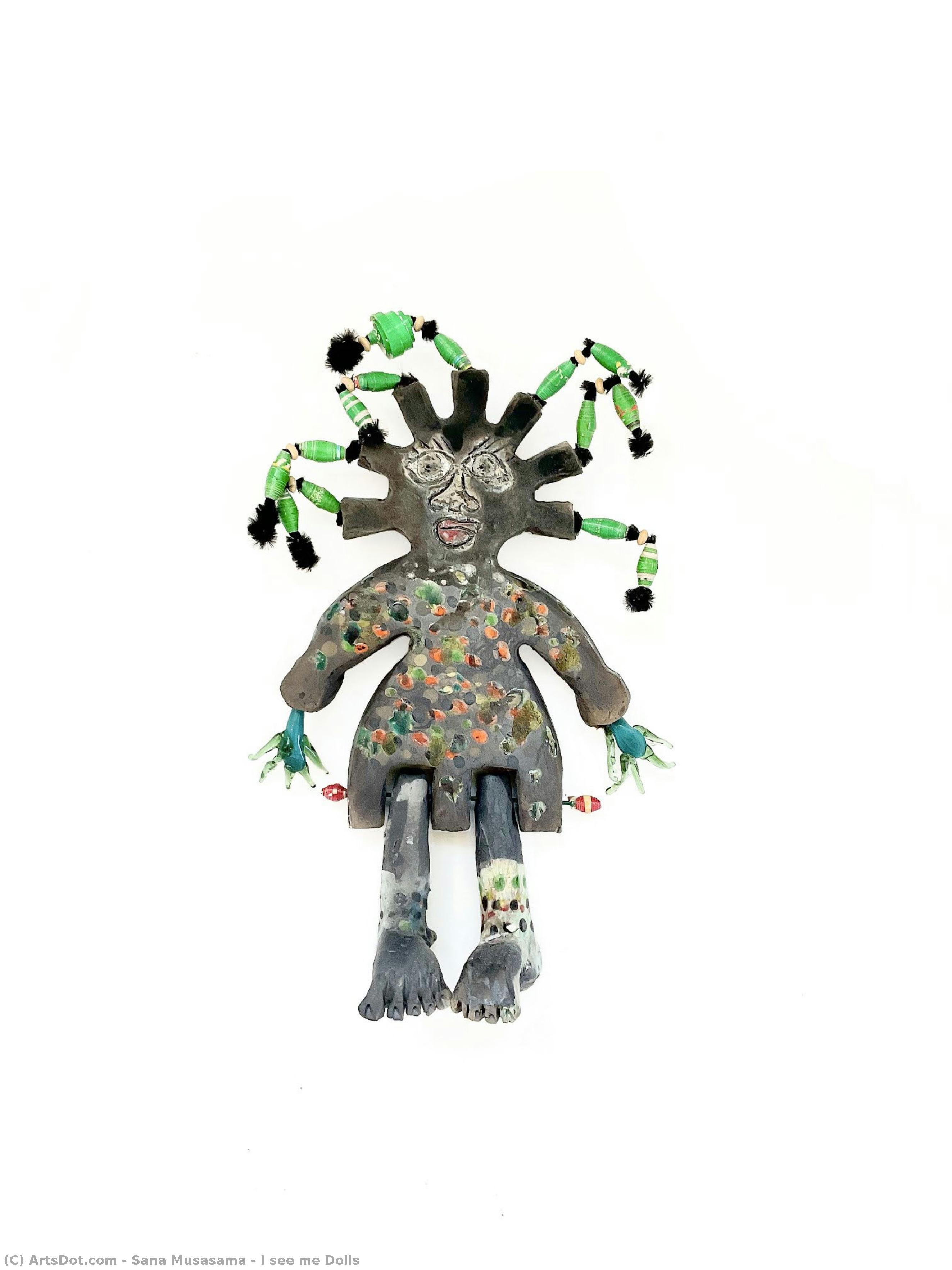
Сана Мусама је афроамериканска керамичарка и уметница која се бави међусобним утицајем културе и женског преживљавања. Њени скупови керамике, као и инспиративна радња ‘Видим Ја Мође’, представљају утицај традиције и свеска уметности.
I See Me Dolls – Sana Musasama: A Ceramic Tapestry of Identity and Memory
Sana Musasama’s “I See Me Dolls” isn't merely a sculpture; it’s a profound meditation on femininity, cultural heritage, and the transformative power of artistic expression. Born in Saint Albans, New York, in 1951, Musasama’s journey as an artist has been inextricably linked to her exploration of global cultures—particularly those grappling with issues of gender equality and social justice—a path that began with her formative experiences witnessing female circumcision rituals in Sierra Leone.
- Artist Background: Sana Musasama holds a BA in Ceramics and Education from City College (1974) and an MFA from Alfred State College of Ceramics (1987). Her dedication to craft extends beyond formal education, encompassing residencies at institutions like the Archie Bray Foundation, Gakium Designer College, Tuscarora International School of Ceramics, and Mende Pottery.
- Material & Technique: The sculpture itself is crafted from ceramic—a material Musasama considers “everywhere,” recognizing its origins in ancient clay traditions. Her distinctive approach involves layering textures – smooth surfaces juxtaposed with rough, sculpted forms – reflecting the artist’s engagement with diverse cultural influences and her own personal narrative.
The artwork's genesis lies in Musasama’s childhood memory—a poignant encounter with her mother who created a doll mirroring her own hair type—a symbol of longing for acceptance and recognition within a society that often prioritized “whiter” hair as more desirable. This recollection fueled the creation of the “I See Me” dolls, a series exploring themes of self-representation and confronting societal expectations.
- Symbolism: The Topsy Turvy doll—a recurring motif in Musasama’s oeuvre—represents a deliberate inversion of cultural norms. Inspired by the Maple Tree abolitionist movement, it embodies resistance to oppressive systems while simultaneously honoring women who embody resilience and strength.
- Narrative Context: Musasama's artistic practice is deeply rooted in her activism for human rights, particularly concerning female empowerment. Her collaborative projects with organizations like CASES and AFESIP Cambodia demonstrate a commitment to fostering dialogue and promoting social change through art—a testament to the transformative potential of creative engagement.
“I See Me Dolls” stands as a powerful reminder that art can serve as a vehicle for personal reflection and cultural critique. Musasama’s meticulous attention to detail—from the incorporation of beads symbolizing adornment practices to the expressive carving of pipe cleaners into the doll's head—underscores her belief in the importance of honoring diverse voices and perspectives. Ultimately, this ceramic sculpture invites viewers to contemplate questions of identity, memory, and the enduring legacy of cultural traditions.