A Vision of Florentine Genius
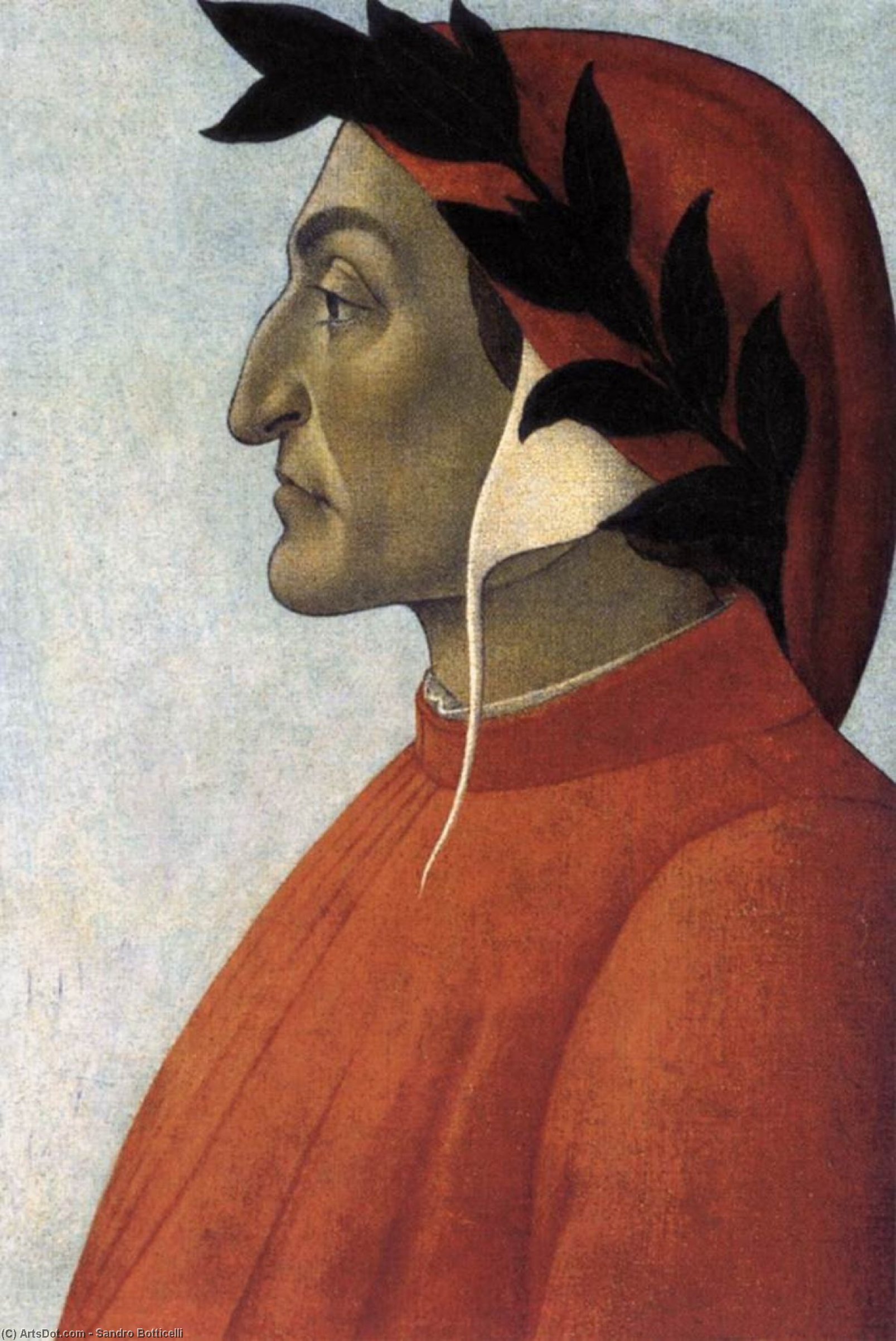
In the quiet intensity of Sandro Botticelli’s Portrait of Dante, painted around 1495, we encounter more than just a likeness of a man; we meet the very soul of the Italian Renaissance. This masterpiece serves as a profound window into an era defined by humanist scholarship and a fervent revival of classical ideals. As the Florentine sun shone upon the reign of Lorenzo de Medici, Botticelli captured Dante Alighieri—the legendary architect of the Divine Comedy—not merely as a historical figure, but as an eternal symbol of intellectual and spiritual aspiration. To gaze upon this portrait is to feel the weight of history and the burgeoning fascination with human potential that once transformed Florence into the cultural heart of the world.
The painting transcends the boundaries of traditional portraiture through its masterful use of tempera on poplar wood. Botticelli, a master of the Florentine school, utilized this technique to achieve a luminous, almost ethereal quality that remains breathtaking centuries later. Through the delicate layering of pigments—rich reds, pristine whites, and shimmering golds—he achieved a tonal gradation that breathes life into Dante’s features. There is a subtle, rhythmic grace in the lines of the face, an idealized form that seeks to emulate the harmony found in ancient Greek sculpture. The artist does not merely record anatomy; he crafts a sense of calm dignity, inviting the viewer into a state of quiet contemplation.
Symbolism and the Weight of Legacy
Every element within this composition is laden with deep, symbolic significance, making it an extraordinary piece for those who appreciate art that speaks in metaphors. The most striking feature is the laurel wreath encircling Dante’s brow, a classical emblem signifying honor, poetic achievement, and everlasting fame. This detail serves as a direct homage to his literary legacy, marking him as a genius whose words would transcend time. His gaze, directed upward toward an unseen light, suggests a soul in reverence of the divine, bridging the gap between the earthly realm and the celestial heights described in his epic poetry.
The regal attire further enhances this sense of importance. The deep red robe, paired with the fine white cloth at his neck and the glint of a gold chain, communicates a status of profound intellectual authority. For the discerning collector or interior designer, this painting offers a commanding presence. It is a work that does not merely decorate a space but anchors it with gravity and sophistication. Whether placed in a private library or a grand salon, the Portrait of Dante acts as a conversation piece, evoking themes of wisdom, endurance, and the timeless pursuit of truth.
An Enduring Inspiration for Modern Spaces
For those seeking to infuse their surroundings with the elegance of the Early Renaissance, a high-quality reproduction of this work offers an unparalleled opportunity. The emotional impact of Botticelli’s brushwork—the way he captures the texture of the fabric and the thoughtful expression in the poet's eyes—provides a sense of warmth and intellectual depth. It is an invitation to slow down and engage with the beauty of human thought.
Integrating such a masterpiece into a contemporary interior allows for a stunning contrast between modern minimalism and historical richness. The vibrant yet balanced palette of the portrait complements various design aesthetics, from classical traditionalism to sophisticated modernism. Owning a piece that embodies the grace of Botticelli is not just about acquiring art; it is about preserving a fragment of Florence's golden age and bringing the light of the Renaissance into the homes of today.