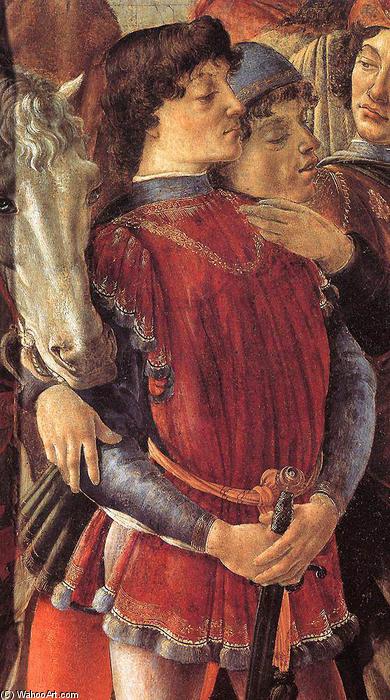
A Window into Florentine Faith and Artistic Grace
Sandro Botticelli’s “Adoration of the Magi,” completed around 1475, stands as a cornerstone of Early Renaissance art—a testament to Florence’s burgeoning cultural prowess during Lorenzo de Medici's reign. More than just a depiction of biblical narrative, this altarpiece embodies the humanist ideals that characterized the era, prioritizing human beauty and intellectual contemplation alongside spiritual devotion.
- Subject Matter: The painting recounts the iconic story of the Magi—Wise Men from Persia, Egypt, and Babylon—following a celestial sign to Bethlehem and presenting gifts of gold, frankincense, and myrrh to the newborn Jesus. Botticelli meticulously captures this pivotal moment in Christian theology.
- Style: Botticelli’s signature style is instantly recognizable – characterized by elongated figures, delicate lines, and an ethereal grace that distinguishes it from the more rigid conventions of preceding Gothic art. The artist eschews dramatic perspective, favoring instead a flattened space that emphasizes compositional harmony and idealized beauty.
Technique: Delicate Brushwork and Vibrant Color Palette
Botticelli employed tempera paint on wood panel—a technique favored for its luminosity and durability—allowing him to achieve remarkable detail while maintaining a luminous quality. His brushstrokes are remarkably subtle, layering colors with meticulous precision to create an atmosphere of serene contemplation. The palette leans heavily towards warm earthy tones – ochre yellows, terracotta reds – punctuated by splashes of vibrant blues and greens that illuminate the drapery and landscape background.
- Material: Tempera paint combined with egg yolk binder ensured exceptional color saturation and longevity for this artwork.
- Composition: Botticelli skillfully arranges figures within a shallow space, creating a balanced composition that draws the viewer’s eye towards the central Virgin Mary and Jesus Christ. The positioning of the Magi—one man supporting another—is particularly noteworthy, conveying intimacy and reverence.
Symbolism: Echoes of Classical Ideal Beauty
Beyond its biblical narrative, “Adoration of the Magi” is laden with symbolic references to classical ideals of beauty and proportion. The figures are rendered in idealized forms—reflecting Renaissance fascination with ancient Greek sculpture—emphasizing harmony and grace. The inclusion of horses symbolizes royalty and pilgrimage – mirroring the Magi’s arduous journey to Bethlehem. Furthermore, Botticelli's meticulous attention to detail—from the folds of Mary’s robe to the expressions on the Magi’s faces—underscores his commitment to capturing human emotion with unparalleled sensitivity.
Emotional Impact: A Celebration of Faith and Artistic Perfection
"Adoration of the Magi" transcends mere representation; it aspires to evoke a profound sense of spiritual awe. Botticelli's masterful artistry elevates this biblical tale into an enduring symbol of faith, compassion, and artistic excellence—a piece that continues to inspire admiration centuries after its creation. Its serene beauty and harmonious composition offer a timeless reminder of the power of art to illuminate the human spirit.