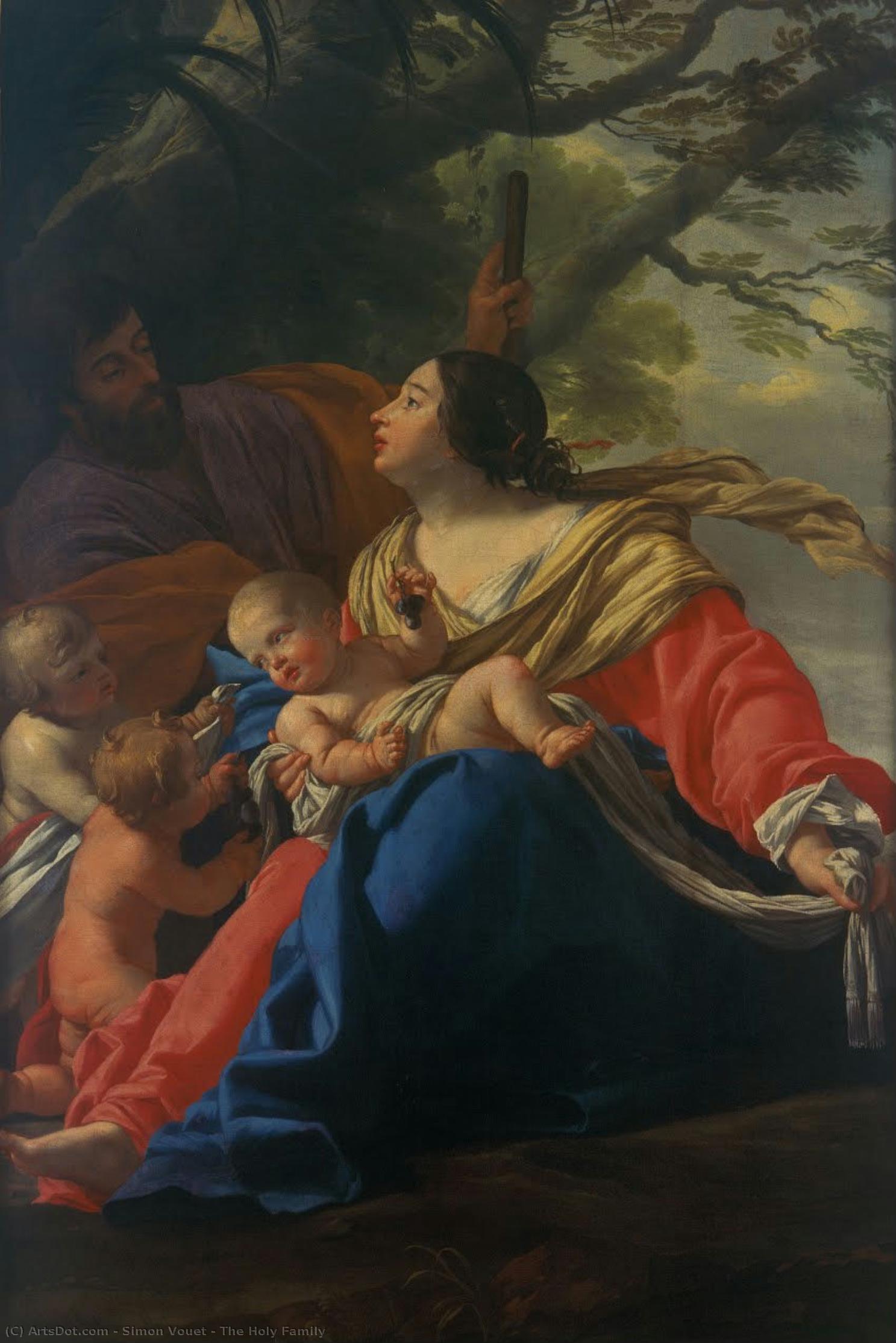
Experience the grandeur of Baroque art with Simon Vouet’s ‘The Holy Family,’ capturing Caravaggio's dramatic chiaroscuro and symbolizing faith, divine light, and the Eucharist. Explore stunning reproductions today!
Istražite život i umetnost Simona Vueta (1590-1649), ključnog francuskog barok slikara koji je uveo italijanske stilove i oblikovao francusko umetničko slikarstvo 17. veka.
Istražite Kunsthalle Bremen: Otkrijte evropska remek-dela od Dürera do Moneta! Uronite u istoriju umetnosti i moderne medijske instalacije u najstarijem muzeju u Nemačkoj u vlasništvu društva.
A Baroque Vision of Faith: Simon Vouet’s “The Holy Family”
Simon Vouet's "The Holy Family," completed in 1630, stands as a cornerstone of French Baroque painting—a testament to artistic innovation and spiritual contemplation. Executed during Louis XIII’s reign, the artwork embodies the stylistic fervor that swept across Europe following the Renaissance, marking a decisive break from Mannerist formalism and embracing dramatic chiaroscuro, opulent color palettes, and idealized figures imbued with profound emotion. This monumental canvas captures a pivotal moment in Christian iconography: Mary, Joseph, and Jesus embarking on their pilgrimage to Egypt—a journey laden with symbolic significance that Vouet skillfully conveys through masterful technique and compositional brilliance.
Style and Technique: Caravaggio’s Influence
The painting's aesthetic is undeniably indebted to the revolutionary style pioneered by Michelangelo Merisi da Caravaggio. Vouet meticulously adopted Caravaggio’s dramatic chiaroscuro—the stark contrast between light and dark—to sculpt the scene with breathtaking realism. Light emanates from a divine source, illuminating Mary at the center of the composition, bathing her in an ethereal glow that underscores her sanctity and devotion. This radiant luminescence casts Joseph's form into shadow, emphasizing his role as protector and grounding the narrative within earthly reality. Vouet’s brushstrokes are deliberate and expressive, capturing subtle nuances of texture and movement—a hallmark of Baroque painting aimed at eliciting visceral responses from the viewer. The artist skillfully employs glazing techniques to achieve luminous colors and create depth, mirroring Caravaggio's masterful use of light to heighten emotional impact.
Historical Context: Louis XIII’s Court
“The Holy Family” emerged during a period of significant artistic patronage under Louis XIII—a monarch determined to elevate French culture and solidify royal prestige. Vouet was appointed court painter, tasked with adorning the royal palaces and disseminating images that reinforced religious piety and aristocratic grandeur. The painting reflects the prevailing intellectual climate of the time, characterized by humanist ideals blended with Catholic dogma. It served as a visual embodiment of Louis XIII’s aspirations for France to be recognized as a beacon of artistic excellence—a legacy that continues to resonate today.
Symbolism: Madonna and Vine Imagery
Beyond its technical prowess and historical context, “The Holy Family” is rich in symbolic references. The depiction of Mary holding her child Jesus alongside St Elizabeth and John the Baptist harkens back to biblical narratives celebrating divine motherhood and prophetic grace. Furthermore, Vouet’s ingenious use of imagery—specifically the grapes adorning the Child’s hand—references the Madonna della Vite (“Madonna of the Vine”), a popular Marian devotion symbolizing Mary's role as the mother of Christ and the source of spiritual nourishment. The wind whipping around the Holy Family serves as a poignant reminder of their arduous journey, representing both physical hardship and divine providence—a visual metaphor for faith’s perseverance amidst adversity.
Emotional Impact: A Moment of Serenity Amidst Pilgrimage
Ultimately, Vouet's masterpiece succeeds in conveying an overwhelming sense of serenity and spiritual contemplation. Despite the implied challenges of their pilgrimage, Mary, Joseph, and Jesus radiate tranquility—their gaze fixed upward toward the divine light—suggesting unwavering faith and acceptance of God’s plan. The painting invites viewers to contemplate themes of humility, compassion, and grace—capturing the essence of Christian piety in a visually stunning composition that continues to inspire admiration centuries later. Its enduring appeal lies in its ability to evoke profound emotion while simultaneously demonstrating the highest standards of Baroque artistic achievement.